The arrival of the rainy season in Nigeria brings welcome relief from extreme heat, greener surroundings, and better farming conditions. Unfortunately, it also marks the beginning of one of the country's biggest public health challenges—malaria.
Every year, millions of Nigerians fall ill from malaria, making it one of the leading causes of hospital visits, missed school days, lost productivity, and preventable deaths. Despite decades of awareness campaigns and improved access to treatment, malaria continues to place a heavy burden on families, particularly those with young children and pregnant women.
According to the World Health Organization's (WHO) 2025 World Malaria Report, Nigeria remains the country with the highest malaria burden in the world. The country accounts for 24.3% of all global malaria cases and 30.3% of malaria-related deaths, even though Nigeria represents only about 2.6% of the world's population.
In simple terms, nearly one out of every four malaria cases recorded worldwide occurs in Nigeria.
The good news is that malaria is both preventable and treatable. Understanding how mosquitoes spread the disease, recognizing symptoms early, and taking simple preventive measures can significantly reduce the risk of infection for you and your family.
Here's what every Nigerian household should know during this rainy season.
Why Malaria Cases Rise During the Rainy Season
Malaria is caused by parasites that are transmitted through the bites of infected female Anopheles mosquitoes.
These mosquitoes breed in stagnant water.
During the rainy season, water collects in places such as:
Blocked drainage systems
Open containers
Old tyres
Potholes
Abandoned buckets
Construction sites
Gutters
Water storage tanks without covers
As mosquito breeding increases, so does the likelihood of malaria transmission.
This explains why hospitals across Nigeria typically record higher malaria cases during and shortly after the rainy months.
Nigeria's Malaria Burden Remains the Highest in the World
Malaria continues to affect every region of Nigeria, but the disease does not impact all communities equally.
According to WHO data, Nigeria contributes almost one-quarter of all malaria cases globally and nearly one-third of all malaria deaths.
These statistics highlight the enormous challenge facing the country's healthcare system.
Beyond the health implications, malaria also has significant economic consequences.
Families spend billions of naira annually on treatment, transportation to hospitals, medications, and lost working days.
Children miss school, businesses lose productivity, and household incomes suffer whenever family members become ill.
Children Under Five Face the Greatest Risk
Young children remain the most vulnerable group.
Across the WHO African Region, children under five account for approximately 75–76% of all malaria deaths.
Their immune systems are still developing, making it harder for them to fight severe infections.
In Nigeria, the Nigeria Demographic and Health Survey (NDHS) reported a national malaria parasite prevalence of 23% among children under five.
However, the numbers vary significantly across different parts of the country.
The survey found:
Around 16% prevalence in the South and South-East.
Up to 34% prevalence in the North-West.
This means children living in certain regions face considerably higher risks than others.
For parents, early prevention and prompt treatment are especially important.
Poverty and Location Increase Malaria Risk
Malaria is not only a health issue—it is also closely linked to poverty.
According to national survey data, children from the poorest households experience malaria infections at a much higher rate than those from wealthier families.
Malaria prevalence among children in the lowest socioeconomic group is estimated at 38%, compared to only 6% among children in the highest-income households.
The difference is equally noticeable between rural and urban communities.
Children living in rural areas have a malaria prevalence of approximately 31%, compared to 13% among children living in cities.
Several factors contribute to this gap, including:
Limited healthcare facilities
Poor drainage systems
Lower access to insecticide-treated nets
Longer travel distances to hospitals
Lower awareness of preventive measures
These figures show why prevention is particularly important for families living in rural communities and lower-income neighborhoods.
Sleep Under an Insecticide-Treated Mosquito Net Every Night
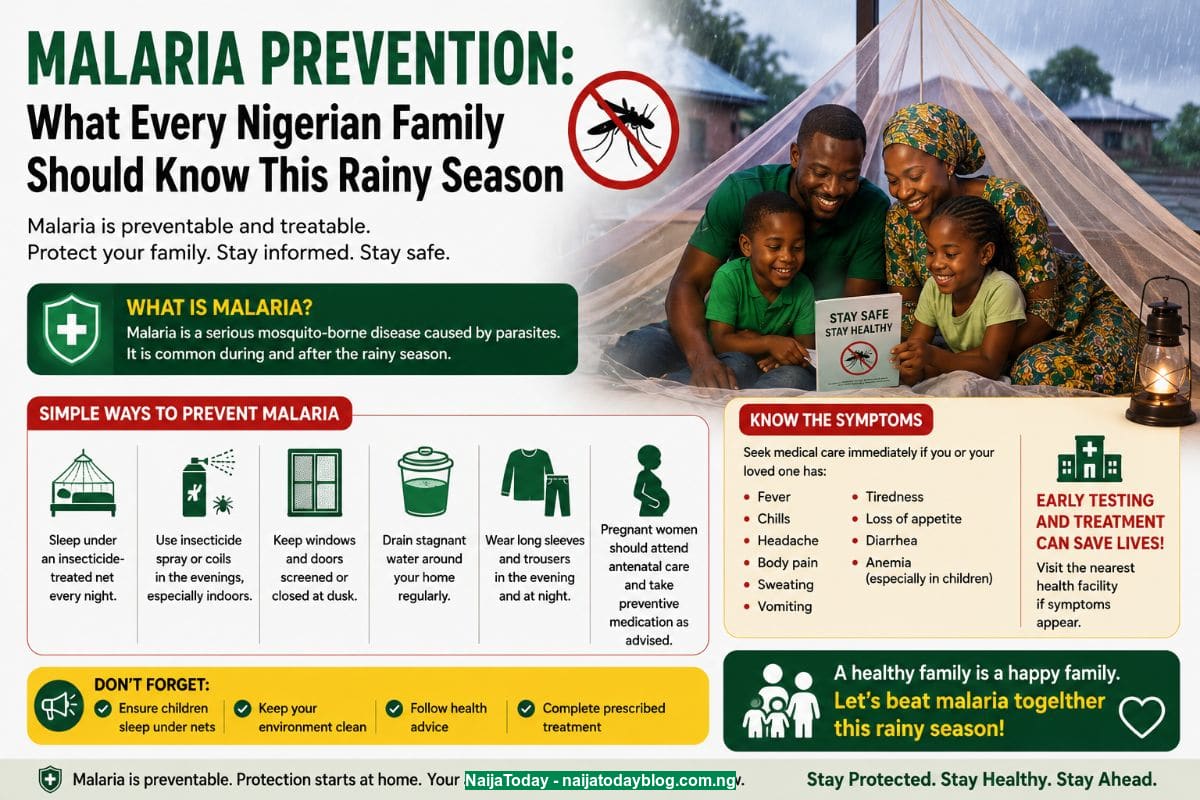
One of the most effective malaria prevention methods remains the use of Insecticide-Treated Nets (ITNs).
These specially treated mosquito nets provide both a physical barrier and insecticidal protection against mosquitoes.
However, simply owning a mosquito net is not enough.
Many households receive free mosquito nets but fail to use them consistently.
The WHO recommends that everyone—especially children under five and pregnant women—sleep under an insecticide-treated net every single night.
Even one night without protection increases the risk of mosquito bites.
Parents should also regularly inspect mosquito nets for holes or tears and replace damaged nets when necessary.
Remove Mosquito Breeding Sites Around Your Home
Preventing mosquitoes from breeding is just as important as protecting yourself from bites.
Every household should conduct a weekly inspection of its surroundings.
Look for places where rainwater collects, including:
Old buckets
Plastic containers
Flower pots
Used tyres
Open drums
Broken bottles
Blocked gutters
Empty standing water whenever possible.
Water storage containers should always be tightly covered.
Keeping your surroundings clean significantly reduces mosquito breeding around your home.
Community clean-up exercises can also have a major impact because mosquitoes easily move between neighboring compounds.
Indoor Residual Spraying Can Provide Extra Protection
Some state governments and public health agencies conduct Indoor Residual Spraying (IRS) programmes before or during peak malaria seasons.
IRS involves spraying approved insecticides on the inside walls of homes.
Mosquitoes that land on these treated surfaces die before they can transmit malaria.
Not every state currently operates spraying programmes.
Families can ask their nearest Primary Healthcare Centre or local health authorities whether indoor spraying campaigns are available in their communities.
Pregnant Women Need Extra Protection
Pregnancy increases the risk of severe malaria.
Malaria during pregnancy can lead to:
Miscarriage
Premature birth
Low birth weight
Severe anaemia
Stillbirth
Maternal complications
For this reason, pregnant women should:
Sleep under insecticide-treated mosquito nets every night.
Attend regular antenatal clinics.
Follow healthcare providers' recommendations for malaria prevention medications.
Seek medical attention immediately if they develop fever.
Routine antenatal care remains one of the most effective ways to protect both mother and baby.
Seasonal Malaria Chemoprevention Saves Lives
In areas where malaria transmission is particularly high, Nigeria operates Seasonal Malaria Chemoprevention (SMC) programmes.
SMC involves giving preventive malaria medication to eligible children during peak malaria months before they become infected.
The programme is supported by the Federal Ministry of Health and organizations including the Malaria Consortium.
According to programme reports, more than 14 million children receive preventive treatment annually in participating states.
Parents should ask their nearest Primary Healthcare Centre whether SMC is available in their area and whether their children qualify.
Know the Symptoms of Malaria
Early diagnosis remains one of the most important factors in successful malaria treatment.
Common symptoms include:
Fever
Chills
Headache
Body weakness
Sweating
Muscle pain
Vomiting
Loss of appetite
Fatigue
Unfortunately, these symptoms often resemble common viral illnesses.
Some people delay seeking treatment, assuming they have "ordinary fever."
This delay can be dangerous, particularly for children.
Severe malaria can develop rapidly if treatment is postponed.
Always Test Before Taking Malaria Drugs
One of the biggest mistakes many Nigerians still make is self-medication.
Not every fever is malaria.
Typhoid, viral infections, COVID-19, dengue fever, and several other illnesses can produce similar symptoms.
The National Malaria Elimination Programme encourages Nigerians to follow one simple principle:
Test before you treat.
Rapid Diagnostic Tests (RDTs) are widely available in hospitals, clinics, pharmacies, and many Primary Healthcare Centres.
These tests usually produce results within minutes and help ensure patients receive the correct treatment.
Taking antimalarial drugs without confirming the diagnosis can delay proper treatment if another illness is responsible.
Avoid Self-Medication
Many households keep leftover malaria drugs from previous illnesses.
Using these medications without proper diagnosis can be risky.
Incomplete treatment contributes to drug resistance and may mask symptoms of more serious illnesses.
Instead of relying on guesswork:
Visit a qualified healthcare provider.
Get tested.
Follow the prescribed treatment exactly.
Complete the full course of medication.
Stopping treatment early because symptoms improve can reduce effectiveness.
Rural Communities Continue to Face Bigger Challenges
Although malaria prevention tools are well understood, access remains unequal.
Health researchers have identified several barriers affecting malaria control in parts of Nigeria.
These include:
Remote communities with limited healthcare access.
Poor transportation networks.
Flooded roads during rainy seasons.
Nomadic populations.
Limited awareness campaigns.
Shortages of healthcare workers.
In some communities, reaching the nearest health facility may require hours of travel by motorcycle, boat, or other means.
These barriers make prevention even more important.
Community leaders, religious organizations, schools, and local health workers all have important roles to play in increasing awareness.
Simple Habits That Can Reduce Your Family's Risk
Protecting your household doesn't require expensive equipment.
Small daily habits can make a significant difference.
These include:
Sleeping under treated mosquito nets every night.
Closing doors and windows during peak mosquito activity.
Installing window and door screens where possible.
Clearing blocked drains.
Removing stagnant water around the house.
Wearing long sleeves outdoors during evenings.
Seeking immediate medical attention for persistent fever.
Taking children for testing as soon as symptoms appear.
Consistency matters more than occasional preventive efforts.
The Bottom Line
Malaria remains one of Nigeria's biggest public health challenges, especially during the rainy season when mosquito breeding increases. Although the country continues to carry the world's highest malaria burden, families are not powerless against the disease. Simple measures such as sleeping under insecticide-treated nets, eliminating stagnant water, using indoor spraying where available, and seeking prompt testing can dramatically reduce the risk of infection.
For parents, pregnant women, and caregivers of young children, prevention should be a daily priority—not just during outbreaks. Early diagnosis and proper treatment save lives, while self-medication and delayed hospital visits can have serious consequences. As the rains continue across Nigeria, taking these practical steps today can help protect your family, reduce healthcare costs, and contribute to the country's broader fight against malaria.