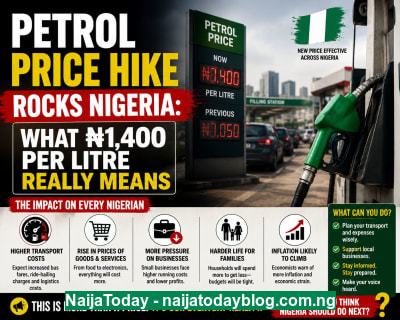
Every morning before sunrise, a small ritual repeats itself at fuel stations
across Nigeria's cities: commercial drivers doing arithmetic in their heads
before they've had breakfast. How many litres today. How many trips that buys.
How many passengers at the current fare. Whether the fare needs to go up again,
and by how much, and whether the passengers on this particular route will
tolerate it or simply start walking instead.
This is the quiet, constant labor that sits underneath every fuel price
headline in Nigeria — the recalculation that hundreds of thousands of okada
riders, danfo and korope drivers, and keke napep operators perform every single
time the price at the pump moves. And in 2026, it has been moving often.
The Driver's Ledger
Consider a typical danfo driver working the Ojota to CMS route in Lagos, one of
the city's busiest commercial corridors. On a full day of trips, a driver in
this category might consume somewhere between 15 and 20 litres of petrol,
depending on traffic conditions, how many round trips he manages, and how
aggressively he drives. At a depot-linked price of roughly ₦1,230 per litre,
that works out to between ₦18,450 and ₦24,600 in fuel costs for the day. With
the mid-July 2026 hike pushing depot prices toward ₦1,350, and pump prices
potentially reaching ₦1,400, that same day's fuel bill climbs toward ₦20,250 to
₦28,000 — a jump of roughly ₦2,000 to ₦3,400 that has to be absorbed somewhere
in the driver's ledger.
Drivers rarely absorb it entirely themselves, and they rarely pass it on
entirely to passengers either. What tends to happen, route by route, is a
negotiation played out in small increments — a ₦50 increase here, a ₦100
increase there, adjustments that drivers describe as necessary but that
passengers experience as a small, constant erosion of what their transport
budget can cover. A driver working the Berger to Ikeja axis, describing his
adjustment after a previous price increase earlier in the year, said he raised
his fare by ₦100 per passenger but still finished most days with less profit
than before the increase, because fewer passengers were willing to make
discretionary trips at the new price, cutting into the volume that used to make
up for thin per-trip margins.
The Okada Calculation
For okada riders, the math is different but no less unforgiving. A typical
rider might fill his tank with 3 to 5 litres for a day's work, spending
anywhere from ₦3,300 to ₦7,000 at current prices depending on his tank size and
how much distance he covers. Okada fares, generally lower per trip than danfo
fares but covering shorter, more frequent journeys, leave less room to maneuver
when fuel costs rise, because passengers on short trips are especially
price-sensitive — a ₦50 increase on a ₦200 trip is a 25 percent jump, one that
riders say pushes a noticeable share of passengers toward trekking short
distances instead of paying for a ride they might have taken without a second
thought a year earlier.
One rider working near a market in Ikorodu described watching his daily
passenger count drop over the course of 2025 and into 2026 even as his fuel
costs climbed, a combination he called "the two-way wahala" — fewer
customers and more expensive fuel, squeezing him from both directions at once.
He has responded, like many riders, by working longer hours to make up the
shortfall, a solution that carries its own costs in exhaustion and, he admits,
increased risk on the road toward the end of a long shift.
Keke Napep and the Middle Ground
Tricycle operators, running keke napep across cities from Lagos to Onitsha to
Kaduna, occupy an interesting middle position in this landscape. Their fuel
consumption per trip sits between that of okadas and danfos, and their fare
structures — often fixed by informal local agreements among operators on a
given route — tend to adjust more slowly than either, because raising fares
requires a kind of collective coordination among operators that individual
danfo or okada drivers don't need. This lag means keke operators sometimes
absorb price increases for weeks before a route-wide fare adjustment catches
up, a period one operator in Onitsha described as "suffer small before we
fit balance am," referring to the informal negotiation process among
drivers on his route before they collectively agreed on a new fare.
Passengers Feel It Too
None of this arithmetic happens in isolation from the passengers footing the
eventual bill. A civil servant commuting daily from Ikorodu to the Lagos Island
business district, spending on danfo and okada legs of her journey combined,
described her daily transport cost rising from roughly ₦1,200 to nearly ₦1,600
over the course of the past year as successive fuel price increases worked
their way into fares — an increase that, multiplied across a working month,
represents a meaningful chunk of a salary that hasn't kept pace with the rate
of these adjustments. She has responded the way many commuters have: cutting
back on other spending, walking longer distances to shorten the paid portion of
her commute, and, on days when money is especially tight, simply staying home
if her work allows it.
A System Under Constant Pressure
What emerges from these individual stories is a transport ecosystem operating
in a state of near-constant recalibration, absorbing shock after shock from a
fuel market that has moved from roughly ₦185 per litre before the 2023 subsidy
removal to well over ₦1,000 today, with further increases arriving on short
notice, as the July 2026 hike demonstrated. Drivers, riders, and operators have
become remarkably adept at this recalibration out of necessity — adjusting
fares, extending hours, cutting corners on maintenance to save money elsewhere,
and absorbing losses during the lag between a fuel price increase and the fare
adjustment that eventually follows it.
But adeptness has limits. Several drivers interviewed for this piece described
a growing sense that the margin for further absorption is thinning — that each
new increase leaves less room to adjust without either pushing fares to a level
passengers genuinely cannot pay, or accepting a profit margin too thin to
justify the work. Whether Nigeria's fuel market stabilizes, whether the Dangote
Refinery's growing local supply eventually eases some of this pressure, or
whether the current pattern of periodic hikes continues, the drivers doing
arithmetic before sunrise each morning will be among the first to know —
because their ledgers, more than any official price index, are where the real
cost of Nigeria's fuel market gets tallied every single day.
🌟 Lifestyle🔥 HOT
Okada Riders, Danfo Drivers, and the New Math of Survival
By NaijaToday Desk · 18 July 2026 · 3 min · 👁 4
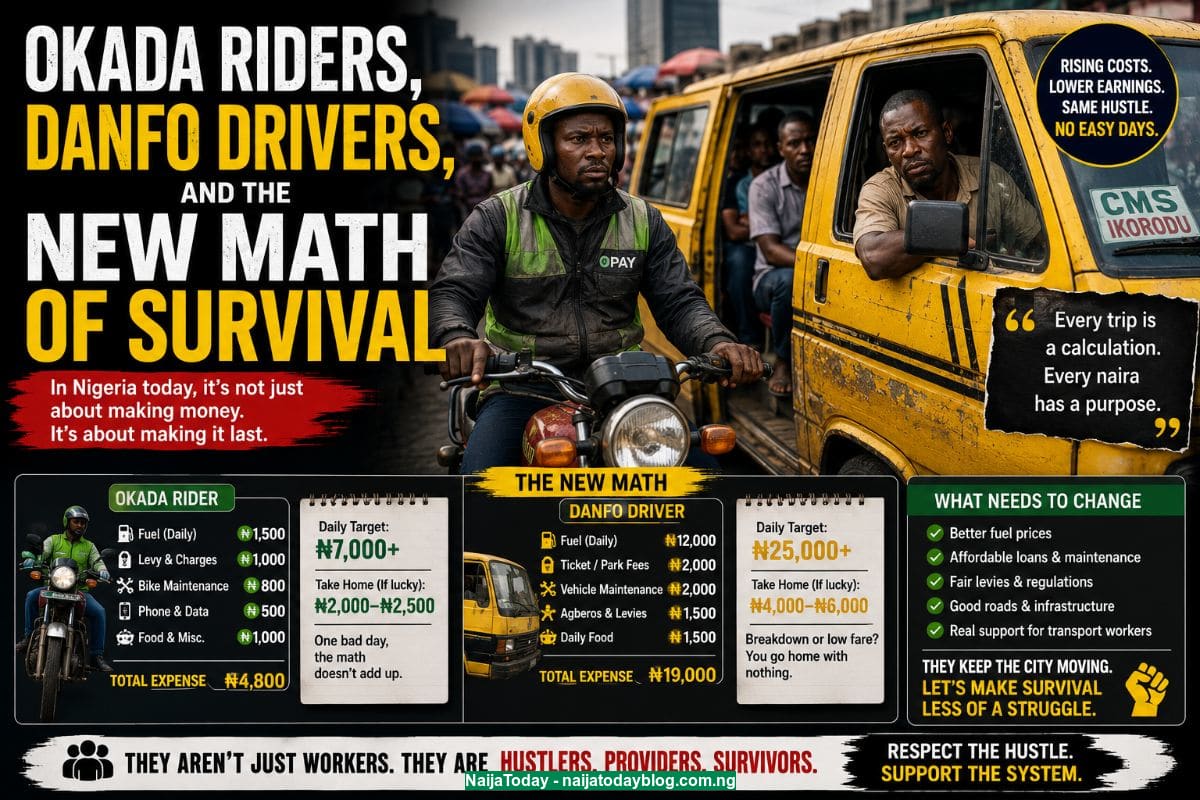
How Lagos commercial drivers, okada riders, and keke operators are recalculating fares and daily earnings as fuel costs keep climbing.
How does this story make you feel?
No account or sign-in needed. You can react instantly.
Share:
NaijaToday Desk
The NaijaToday newsroom
More Stories to Explore
More reporting selected from NaijaToday, based on topics and categories.