Everybody already knows Burna Boy,
Wizkid, and Tems. This is about who's coming for the throne next.
Afrobeats doesn't stand still, and neither does its audience. While the
established names keep filling stadiums and picking up Grammy nominations, a
new generation is quietly rewriting what the sound can be — inventing entire
subgenres, building fanbases from scratch on TikTok, and forcing the industry
to pay attention on their own terms. Here's who's genuinely moving right now,
not who was hot two years ago.
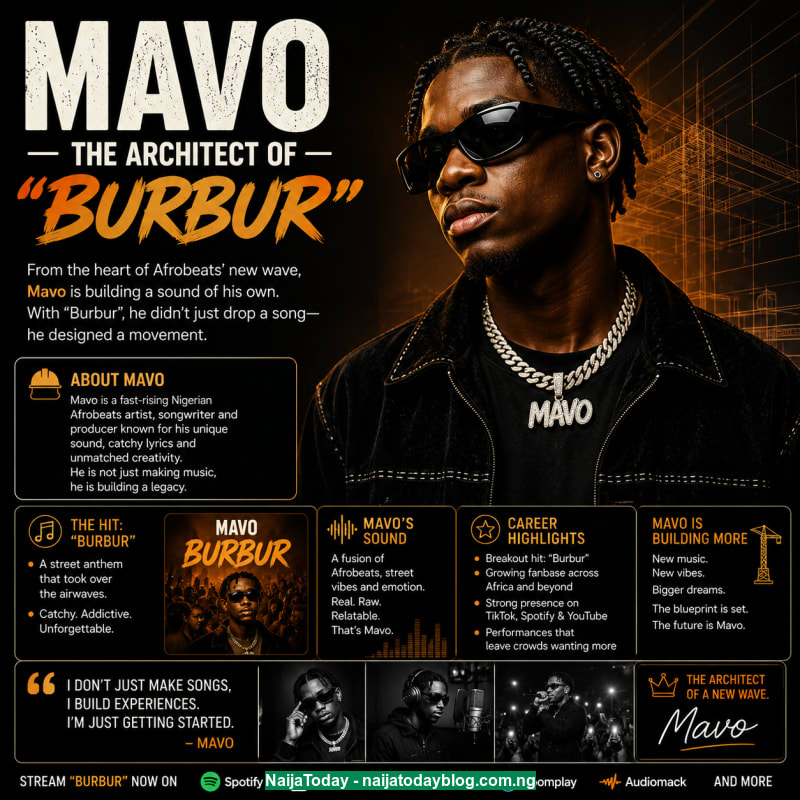
Mavo — The Architect of "Burbur"
If there's one name that defined the underground-to-mainstream pipeline over
the last year, it's Mavo. He didn't just make songs — he built an entire sound
and vocabulary around it, calling it "Burbur music," a fusion of
Afrobeats, rap, and street slang that spilled straight into everyday
conversation online. Tracks like SANKO and Shakabulizzy
turned into cultural moments rather than
just streaming numbers, and he's entering 2026 with real momentum behind him,
not hype built on a single viral clip.
oSHAMO — Leading the "Superfuji"
Movement
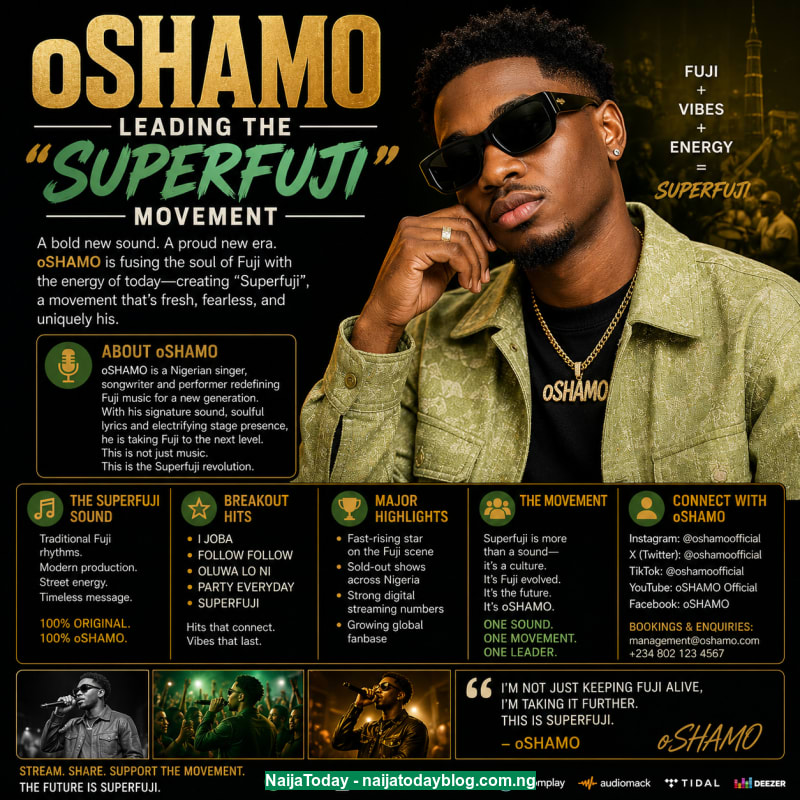
oSHAMO has spent the past year blending traditional Fuji vocals with the
high-octane energy of modern club production — a combination he's branded
"Superfuji." His breakout hit Life
of the Party became one of the defining
tracks of 2025, and the fusion feels less like a gimmick and more like a
genuine bridge between generations of Nigerian sound. He's a strong candidate
for the kind of crossover moment that turns a rising artist into a headline
name.
Champz
— 14 Years Old and Already Breaking Records
Yes, he's the son of an Afrobeats icon (Wizkid), but Champz isn't coasting on
the name. His debut EP landed at Number 1 on Apple Music Nigeria within hours
of release, and crossed a million Spotify streams in under a day — making him
the youngest Nigerian artist to pull off a chart-topping debut. His sound leans
into UK Grime and hip-hop influences, and his flow carries a confidence that
doesn't read like a teenager still figuring things out. Whatever comes next
from him is worth watching closely.

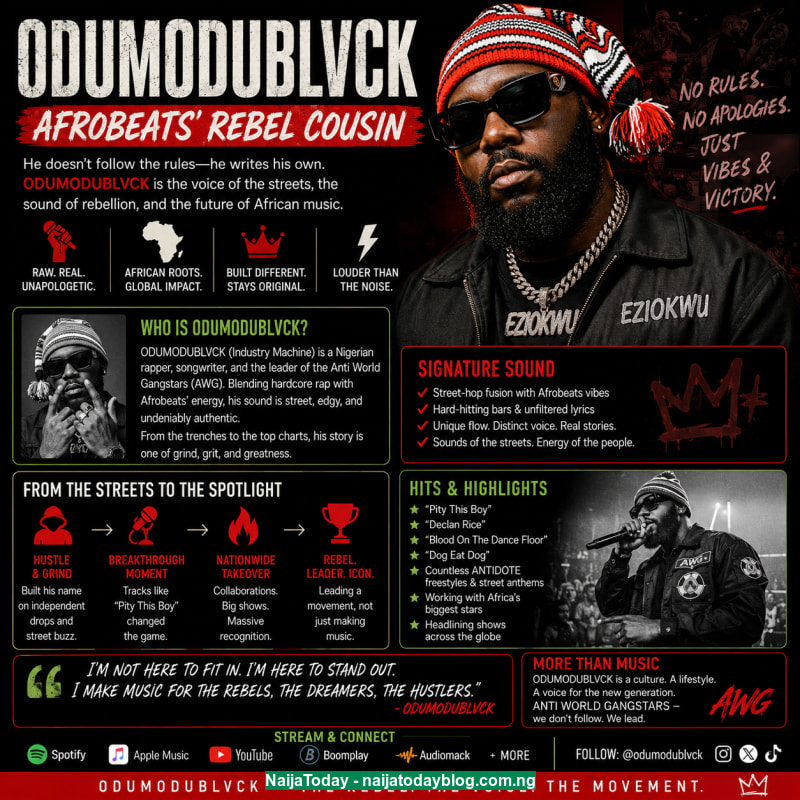
ODUMODUBLVCK — Afrobeats' Rebel Cousin
ODUMODUBLVCK doesn't sit neatly inside the genre — and that's exactly the
point. Blending hip-hop grit with Afrobeats bounce and heavy Nigerian street
influence, he's carved out a lane that feels raw and unapologetic, mixing viral
energy with lyrics that occasionally get genuinely political. He represents
where the genre's edges are expanding, rather than where its centre already
sits.
Juno — The Sound of After the Party
An R&B voice standing apart from the high-tempo tracks dominating most
playlists right now, Juno has built a following around what she calls
"slumber party" sessions — soft, sensual, expertly produced work that
functions as a deliberate counterpoint to club-ready Afrobeats. Her recent
collaboration RUM has pulled in wider attention, and industry
tastemakers have increasingly flagged her as one of the names to watch heading
deeper into the year.

Fola — Quietly Racking Up Real Numbers
Fola doesn't always dominate headlines, but the streaming numbers tell their
own story — north of half a billion Spotify streams and a consistent place in
Spotify Nigeria's Top Songs. He picked up Best African Act honours at the 2026
NXT Honors, which is the kind of recognition that tends to arrive after the
momentum is already real, not before.

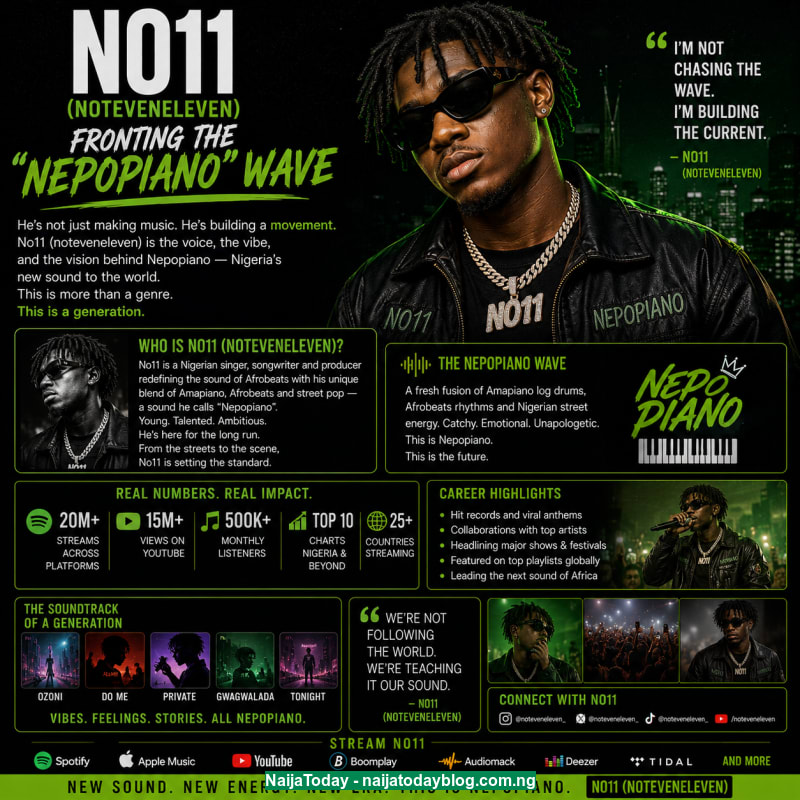
No11 (noteveneleven) — Fronting the
"Nepopiano" Wave
Representing Abuja's soft-life aesthetic with a sound blending Amapiano's
laid-back groove with Nigerian pop sensibilities, No11 is at the front of
what's being called the "Nepopiano" movement. It's a sound that feels
distinct from both the Lagos street-pop wave and the more polished Afropop
mainstream — worth paying attention to as its own lane rather than a footnote
to either.
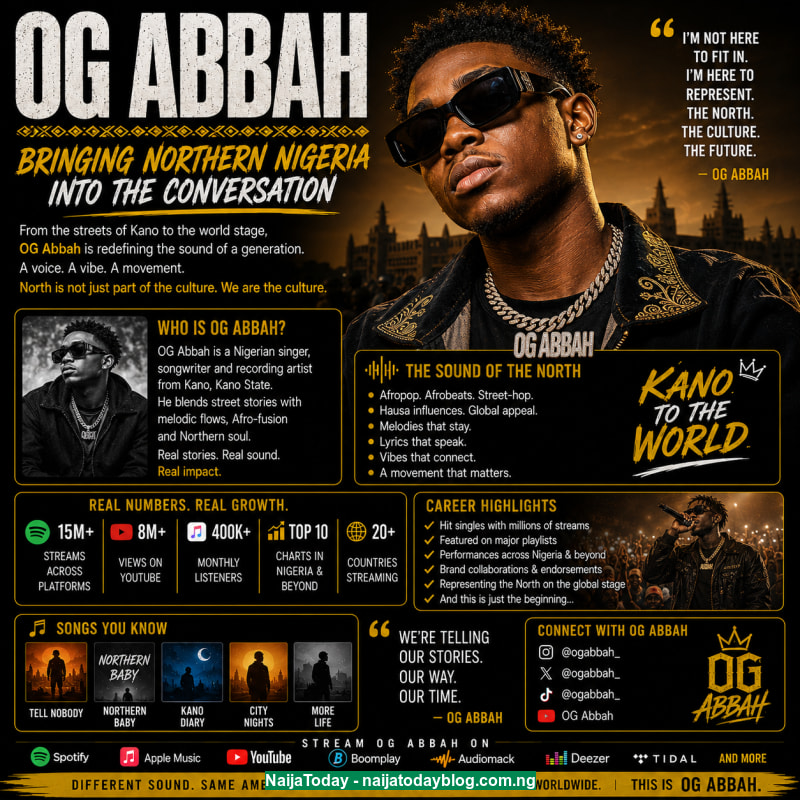
OG Abbah — Bringing Northern Nigeria Into the
Conversation
Afrobeats has long been dominated by Lagos and, to a lesser extent, Port
Harcourt and Abuja voices. OG Abbah is pushing Hausa-influenced sound and
Northern Nigerian energy into that broader conversation, with breakout tracks
like Wayyo Allah Na drawing genuine attention rather than novelty
interest. It's a reminder that the "next wave" isn't just about new
artists — it's also about new regions finally getting heard.
Toye — The Songwriter Stepping Into the
Spotlight
Toye has spent years building an independent catalogue and picking up writing
credits for bigger names in the industry — the kind of behind-the-scenes work
that rarely gets public credit. His own sound, which he calls
"Faajipolitan," blends fusion and R&B with real polish, and 2026
looks like the year he steps fully into his own spotlight rather than someone
else's.

What Ties Them Together
None of these artists sound alike, and that's the actual story here. Afrobeats
in 2026 isn't converging toward one dominant sound the way it sometimes has in
past cycles — it's splintering into distinct, confident subgenres, each with an
artist willing to name and own their lane rather than just occupy a trend.
That's usually the surest sign an industry is genuinely healthy rather than
just loud.
Keep an ear out. A year from now, at least a few of these names won't need an
introduction anymore.
Published on NaijaToday —
naijatodayblog.com.ng