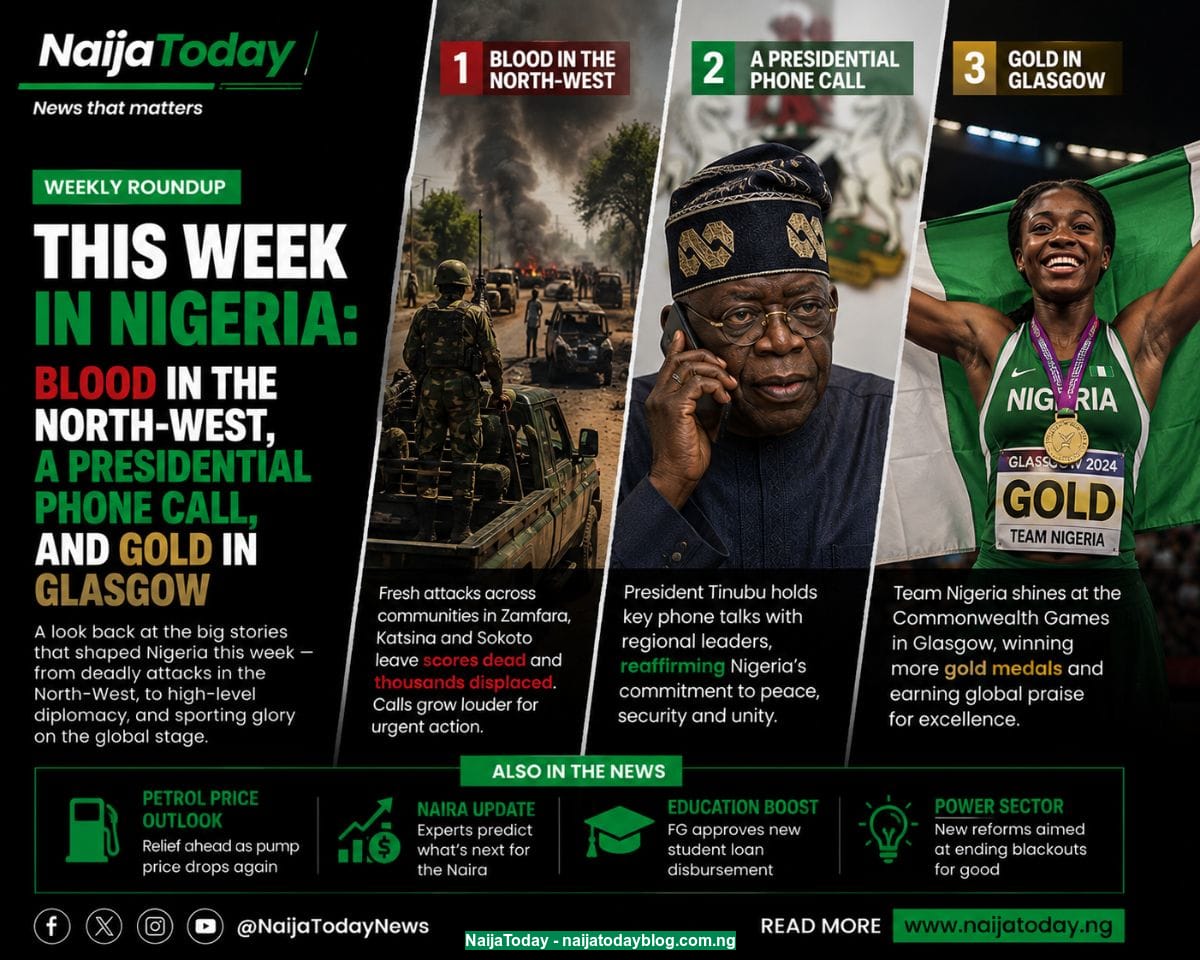
This Week In
Nigeria: Blood In The NorthWest, A Presidential Phone Call, And Gold In
Glasgow
August 3 – 7, 2026 | NaijaToday
SECURITY: Four States, One Bloody Week — Then A Rare Win
The week's security story reads like a map of Nigeria's northwest and
northcentral belt lighting up one community at a time.
It began over the weekend of August 1–2 in Zamfara State, where gunmen on
motorcycles struck Kasuwar Daji village in Kaura Namoda council just after
midnight. According to residents who spoke to AFP, the attackers first hit a
military outpost on the outskirts of town, seizing rifles and setting a patrol
vehicle ablaze, before sweeping into the village itself. Local resident Shehu
Abdullahi, whose 12yearold daughter was among those taken, said the gunmen
initially rounded up more than 100 people before releasing most of them,
ultimately holding onto 52 captives. That attack came barely a week after a
separate raid in the same state left at least 24 farmers dead.
Sokoto State had its own grim weekend. Gunmen stormed Lajinge village late on a
Saturday night, killing at least 12 people and making off with women and
children as captives, along with stolen livestock. Police spokesperson Ahmed
Rufai confirmed an investigation was underway. Days later, a second, larger
assault hit Sokoto and neighbouring Plateau communities: no fewer than 21
people were feared dead and 37 abducted, with the attackers razing two security
vehicles belonging to the Nigeria Police Force and the Sokoto State Community
Guard Corps. Rufai, briefing reporters again, said police who responded to a
distress call engaged the attackers directly and repelled them, though one
officer was killed in the exchange. He said the command had since intensified
operations in the area.
Southern Kaduna was hit hardest in raw numbers. Renewed attacks across Kaduna,
Sokoto and Benue states left no fewer than 56 people dead early in the week,
with roughly 30 of those killed in a single overnight assault on Naridon
community. Not far away, in Katsina, bandits killed one person and abducted 31
others from local communities — the latest in a string of incidents that has
become almost routine for residents there. Katsina State Governor Dikko Radda,
speaking at a wedding ceremony in Mashi over the weekend, called on residents
to "sustain their supplications" while insisting federal and state
governments were intensifying efforts to end the crisis. Meanwhile in Zamfara,
a separate attack targeting a military facility saw troops repel the assault
after reinforcements arrived, though a conflictfocused journalist alleged on
social media that four soldiers were killed and several wounded before the
attackers fled with an unspecified number of abducted residents — a claim the
Army had not officially confirmed as of the time of writing.
It wasn't only bad news, though. Troops of Sector 1 Joint Task Force Operation
Whirl Stroke, working with the Benue State Civil Protection Guard, carried out
an intelligenceled operation that neutralised two suspected terrorists and
rescued three kidnapped victims — a teacher, a spareparts dealer and a farmer,
all from KatsinaAla council — after tracking them across the River Yooyo into
Taraba State.
Then came Tuesday's biggest security headline of the year: the Presidency
announced that more than 300 Nigerians abducted in separate masskidnapping
incidents had been freed in a single coordinated operation, described as the
country's largest oneday rescue to date. Presidential adviser Bayo Onanuga
said 163 of those freed had been taken during a February attack on Woro
community in Kwara State, while the remaining 145 were abducted separately in
Niger State — all of them recovered from the Kainji Lake National Park forest
in Niger's New Bussa council area through what officials called a "coordinated,
intelligencedriven operation" involving the military, police, the DSS and
the National CounterTerrorism Centre. President Tinubu called the rescue proof
that his administration's investment in the armed forces was paying off.
The week closed on an even more personal note of relief in Ogun State. A
combined security team rescued all seven students of Gateway ICT Polytechnic,
Saapade, who had been kidnapped from Remo North council earlier in the week.
Governor Dapo Abiodun announced their safe recovery himself on Thursday
morning, thanking traditional rulers, community leaders and the polytechnic's
management for their patience throughout the operation, and linking the rescue
to what he called the "growing effectiveness of coordinated security operations"
under the current administration.
Reading between the lines: the numbers this week are hard to reconcile —
hundreds freed, dozens still missing, and fresh abductions reported even as the
celebrations over the 300plus rescue were still going on. Security remains the
single issue that touches every other story on this list, from Osun's election
to next year's budget conversations.
POLITICS: A Frozen Bank Account, An Embarrassed President, And A Phone Call
To Osun

If one story defined Nigerian politics this week, it was the fight over Osun
State's bank accounts — and how quickly it pulled the presidency itself into
the fray.
On Wednesday, the EFCC quietly obtained a court order freezing an Osun State
Government account at First Bank, placing a "Post No Debit"
restriction tied to an investigation — reportedly ongoing since March — into
the alleged mishandling of roughly N11 billion in Ecology Funds, Intervention
Funds and FAAC allocations. The timing could not have been more sensitive: Osun
votes for governor on August 15, with incumbent Ademola Adeleke of the Accord
Party facing the APC's Bola Oyebamiji. Nigerian Bar Association president Afam
Osigwe was among the lawyers who publicly questioned whether the EFCC even had
the legal standing to restrict a sitting state government's account without a
stronger judicial process, while the Accord Party went further, branding the
move "injustice, illegality, impunity and recklessness" in a
statement signed by its national leader, Chief Maxwell Mgbudem, and warning
that "the people have rejected" the APC in the state.
By Thursday, President Tinubu had stepped in personally. In a statement issued
from the State House and signed in his own name, he said he had only learned of
the freeze after the fact and was embarrassed not by the EFCC doing its job,
but by the timing of it. He directed the commission to immediately return to
court and vacate the order, arguing that any federal action so close to a
governorship election could create an impression of interference — regardless
of intent. Tinubu then placed a phone call to Governor Adeleke, the first
confirmed direct conversation between the two men since the controversy
erupted, to personally reassure him the restriction would be lifted before polls
open. The EFCC, responding to the backlash, clarified that only one specific
account under investigation had been affected, not the state's entire financial
operations.
The episode has also fed into a broader, more pointed political conversation.
In a widely shared opinion piece this week, commentator Yushau Shuaib
referenced a closeddoor meeting between Catholic bishops and the president in
which Cardinal John Onaiyekan reportedly suggested presidential aides were
shielding Tinubu from the full picture of Nigerians' suffering and presenting
an overly rosy one instead — with Shuaib arguing the Osun episode was legally
arguable but politically indefensible, and evidence that the president's inner
circle needs sharper political instincts ahead of 2027.
In a quieter but still notable development, Vice President Kashim Shettima
began a twoweek leave on Thursday — his first extended break since taking
office in May 2023 — which a statement from his office described as time set
aside for study, reflection and intellectual renewal to strengthen his capacity
for the work ahead.
Why it matters: Osun is a dress rehearsal. With the 2027 general election
cycle already forming in the background, how federal agencies handle
statelevel politics between now and then will shape how much trust either side
has heading into the bigger contest.
BUSINESS & ECONOMY: A Naira That Won't Move, And A Central Bank In A
Good Mood
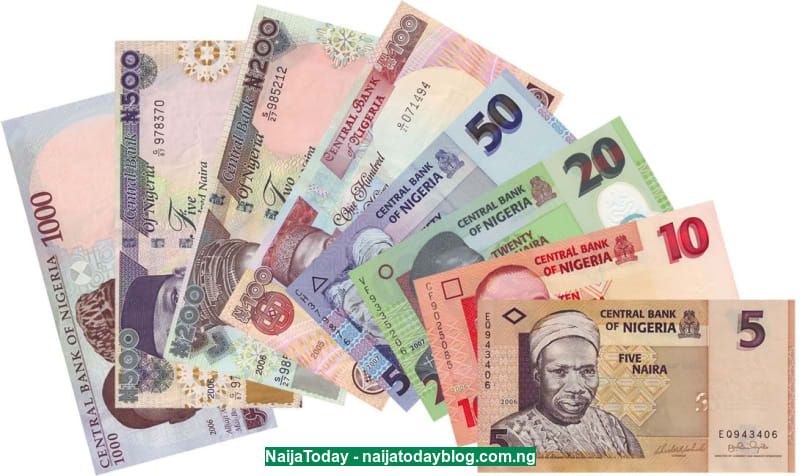
Currency traders had a quiet week — which, in Nigeria, is itself a story. The
naira closed trading around ₦1,368.22 to the dollar on the official Nigerian
Foreign Exchange Market, staying within the narrow ₦1,36x band it has held for
several sessions, according to CBN and marketaggregator data. On the parallel
market, the dollar changed hands near ₦1,405, putting the spread between the
two markets at roughly ₦37 — a gap analysts describe as evidence of continued
stability rather than stress in the system.
The Central Bank used the week to project real confidence about where things
are headed. Speaking at a CBN stakeholders' fair in Gombe, acting director of
corporate communications Hakama Sidi Ali said headline inflation eased from
15.93% in May to 15.91% in June, with both food and core inflation moderating
over the same period. She credited the trend to disciplined monetary
tightening, exchange rate unification and improved market transparency, and
revealed that Nigeria's foreign reserves have climbed to their highest level in
17 years, while the gap between the official exchange rate and Bureau de Change
rates has narrowed to below 2%. The apex bank also confirmed, in partnership
with the Financial Markets Dealers Association, the introduction of the
Nigerian Overnight Financing Rate — a new, marketbased benchmark for
shortterm funding meant to bring Nigeria's interbank lending closer to global
standards.
There was relief at the pump, too. Dangote Refinery cut its petrol price to
₦1,165 per litre and diesel to ₦1,570 this week, a reduction that should feed
through to transport and food logistics costs in the weeks ahead if it
holds.
The politics of the economy got its own airing as well. APC National Chairman
Nentawe Yilwatda used a colloquium marking his 58th birthday in Jos to defend
the administration's economic record, claiming Nigeria's GDP has grown from
below $300 billion to about $375 billion in two years, and arguing that growth
is now outpacing population growth while investor confidence and exports both
improve.
A number worth sitting with: independent trackers this year have put
Nigeria's GDP closer to $500 billion with growth around 4.4%, the fastest pace
in over a decade, alongside inflation that has roughly halved from its 2024
peak of 34%. The gap between competing GDP figures floating around this week is
a reminder to always check the source before sharing a statistic — but on the
general direction, official and independent data are telling a similar story of
a slow, real recovery.
SPORTS: Team Nigeria Closes Out Its Best Commonwealth Games In Two
Decades

While insecurity and politics dominated the front pages, Nigerian sport quietly
delivered one of the best weeks the country has had in years, as reaction to
Team Nigeria's performance at the Glasgow 2026 Commonwealth Games kept rolling
in.
Nigeria finished the Games with 24 medals overall — 10 gold, 7 silver and 7
bronze — good for seventh on the final table and, more importantly, the highest
ranking of any African nation, ahead of both South Africa (11th, with 28
medals) and Kenya (13th, with 12). It's Nigeria's best Commonwealth Games
finish in twenty years, even though the overall medal count was actually lower
than in some previous editions — a reflection of just how much more competitive
the Games have become.
The headline moment belonged to 20yearold Samuel Ogazi, who became the first
Nigerian in history to win Commonwealth Games gold in the men's 400m, crossing
the line in 44.25 seconds to hold off Trinidad and Tobago's Jereem Richards and
South Africa's Zakithi Nene. He wasn't the only one making history: Ezekiel
Nathaniel took gold in the men's 400m hurdles, and Chukwuebuka Enekwechi
claimed Nigeria's firstever Commonwealth title in the men's shot put. Goodness
Nwanchukwu successfully defended her women's discus title in the F4244/F6164
para category, and Kayinsola Ajayi ended a 20year wait for a Nigerian medal in
the men's 100m with bronze. Temitope Adeshina delivered Nigeria's first
Commonwealth Games high jump medal in more than seventy years, taking bronze in
the women's event.
Sprint hurdles star Tobi Amusan added another accolade to an already decorated
career, fighting through a knee injury to win bronze in the women's 100m
hurdles. Nigeria's relay squads also impressed: the mixed 4x400m team won
bronze in the event's Commonwealth Games debut, and the men's 4x100m team was
ultimately awarded bronze after a review overturned Canada's earlier
disqualification. Elsewhere on the medal table, silver went to Udodi Onwuzurike
in the men's 200m, Ruth Usoro in the women's long jump, Jessica Oji in the women's
shot put and weightlifter Ruth Nyong in the women's 48kg category, while Ella
Onojuvwevwo picked up bronze in the women's 400m before adding a second in the
mixed relay.
Team Nigeria sent 72 athletes — 34 men and 38 women — competing across eight
sporting categories including athletics, paraathletics, weightlifting, judo,
boxing, swimming, 3x3 basketball and track cycling. Australia topped the
overall medal table with 171 medals (70 gold), followed by England with 110 and
Canada in third. President Tinubu and the Athletics Federation of Nigeria have
continued publicly praising the team's performance in the days since the Games
wrapped, calling it a glimpse of the country's next generation of sporting
stars.
CULTURE & ENTERTAINMENT: A Musician's Visit To Grieving Benue, And
Nollywood's Busiest Month Yet
Away from politics and sport, one of the week's most talkedabout moments came
from the entertainment world — but it wasn't a red carpet.
Afrobeats veteran Innocent "2Baba" Idibia travelled to OtukpoNobi,
one of the Benue communities attacked by suspected armed herders in July, to
stand in solidarity with residents still grieving their losses. In a video
shared from the visit, he said the recurring violence in Benue has become too
much to keep ignoring and called for Nigerians to come together around a
deliberate, lasting solution rather than treating each attack as an isolated
tragedy. The visit followed two separate attacks in the state in July — one on
Akpachi and OtukpoNobi on the 12th that killed at least 10 people, and another
on EfeyiUgboju on the 28th that killed at least 15 more — both of which drew
condemnation from rights groups including Amnesty International. 2Baba's visit
is part of a wider pattern this year of Nigerian entertainers using their
platforms to speak on insecurity, following similar public statements from
other prominent artists earlier in 2026.
On a lighter note, Nollywood is gearing up for one of its busiest theatrical
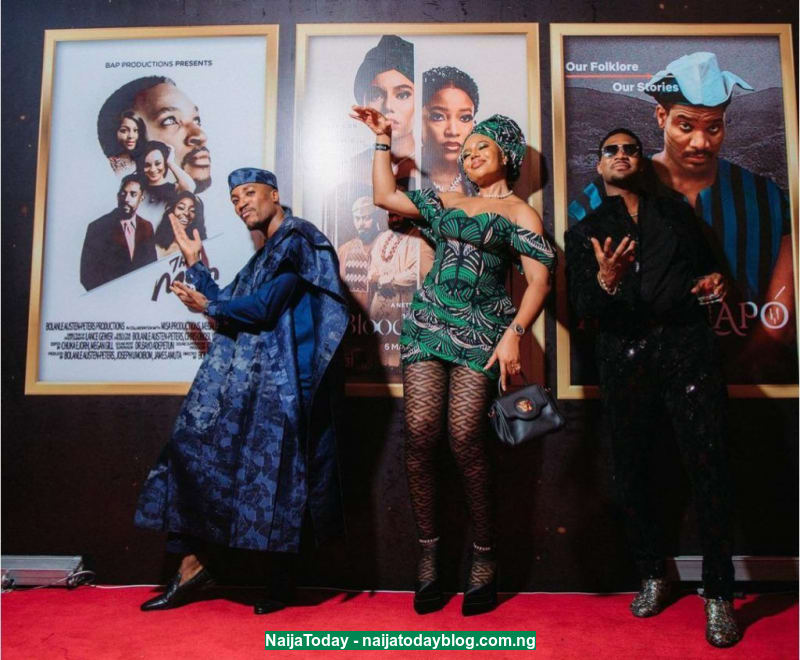
stretches of the year. Niyi Akinmolayan's "Colours of Fire" began
streaming on Netflix across Africa this week, becoming the fifth Nigerian
posttheatrical licensing deal the platform has signed in 2026 alone. It's the
calm before a genuinely packed release corridor: comedydrama "Sweet
16" opens in cinemas nationwide on August 14, followed a week later by
"Ikenga," "Aláhùn," "Abujaa" and "A Father's
Secret" all landing on August 21, before the historical epic "King
Kosoko: The Battle for Lagos" closes out the month on August 28. It's a
reminder that even in a heavy news week, Nigeria's creative industries — now
generating billions of naira annually between Nollywood and Afrobeats — keep
moving at their own pace.
That's your week in review. Follow NaijaToday for daily updates as these
stories — especially Osun's governorship race and the ongoing security response
across the north — continue to develop.