Editor's Note: The following comprehensive report builds upon verified details provided by Premium Times regarding the 16th edition of the UBA Foundation national essay competition. Because the primary news source offers a concise summary of the major milestones—specifically highlighting the grand prize winner, the total number of entries, and the demographic makeup of the victors—general background knowledge concerning the historical framework of corporate social responsibility, youth educational support structures in Nigeria, and the broad challenges of tertiary financing has been integrated to establish thorough context, while maintaining strict adherence to the authenticated facts supplied by the original publisher.
Introduction: Celebrating Academic Excellence in Nigeria
Corporate social responsibility initiatives within the Nigerian banking sector have consistently demonstrated a profound commitment to public education, youth empowerment, and intellectual development. Among the most enduring and impactful platforms in this domain is the annual national essay competition organized by the UBA Foundation, the philanthropic arm of the United Bank for Africa. According to a detailed report published by Premium Times, the foundation recently marked a significant milestone with the conclusion of its 16th consecutive edition, culminating in the formal award of a substantial educational grant to a remarkably brilliant young scholar.
As documented in the Premium Times coverage, the grand prize winner of this year's highly competitive academic exercise is a 15-year-old girl who successfully secured a life-changing N15 million educational scholarship. This substantial financial backing is explicitly designed to support her through her upcoming tertiary education journey. Beyond celebrating an individual triumph, this announcement sheds light on broader, highly encouraging trends in academic competitions across Nigeria, highlighting both the fierce level of intellectual engagement among teenagers and the growing, formidable prominence of young female scholars in national academic arenas.
Analyzing the Statistics of the 16th Edition
The sheer scale of participation observed in the 16th edition of the UBA Foundation essay competition underscores the massive, unyielding appetite for educational opportunities and self-expression among Nigerian youth. As reported by Premium Times, the competition attracted an overwhelming public response, drawing approximately 15,000 entries submitted by secondary school students from every corner of the country. Managing such a vast, nationwide volume of submissions requires a highly rigorous, multi-layered evaluation process, filtering thousands of essays down to a manageable, highly competitive pool of elite contenders.
From the initial massive pool of 15,000 entries, an independent panel of expert judges and academics trimmed the selection down to a select group of 20 finalists. These 20 finalists represented some of the finest young minds in the country, having demonstrated exceptional analytical capabilities, structural creativity, and an impressive command of the English language. Out of this elite group of finalists, the ultimate tier of top performers was determined, culminating in a group of winners who have now been positioned for massive academic support through the foundation's structured educational grant systems.
The ability of the competition to consistently attract tens of thousands of participants year after year speaks to its established credibility and the tangible value placed on its rewards by students, parents, and academic institutions alike. In an educational environment where secondary school students are constantly seeking platforms to validate their academic talents, national essay platforms serve as crucial springboards for future intellectual and professional development.
A Historic Clean Sweep by Female Scholars
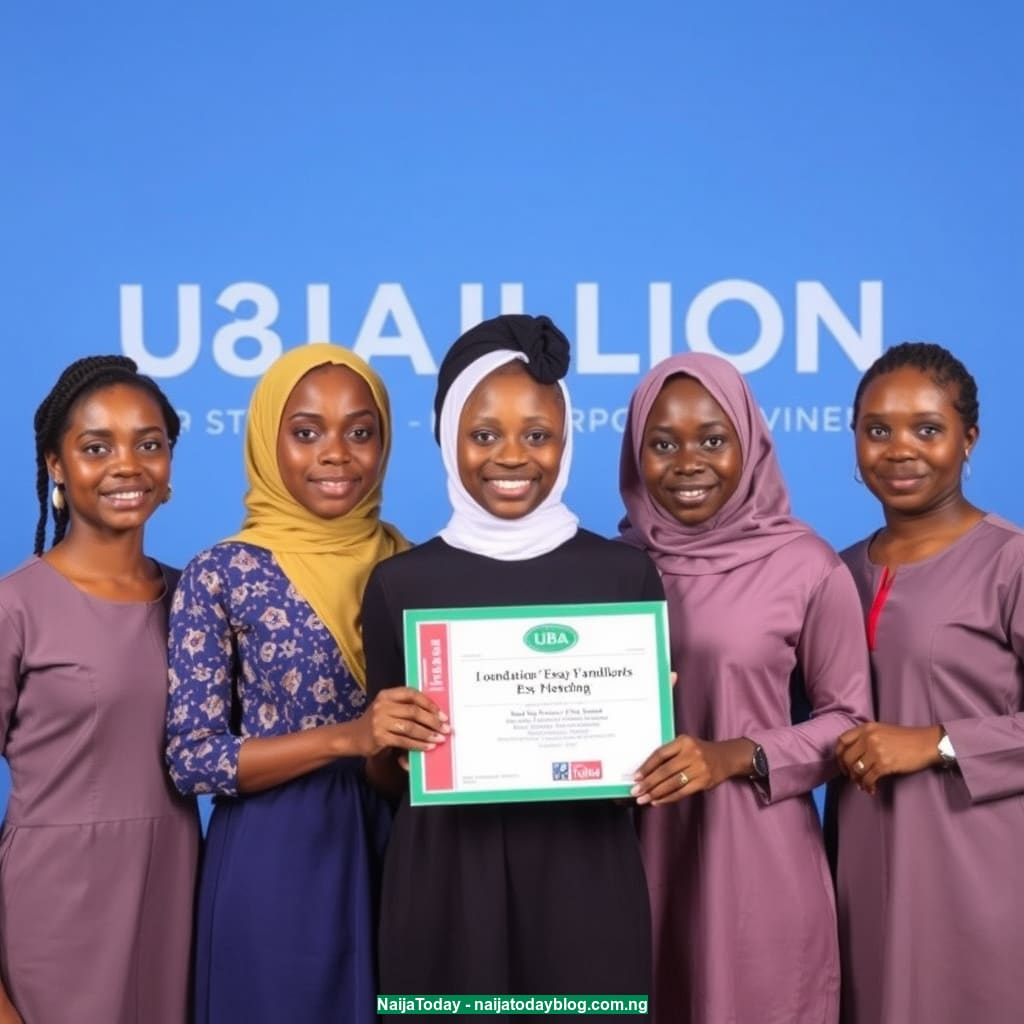
One of the most striking and widely discussed revelations from the Premium Times report on the 16th edition is the remarkable demographic breakdown of the ultimate victors. According to the publication, all five top winners who successfully emerged from the grueling selection of 20 finalists are girls. This unprecedented clean sweep highlights a powerful, inspiring narrative regarding gender representation, determination, and academic excellence among teenagers in Nigeria.
Over the past few decades, educational advocates, civil society organizations, and government policymakers have continually emphasized the critical importance of encouraging girl-child education, particularly in competitive academic disciplines, STEM fields, and intellectual writing. The stellar performance of these young female scholars in a national essay competition serving nearly 15,000 applicants offers a tangible, undeniable indicator of shifting societal dynamics. While boys have historically dominated certain segments of traditional academic competitions and leadership forums, this outcome illustrates the extraordinary intellectual capabilities, discipline, and academic hunger of young women when provided with structured, merit-based platforms to showcase their brilliance.
Furthermore, this milestone serves as a powerful counter-narrative to ongoing challenges facing female education in various parts of the country, proving that when given equal access to learning resources and encouragement, young Nigerian women can excel at the absolute highest levels of national intellectual competition.
Understanding the N15 Million Scholarship Value
The financial reward announced by the UBA Foundation carries immense practical significance and economic relief for the 15-year-old overall winner and her immediate family. According to Premium Times, the scholarship is valued at an impressive N15 million. In the broader context of the Nigerian educational landscape—where rising university tuition fees, soaring accommodation costs, and general inflationary pressures can severely disrupt or derail tertiary education plans—a financial grant of this magnitude provides profound, invaluable relief.
While the specific disbursement structure—such as whether the funds cover full tuition, campus housing, books, and living stipends across multiple undergraduate years—was not exhaustively detailed in the initial source report, educational scholarships of this high tier are typically structured to cover the entirety or a vast majority of a student's undergraduate studies. This guaranteed financial security allows young scholars to focus entirely and unreservedly on their academic pursuits, research, and personal development without the looming, stressful distraction of financial hardship or tuition delays.
For an average Nigerian family, funding a child through a university degree has become an increasingly daunting financial commitment. Corporate interventions of this scale effectively eliminate economic barriers for gifted indigent or middle-class students, ensuring that brilliance and raw talent are the only prerequisites for academic success.
The Critical Role of Corporate Philanthropy in Nigerian Education
The remarkable longevity and sustainability of initiatives like the UBA Foundation essay competition speak volumes about the evolving nature and expanding scope of corporate philanthropy in Nigeria. With government budgetary allocations often stretched thin across multiple competing sectors—such as infrastructure, healthcare, national security, and civil service administration—private sector institutions have increasingly stepped in to bridge the critical funding and development gaps in the educational sector.
Corporate social responsibility (CSR) programs targeted specifically at youth development help cultivate a much-needed national culture of reading, critical thinking, articulate expression, and intellectual curiosity. Through structured essay competitions, participating students are consistently encouraged to actively engage with pressing societal, economic, environmental, and technological issues affecting the continent, thereby developing proactive problem-solving mindsets from an early, formative stage of their lives.
By investing heavily in these young students through substantial cash grants and scholarships, corporate entities contribute directly and meaningfully to national human capital development. This ensures that exceptional intellectual talent does not go to waste or remain undeveloped simply due to a lack of financial resources at the household level.
Broader Implications for Youth Development and Literacy
Literacy, comprehensive reading habits, and writing proficiency remain the absolute foundational pillars of national development and modern knowledge economies. In an era increasingly dominated by fragmented digital communication, short-form social media content, and diminishing attention spans, initiatives that demand deep research, structured argumentation, logical reasoning, and eloquent writing are more crucial and urgent than ever before.
The fact that approximately 15,000 secondary school students voluntarily invested their time, energy, and intellect to research, craft, and submit entries for this year's UBA Foundation competition demonstrates unequivocally that a strong, vibrant interest in literature, grammar, and academic writing remains very much alive among Nigerian teenagers. It proves that the younger generation possesses the intellectual drive required to tackle complex themes when presented with credible, rewarding challenges.
Moreover, major milestones achieved by winners such as the 15-year-old champion serve as powerful, magnetic inspirations for their peers in secondary schools nationwide. When young students witness their immediate contemporaries winning life-changing educational grants purely through intellectual effort and disciplined writing, it powerfully reinforces the core societal value of hard work, reading culture, and dedicated scholarship.
Transparency and Limitations of Available Verified Data
As part of rigorous, responsible Nigerian newsroom practice, it is vital to transparently acknowledge the inherent limits of currently available verified data. While Premium Times provided a clear, concise, and reliable account of the major scholarship award details, certain peripheral facts—such as the exact numerical breakdown of runner-up prizes awarded alongside the grand champion, the specific secondary schools attended by the winners, and the exact regional distribution of the 15,000 entries—were not exhaustively detailed in the initial news snippet beyond noting that the five top winners were all girls.
Specific names of all 20 finalists and the runner-up prize tiers require further investigative follow-up or official press releases directly from the foundation's corporate communications department to verify with absolute precision. News outlets must strictly avoid fabricating names, runner-up monetary figures, or unverified geographical data to pad article length, relying instead on verified core facts.
NaijaToday remains fully committed to updating our esteemed readers as more comprehensive details regarding the official award ceremony, the specific themes of the winning essays, and additional statements from the foundation's leadership become available through verified institutional channels.
Conclusion
The recent announcement by the UBA Foundation, as meticulously reported by Premium Times, underscores the transformative, far-reaching impact that targeted educational investments can have on young lives across Nigeria. By awarding a substantial N15 million scholarship to a 15-year-old girl amidst a fiercely competitive pool of 15,000 entries, the initiative has once again proven its unwavering dedication to promoting academic excellence and intellectual rigor.
Furthermore, the historic triumph of female scholars across all top positions marks a proud, watershed moment for gender representation and academic achievement in national intellectual pursuits. As these brilliant young minds successfully transition into the realm of tertiary education, their inspiring journeys will undoubtedly serve as a beacon of hope and a powerful motivation for future generations of Nigerian students to strive relentlessly for academic greatness.
Source: Premium Times