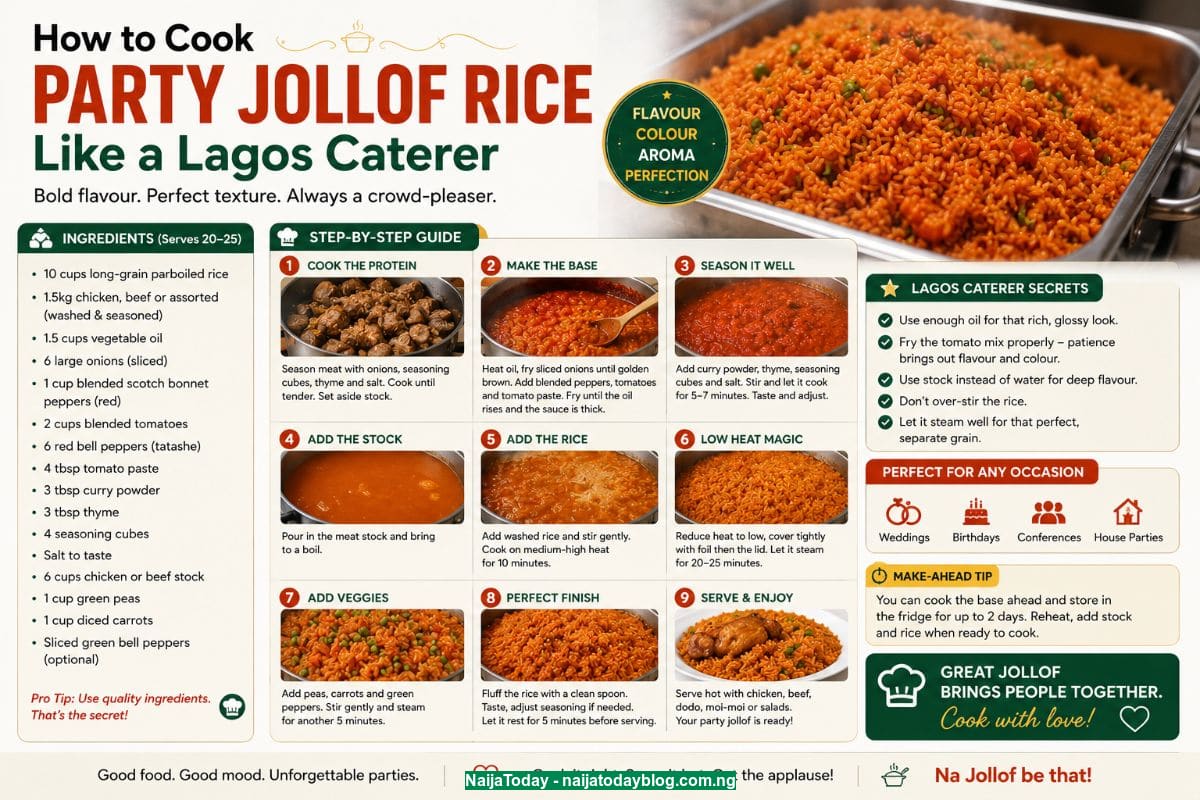
If you've ever attended a Nigerian wedding, birthday celebration, naming ceremony, or weekend owambe in Lagos, there's one dish everyone judges before anything else—the jollof rice.
Guests may forgive small portions of meat or a long queue at the buffet, but they rarely forget bad jollof rice. In fact, conversations about the food often continue long after the party is over.
"The rice was smoky."
"It tasted just like wedding jollof."
"Who was the caterer?"
That's the reaction every home cook hopes for.
The truth is, party jollof rice isn't made with secret ingredients that only professional caterers know. What separates ordinary jollof from unforgettable party jollof is technique, patience, heat control, and proper seasoning.
Many people follow recipes correctly but still end up with rice that's pale, soggy, or lacking that rich smoky flavor Nigerians love.
In this guide, you'll learn how Lagos caterers prepare party jollof rice that looks beautiful, tastes rich, and keeps guests coming back for second and third servings.
What Makes Party Jollof Different?
Regular home jollof and party jollof use almost the same ingredients.
The difference lies in how they're cooked.
Professional caterers spend more time developing the tomato sauce before the rice goes in. They carefully control moisture, allow the flavors to deepen, and intentionally create the famous smoky taste that people associate with Nigerian parties.
Party jollof usually has:
A deeper red color.
Rich tomato flavor.
Smoky aroma.
Firm but soft grains of rice.
Balanced seasoning.
No excess water.
Slight caramelization at the bottom of the pot.
These are the details that make all the difference.
Ingredients You'll Need
This recipe serves approximately 8 to 10 people.
Rice
4 cups long-grain parboiled rice
Tomato Base
8–10 fresh tomatoes
4–5 red bell peppers (tatashe)
2–3 Scotch bonnet peppers (ata rodo)
2 large onions
Cooking Ingredients
½ cup vegetable oil (or a mixture of vegetable and palm oil)
3–4 tablespoons tomato paste
3–4 cups chicken or beef stock
2 seasoning cubes
1 tablespoon curry powder
1 tablespoon thyme
1 bay leaf
Salt to taste
Optional additions include garlic, ginger, white pepper, paprika, and butter for extra depth of flavor.
Step One: Prepare the Pepper Mix
Wash the tomatoes, bell peppers, Scotch bonnets, and one onion thoroughly.
Blend everything until smooth.
Some caterers remove excess water from fresh tomatoes before blending.
Others simply allow the blended mixture to cook for longer.
Either method works, provided you eventually reduce the moisture properly.
A watery pepper mix almost always produces watery jollof rice.
Step Two: Wash and Parboil the Rice
Although some modern recipes skip parboiling, many experienced Nigerian caterers still prefer this method.
Wash the rice thoroughly until the water becomes almost clear.
Parboil it for about 5 to 7 minutes.
Drain immediately and rinse lightly.
The rice should not be fully cooked at this stage.
It only needs to soften slightly before finishing inside the tomato sauce.
Parboiling reduces the chances of sticky or mushy rice later.
Step Three: Build a Rich Tomato Sauce
This is where great jollof rice begins.
Heat your cooking oil in a large pot.
Add sliced onions and fry until fragrant.
Next, add the tomato paste.
This step is often overlooked by beginners.
Allow the tomato paste to fry for about 3 to 5 minutes.
You'll notice the color becoming darker and the raw tomato smell disappearing.
Only then should you pour in the blended pepper mixture.
Don't Rush the Sauce
This is perhaps the biggest secret behind party jollof.
Many people become impatient and add rice too early.
Professional caterers don't.
Allow the sauce to simmer over medium heat until most of the liquid evaporates.
As the sauce cooks, several things happen:
Water disappears.
The color becomes deeper.
The flavor becomes richer.
Oil begins separating from the sauce.
Depending on the quantity you're cooking, this process can take 20 to 30 minutes or even longer.
If your sauce still looks watery, it's not ready.
Patience here pays off later.
Season Before Adding the Rice
Once the sauce has reduced properly, add your seasonings.
Include:
Curry powder
Thyme
Bay leaf
Seasoning cubes
Salt
Now taste the sauce.
It should taste slightly stronger than you expect the finished rice to taste.
Remember that rice absorbs seasoning during cooking.
If the sauce tastes bland now, the finished jollof will almost certainly be bland too.
Many experienced caterers also add a little white pepper or paprika at this stage for additional depth.
Add the Stock Gradually
Chicken or beef stock gives party jollof much of its rich flavor.
Pour enough stock into the sauce to cook the rice without flooding the pot.
One common mistake is adding too much liquid.
Too much stock produces soggy rice.
Too little leaves the rice undercooked.
It's better to start with less and add small amounts if necessary during cooking.
Add the Rice
Pour the parboiled rice into the sauce.
Stir gently until every grain is coated.
The rice should sit comfortably inside the sauce—not float in liquid.
Cover the pot tightly.
Many Lagos caterers place aluminum foil beneath the lid before covering the pot.
This traps steam inside and helps the rice cook evenly.
Cook over low heat.
Avoid opening the pot every few minutes.
Every time the lid is lifted, valuable steam escapes.
Let Steam Do Most of the Work
One mistake beginners often make is stirring continuously.
Resist the temptation.
Allow the steam to cook the rice naturally.
Check occasionally to ensure the bottom isn't drying out excessively.
If necessary, sprinkle in a little more stock or hot water.
Never pour cold water into cooking jollof rice.
Cold water interrupts the cooking process and can affect texture.
The Secret Behind the Smoky Flavor
Ask anyone why Lagos party jollof tastes different, and they'll probably mention one word:
Smoke.
That famous smoky aroma usually comes from what's known locally as bottom pot or kanzo.
Professional caterers intentionally allow a thin layer of rice at the bottom of the pot to caramelize slightly.
The key word is slightly.
Burning the rice isn't the goal.
Creating gentle caramelization is.
Some caterers achieve this by:
Increasing the heat during the final few minutes.
Finishing the pot over firewood.
Using charcoal cooking methods.
Allowing controlled bottom-pot formation.
If you're cooking at home with gas or an electric cooker, increase the heat only briefly during the last five minutes.
Stay nearby.
A few extra minutes can turn delicious smoky rice into burnt rice.
Why Many Lagos Caterers Prefer Firewood
One reason party jollof served at weddings tastes different is the cooking equipment.
Large caterers often prepare rice using:
Firewood
Charcoal
Industrial gas burners
Firewood naturally produces light smoke that infuses the rice with additional flavor.
While most people cooking at home won't have access to firewood, careful heat management can produce surprisingly similar results.
Common Mistakes That Ruin Party Jollof
Even experienced cooks sometimes make avoidable errors.
Some of the biggest include:
Adding Too Much Water
This remains the most common reason jollof becomes soft and soggy.
Always add liquid gradually.
Undercooking the Tomato Sauce
Fresh tomatoes contain plenty of water.
If the sauce hasn't reduced properly, your rice will likely become watery.
Over-Stirring
Frequent stirring breaks the rice grains and creates a sticky texture.
Gentle stirring is enough.
Using Too Little Seasoning
Rice absorbs flavor quickly.
Always season the sauce well before adding the rice.
Cooking on High Heat Throughout
High heat may cook the bottom while leaving the top undercooked.
Low, steady heat produces the best results.
What to Serve with Party Jollof
A proper Nigerian party rarely serves jollof rice alone.
Popular side dishes include:
Fried plantain (dodo)
Moin-moin
Coleslaw
Grilled chicken
Fried chicken
Turkey
Beef
Goat meat
Fried fish
Peppered gizzard
Peppered turkey
Salad
Many Lagos caterers also serve a chilled soft drink or fresh fruit juice alongside the meal.
Can You Cook Party Jollof for Large Crowds?
Absolutely.
One advantage of party jollof is that the recipe scales well.
Whether you're cooking for:
A birthday party
Wedding reception
Naming ceremony
Church program
Graduation celebration
Family reunion
the same principles apply.
The only adjustments involve increasing ingredient quantities while maintaining the same cooking techniques.
Large quantities simply require larger cooking pots and a little more patience.
Storage and Reheating Tips
Party jollof often tastes even better the next day.
Allow leftovers to cool completely before refrigerating.
Store them in airtight containers.
When reheating:
Sprinkle a little stock or water over the rice.
Cover while reheating.
Heat gently to avoid drying out the rice.
Avoid microwaving uncovered rice for extended periods, as it can become hard.
Properly stored jollof rice can remain fresh in the refrigerator for several days.
Final Thoughts
Great party jollof rice isn't about luck—it's about mastering a few important techniques and giving each stage of the cooking process the attention it deserves. From patiently reducing the tomato sauce to controlling the amount of liquid and creating that signature smoky bottom pot, every step contributes to the rich flavor that guests remember long after the party is over.
According to current market prices across major Nigerian markets as of mid-2026, preparing this recipe for 8–10 people will typically cost between ₦28,000 and ₦38,000, depending on where you shop and whether you're using chicken stock, beef stock, or adding proteins like chicken, turkey, or gizzard. Prices are generally lower in major open markets than in supermarkets, and buying ingredients such as rice, tomatoes, peppers, and cooking oil in bulk can further reduce your overall cost.
Whether you're cooking for a family gathering, birthday, naming ceremony, or weekend owambe, taking your time with the sauce and cooking the rice patiently will always produce better results than rushing the process. Once you master these simple techniques, you'll be able to recreate that authentic Lagos caterer-style party jollof that keeps guests asking for another serving—and maybe even your recipe.