What once seemed like science fiction is now becoming reality, and the pace of innovation continues to accelerate.
In 2026, AI is no longer a futuristic concept reserved for technology experts.
It has become an essential tool for businesses, governments, educators, healthcare professionals, and everyday individuals. As the technology evolves, it raises exciting opportunities as well as important questions about privacy, employment, ethics, and the future of humanity.
This article explores how artificial intelligence is changing the world, the benefits it offers, the challenges it presents, and what the future may hold.
What Is Artificial Intelligence?
Artificial Intelligence refers to computer systems that can perform tasks that typically require human intelligence.
These tasks include learning, reasoning, problem-solving, understanding language, recognizing images, and making decisions.
AI systems are trained using large amounts of data and sophisticated algorithms. Through machine learning and deep learning technologies, these systems improve their performance over time without requiring explicit programming for every task.
Popular examples of AI include:
Virtual assistants such as Siri and Google Assistant
Chatbots and customer service agents
Recommendation systems on Netflix and YouTube
Facial recognition technology
Self-driving vehicles
AI-powered content creation tools
The increasing accessibility of AI has made it one of the fastest-growing technological developments in history.
AI in Healthcare: Saving Lives and Improving Care
Healthcare is among the industries experiencing the most significant impact from artificial intelligence.
Medical professionals now use AI tools to analyze patient records, detect diseases earlier, and recommend treatment options. AI-powered imaging systems can identify abnormalities in X-rays, MRIs, and CT scans with remarkable accuracy.
Researchers are also using AI to accelerate drug discovery. Traditional pharmaceutical development can take years, but AI can analyze millions of data points in a fraction of the time, helping scientists identify promising treatments more quickly.
Remote healthcare services have also improved thanks to AI-powered diagnostic tools. Patients can receive preliminary assessments and health recommendations through digital platforms, making healthcare more accessible, especially in underserved regions.
For countries like Nigeria, AI presents an opportunity to bridge healthcare gaps and improve medical services for millions of people.
The Transformation of Education
Artificial intelligence is reshaping education by making learning more personalized and effective.
AI-powered educational platforms can adapt to a student's learning style, strengths, and weaknesses. Instead of following a one-size-fits-all approach, students receive customized lessons that help them progress at their own pace.
Teachers are benefiting as well. AI tools assist with grading, lesson planning, and administrative tasks, allowing educators to focus more on teaching and student engagement.
Language learning applications, virtual tutors, and interactive learning environments have made education more accessible than ever before.
As internet access expands globally, AI-driven education could help reduce educational inequalities and provide learning opportunities to people regardless of their location.
AI and the Future of Work
One of the most debated aspects of artificial intelligence is its impact on employment.
Many routine and repetitive tasks can now be automated using AI systems.
Industries such as manufacturing, logistics, banking, and customer service are increasingly adopting automation technologies.
While some jobs may disappear, experts believe that AI will also create new opportunities.
Emerging roles in AI development, data science, cybersecurity, digital marketing, and technology management are expected to grow significantly.
Workers who embrace lifelong learning and acquire digital skills will be better positioned to thrive in the AI-driven economy.
Rather than replacing humans entirely, AI is likely to augment human capabilities by handling repetitive tasks while allowing people to focus on creativity, strategy, and complex decision-making.
AI in Business and Entrepreneurship
Businesses around the world are leveraging AI to improve efficiency, reduce costs, and enhance customer experiences.
AI-powered analytics help companies understand consumer behavior, predict market trends, and make data-driven decisions. Customer service chatbots provide instant support, while marketing tools generate personalized content and advertising campaigns.
Entrepreneurs are particularly benefiting from affordable AI solutions.
Small businesses can now access advanced tools that were previously available only to large corporations.
From automated bookkeeping to intelligent inventory management, AI is helping startups compete more effectively in the global marketplace.
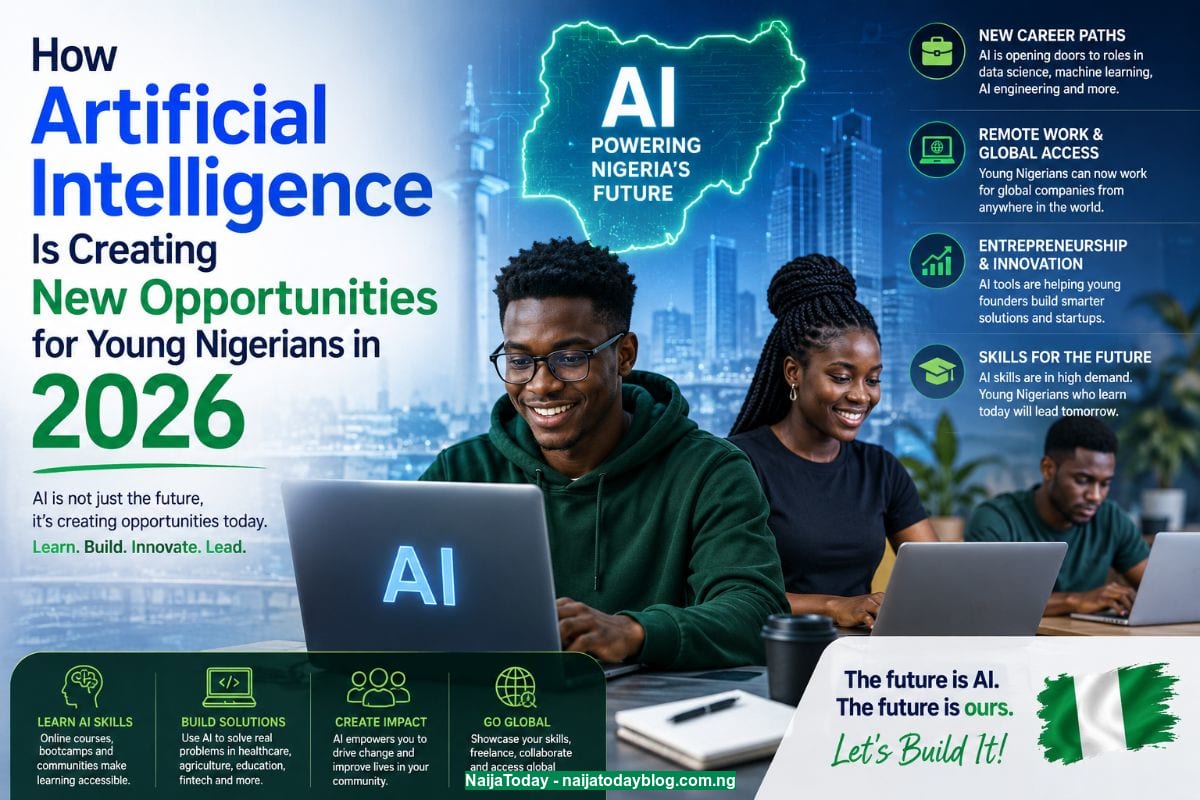
For African entrepreneurs, AI offers unprecedented opportunities to solve local challenges and create innovative products and services.
The Rise of Generative AI
One of the biggest technological breakthroughs in recent years has been the emergence of generative AI.
Generative AI systems can create text, images, music, videos, and even computer code.
These tools are revolutionizing content creation across industries.
Writers use AI to generate ideas and drafts. Designers create visual content more quickly. Developers use AI-assisted coding tools to improve productivity.
Businesses automate content production while maintaining quality.
However, the rapid growth of generative AI has also sparked concerns regarding misinformation, copyright issues, and authenticity.
As the technology continues to improve, governments and organizations are working to establish guidelines that promote responsible use.
AI and Cybersecurity
As digital threats become more sophisticated, artificial intelligence is playing an increasingly important role in cybersecurity.
AI systems can detect unusual network activity, identify potential security breaches, and respond to threats faster than traditional methods.
Organizations use AI to monitor large volumes of data and recognize patterns that may indicate cyberattacks.
At the same time, cybercriminals are also leveraging AI to develop more advanced attack methods. This ongoing technological battle highlights the importance of continuous innovation in digital security.
Protecting sensitive information and maintaining trust in digital systems will remain critical priorities in the AI era.
Ethical Challenges and Concerns
Despite its many advantages, artificial intelligence presents several ethical challenges.
Privacy remains a major concern. AI systems often require vast amounts of data, raising questions about how personal information is collected, stored, and used.
Bias in AI algorithms is another issue. If training data contains biases, AI systems may produce unfair or discriminatory outcomes.
There are also concerns about misinformation.
AI-generated content can be used to create realistic fake images, videos, and news stories, making it more difficult for people to distinguish fact from fiction.
Governments, technology companies, and researchers are working together to establish ethical standards that ensure AI is developed and used responsibly.
Transparency, accountability, and fairness will be essential as AI becomes more integrated into society.
AI and Developing Countries
Artificial intelligence has the potential to accelerate development in emerging economies.
In agriculture, AI can help farmers predict weather conditions, monitor crop health, and optimize yields. In finance, AI-powered platforms can expand access to banking services for underserved populations.
Transportation systems can become more efficient, while smart infrastructure can improve urban planning and resource management.
For countries across Africa, embracing AI could contribute significantly to economic growth, job creation, and technological advancement.
However, achieving these benefits will require investments in digital infrastructure, education, and innovation ecosystems.
What the Future Holds
The future of artificial intelligence is both exciting and uncertain.
Experts predict that AI will continue to advance rapidly, influencing industries ranging from healthcare and education to entertainment and transportation.
Future AI systems may become even more capable of understanding human language, solving complex problems, and collaborating with people in meaningful ways.
Emerging technologies such as robotics, quantum computing, and advanced machine learning could further accelerate AI development.
While challenges remain, the potential benefits are enormous.
The key will be ensuring that AI is developed in ways that serve humanity's best interests.
Conclusion
Artificial intelligence is no longer a distant possibility—it is a present-day reality that is transforming the world at an unprecedented pace. From improving healthcare and education to driving business innovation and economic growth, AI is reshaping how people live and work.
As society navigates the opportunities and challenges of this technological revolution, responsible development and ethical governance will be essential. Individuals, businesses, and governments must work together to ensure that AI remains a force for positive change.
The AI revolution has only just begun, and its impact will likely define the future of humanity for generations to come. Understanding this technology today is not merely an advantage—it is becoming a necessity in an increasingly digital world.