Federal Government Recruitment in Nigeria: How the Process Actually Works
Category: Jobs | Author: NaijaToday Desk | Published: Sun Jul 12 2026
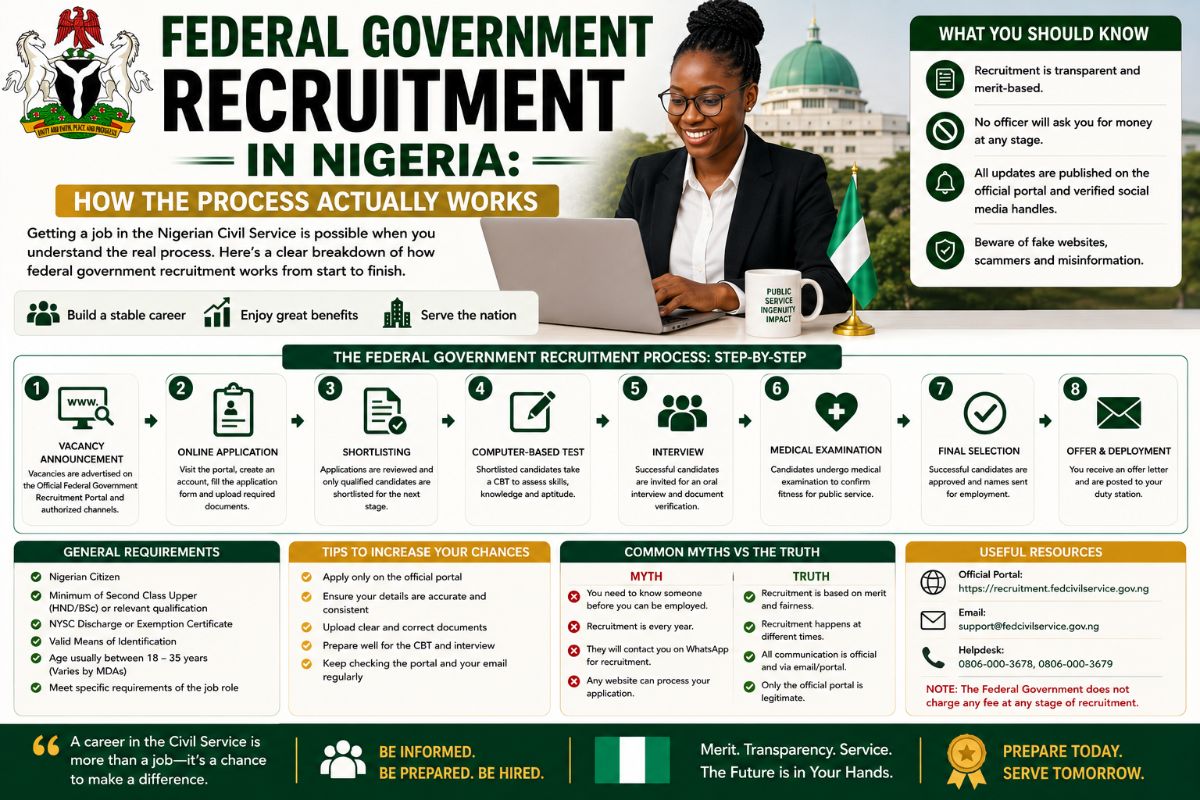
Every year, millions of Nigerians apply for federal government jobs — across the civil service, the military and paramilitary agencies, parastatals, and federal ministries — yet the process itself remains confusing to most first-time applicants. Portals open and close without warning, some exercises take months to move from application to shortlisting, and misinformation from unofficial sources leads many genuine candidates to miss real opportunities or fall victim to scams.
Every year, millions of Nigerians apply for federal government jobs — across the civil service, the military and paramilitary agencies, parastatals, and federal ministries — yet the process itself remains confusing to most first-time applicants. Portals open and close without warning, some exercises take months to move from application to shortlisting, and misinformation from unofficial sources leads many genuine candidates to miss real opportunities or fall victim to scams. This guide explains how Nigerian federal government recruitment actually works, the main categories of agencies you can apply to, and how to give yourself a realistic shot at getting in. Why Federal Government Jobs Remain So Competitive Federal government employment in Nigeria continues to attract enormous interest for reasons that go beyond salary alone — job security, pension benefits, and a clear structure for career progression make these roles attractive in a labour market where private sector job security can feel far less predictable. This demand means that even relatively junior positions can attract applications running into the tens or hundreds of thousands, making preparation and understanding the process genuinely important rather than optional. The Main Categories of Federal Recruitment Understanding which category a role falls into matters, because the application process, eligibility criteria, and timeline differ significantly between them. Civil Service Positions. These are the administrative and technical roles within federal ministries, departments, and agencies (commonly referred to as MDAs). Recruitment into the mainstream federal civil service is coordinated through the Federal Civil Service Commission, and increasingly processed via a centralised online recruitment portal rather than agency-by-agency paper applications. Military Recruitment. The Nigerian Army, Navy, and Air Force each run periodic recruitment exercises for enlisted personnel and, separately, officer cadet or short service commission intakes for graduates. These typically follow a well-defined multi-stage process: online registration, document screening, physical and medical fitness tests, written examinations, and interviews. Paramilitary Agencies. Organisations including the Nigeria Police Force, Nigeria Security and Civil Defence Corps (NSCDC), Nigeria Customs Service, Federal Road Safety Corps (FRSC), and the Nigerian Correctional Service each run their own recruitment cycles, generally following a similar structure to military recruitment — online application, screening, physical assessment, and interviews. Parastatals and Agencies. Beyond the core ministries, a wide range of federal parastatals and agencies — from regulatory bodies to development agencies — run their own independent recruitment processes, often announced directly on the specific agency's website rather than through a single centralised portal. Empowerment and Skills Programmes. Separate from direct employment, sever