The Nigerian Job Market in 2026: The Skills That Actually Get You Hired
Category: Jobs | Author: NaijaToday Desk | Published: Fri Jul 31 2026
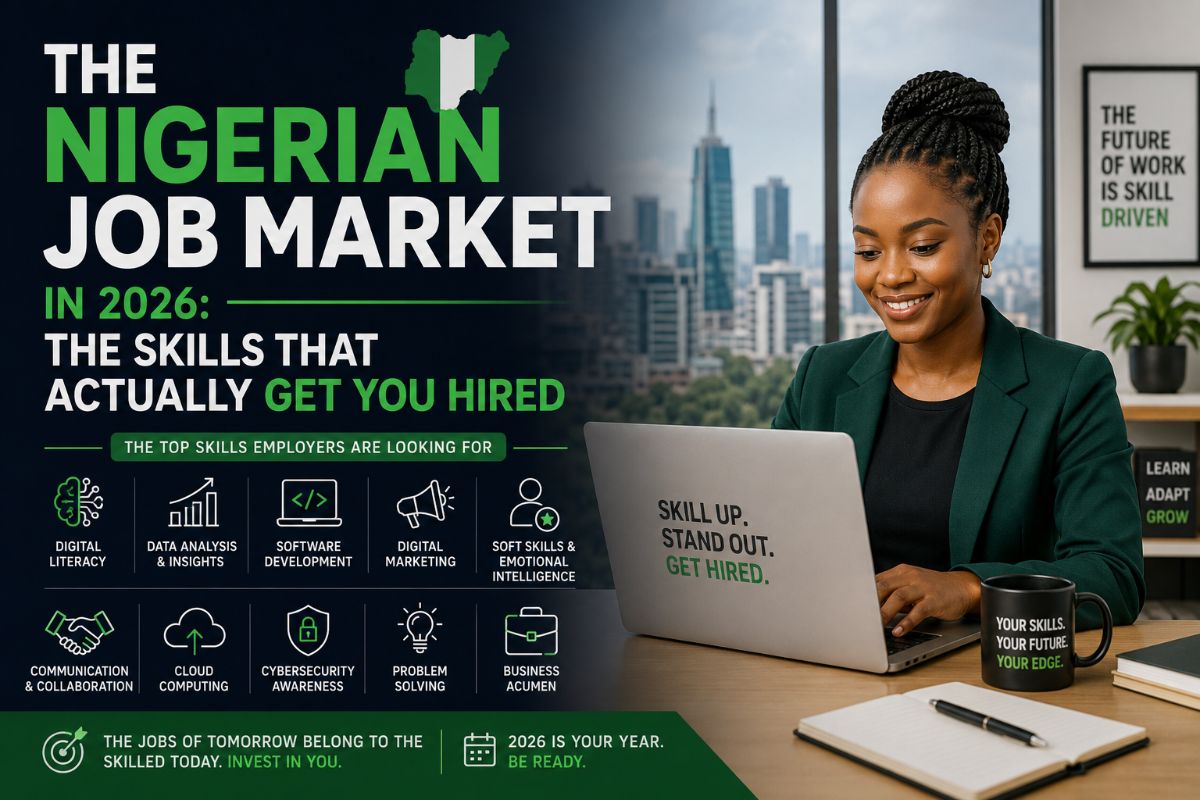
Nigeria's job market in 2026 isn't short of graduates, it's short of the right skills. See the exact skill combinations, salary ranges, and trade opportunities employers are actually hiring for.
The Nigerian Job Market in 2026: The Skills That Actually Get You Hired If you've sent out fifty applications this year and heard back from none of them, you're not imagining things. The Nigerian job market in 2026 is not short of graduates — it's short of the right skills. And that gap is exactly where opportunity is hiding for anyone paying attention. A market with too many degrees and too few skills Nigeria's labour numbers tell a strange story. Unemployment, on paper, sits at a relatively low 5.3%, according to the National Bureau of Statistics. But that number hides more than it reveals — over 92% of working Nigerians are in the informal sector, meaning most people aren't unemployed, they're underemployed, hustling in roles that don't match their training or their potential earnings. Meanwhile, employers are struggling to fill the roles they do have. Industry surveys this year put the figure at roughly seven in ten Nigerian employers saying they cannot find candidates with the skills they actually need. That's not a shortage of ambition or education — Nigerian universities graduate hundreds of thousands of students annually — it's a mismatch between what schools teach and what the market pays for. Take cybersecurity as an extreme example. Nigeria has an estimated 25,000-odd certified cybersecurity professionals for a population well above 220 million. The National Information Technology Development Agency has flagged this as one of the widest workforce gaps in any tech-adjacent field in the country. Banks, telecoms, and now government agencies are all competing for the same small pool of people — which means salaries for anyone with real, demonstrable cybersecurity or networking skills (CCNA-level and above) are climbing fast. The skills actually worth your time in 2026 Forget generic "top 10 skills" listicles for a second. What's changed this year is that Nigerian employers increasingly want combinations, not single skills. A person who can do one thing well is replaceable. A person who pairs two or three adjacent skills becomes the one recruiters fight over. A few combinations showing up repeatedly in job postings across Lagos, Abuja, and Port Harcourt: - Compliance + data analytics. Compliance is currently one of the single most requested skills in the country, but plain compliance officers — the ones who just fill forms and quote regulations — top out at modest pay. Add the ability to build a dashboard in Power BI that tracks regulatory risk in real time, and you've turned a paperwork job into a strategic one. - Power BI + Excel + SQL. This is the backbone of business analyst roles across Nigerian banking, consulting, and the NGO sector — arguably the most "learnable in six months" combination on this list, and one of the highest-leverage for anyone starting from a non-tech background. - Python + SQL + machine learning, ideally with a cloud platform like AWS or Google Cloud layered on top, for anyone serious about data science. - JavaScr