Running a Small Business in Nigeria in 2026: Making Sense of the Money Side
Category: Business | Author: NaijaToday Desk | Published: Fri Jul 31 2026
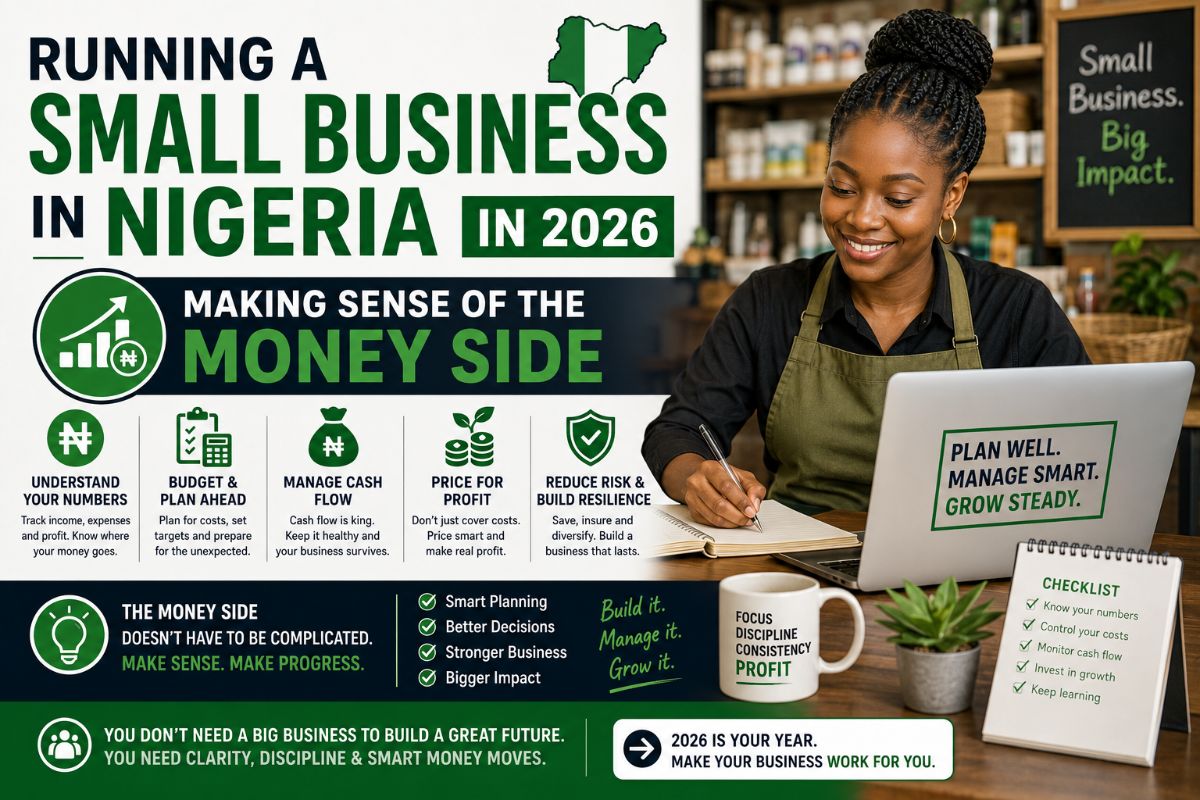
CBN's 26.5% benchmark rate is keeping SME loans expensive in 2026. Here's why, which single-digit government-backed funding options most owners overlook, and how to avoid costly fintech loan traps.
Running a Small Business in Nigeria in 2026: Making Sense of the Money Side If you run a small business in Nigeria right now, you've felt it: money to expand is expensive, and it has been for a while. Understanding exactly why — and which funding routes are actually worth pursuing — is the difference between a business that survives this stretch and one that quietly stalls out. This isn't financial advice tailored to your specific situation, but here's the factual picture as it stands, and what it means in practice. Why borrowing still feels so expensive The Central Bank of Nigeria held its benchmark Monetary Policy Rate at 26.5% at its July 2026 meeting — the second consecutive meeting it left the rate unchanged, after cutting it from 27% earlier in the year. That benchmark rate isn't what you personally pay to borrow; commercial banks add their own funding costs, risk margins, and operating expenses on top of it, which is why actual lending rates for many small businesses sit above 30%. The CBN's own reasoning, according to its public statements, is that inflation is trending down but not fast enough to justify aggressive rate cuts — and cutting too quickly risks weakening the naira and reviving the same price pressures that made borrowing expensive in the first place. Nigeria pulled in roughly $10.4 billion in capital importation in the first quarter of 2026 alone, with the vast majority coming from portfolio investors chasing high-yield naira assets. That inflow is genuinely useful for supporting the currency, but it also means the CBN has an incentive to keep rates attractive to foreign investors — which, in turn, keeps them high for local SME borrowers too. It's a trade-off, and small business owners are, unfortunately, the ones absorbing most of the cost of it. The scale of the mismatch is striking: small and medium enterprises make up over 90% of Nigerian businesses, yet receive less than 5% of total commercial bank lending. Total private-sector credit did rise to roughly ₦81 trillion by May 2026, so banks are lending more overall — it's just not reaching MSMEs in proportion to how many of them there are. The financing options that are actually worth your time Not all borrowing in Nigeria is expensive. The gap is wide between commercial bank rates and a handful of government-backed schemes most small business owners simply never apply to, often because the paperwork feels intimidating. - Bank of Industry (BOI) intervention funds — typically 9–12% annually, dramatically below commercial rates, though they require more documentation and patience to access. - FGN MSME Intervention Fund — up to ₦5 million per beneficiary at 9% annual interest over a three-year term. - BOI's Youth Entrepreneurship Support (YES) Programme — combines training with funding up to ₦5 million, targeted at entrepreneurs aged 18 to 35. - Presidential Conditional Grant Scheme (PCGS) — genuine grant funding (not a loan) aimed at nano and micro businesses, with a particu