Inside Nigeria's Fintech Boom: How Everyday Nigerians Are Changing the Way We Pay
Category: Technology | Author: NaijaToday Desk | Published: Fri Jul 10 2026
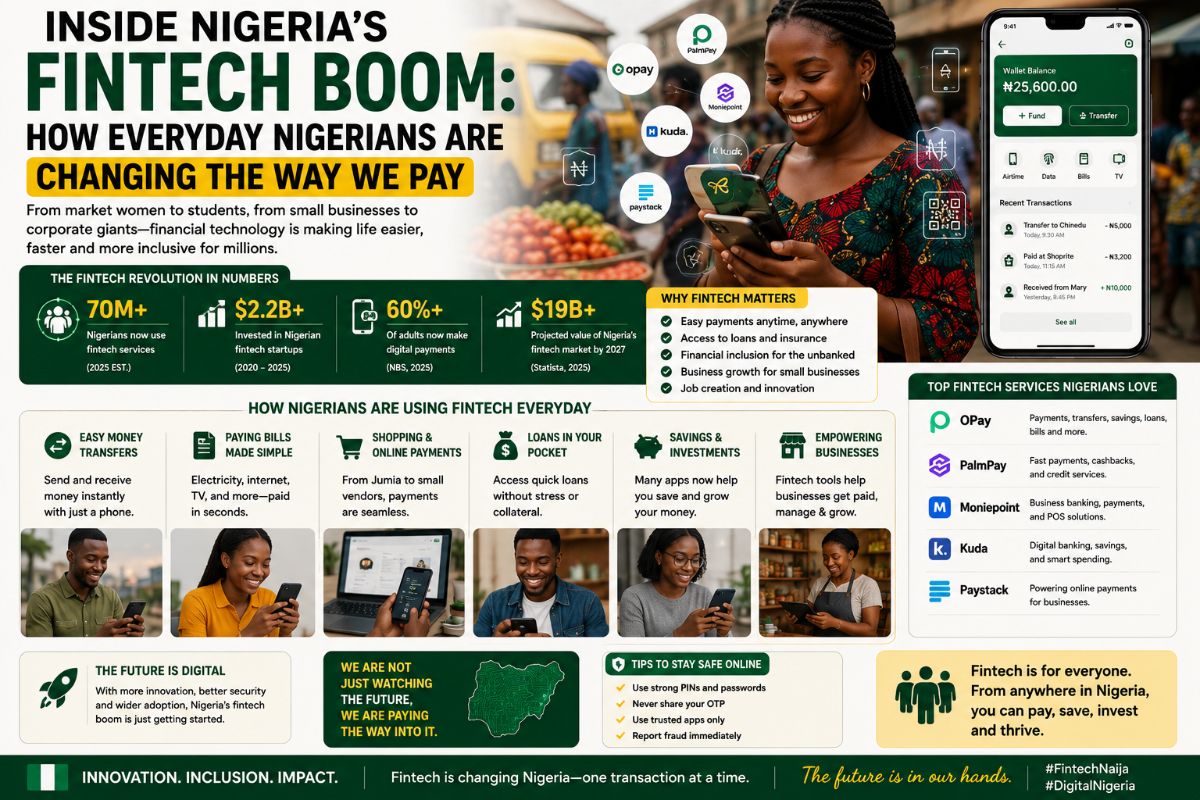
A few weeks back, I watched my neighbour's teenage son pay for suya from a mai suya using his phone, tapping a QR code taped to the man's wooden cart, no cash, no change wahala, no "abeg you no get change." The suya seller, who I'd guess is somewhere in his fifties, didn't even blink. He's been accepting bank transfers and mobile wallet payments for at least two years now.
Inside Nigeria's Fintech Boom: How Everyday Nigerians Are Changing the Way We Pay A few weeks back, I watched my neighbour's teenage son pay for suya from a mai suya using his phone, tapping a QR code taped to the man's wooden cart, no cash, no change wahala, no "abeg you no get change." The suya seller, who I'd guess is somewhere in his fifties, didn't even blink. He's been accepting bank transfers and mobile wallet payments for at least two years now. If you had told either of them ten years ago that this would be a normal Tuesday evening on a random street in Lagos, they probably would have laughed. That small moment, honestly, tells you more about Nigeria's fintech revolution than any report from McKinsey or PwC could. We've become a country where a roadside food vendor is more digitally fluent with payments than some banks in supposedly "developed" economies. And it didn't happen by accident. How We Got Here Nigeria's fintech story didn't start with flashy apps. It started with frustration. Anyone who banked in Nigeria before 2015 remembers the queues, the network downtime right when you needed to send urgent money, the "please try again later" messages that always seemed to arrive exactly when your rent was due. Traditional banks, for all their history and buildings on every major street, simply weren't built for the pace and informality of how most Nigerians actually move money. Interswitch quietly laid a lot of the groundwork years before "fintech" was even a word Nigerians used casually. Then came Paystack, co-founded by Shola Akinlade and Ezra Olubi, which made it possible for even a small online shop selling ankara fabric to accept card payments without needing a relationship with a bank's corporate team. When Stripe acquired Paystack in 2020 for over 200 million dollars, it was less a surprise to Nigerians in tech and more a confirmation of what we already knew, that this space was going to explode. And explode it did. Flutterwave, Moniepoint, OPay, PalmPay, Kuda, Chipper Cash, the list keeps growing. Today, Nigeria's fintech sector makes up roughly a third of Africa's entire fintech market, and the country accounts for nearly half of all fintech transactions on the continent. That's not a small statistic. That's Nigeria, despite everything, quietly becoming one of the most important financial technology hubs in the world. The Numbers That Actually Matter to You Let's talk plainly. As of 2025, Nigeria recorded well over 100 billion mobile money transactions in a single year, worth close to two trillion dollars in total value moved. OPay alone has crossed 45 million users as of mid-2026, with over 50 million downloads. PalmPay isn't far behind, sitting around 40 million users and a million merchants. Moniepoint, the agency banking giant that most Nigerians know from those distinctive blue POS terminals in every market and roadside shop, processed something in the region of 412 trillion naira in transactions in 2025 alone, and reportedl