POLITICS &
GOVERNANCE
The Freeze Is On: How EFCC and NFIU Are Enforcing Supreme Court
Victory for Local Government Autonomy
The
Decisive Battle for Nigeria’s Third Tier of Government
For over twenty-four years following Nigeria’s
return to democratic governance in 1999, local government administration
existed in a state of systemic atrophy. Despite being explicitly enshrined in
Section 7 of the 1999 Constitution as the third tier of government, the vast
majority of Nigeria's 774 Local Government Areas (LGAs) operated as little more
than administrative departments run at the whim of state governors.
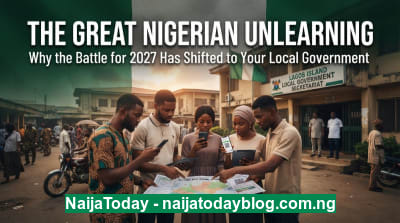
Local government secretariats across the nation
were converted into deserted structures, staffed by demoralized civil servants
whose salaries were chronically delayed, while council chairmen acted as
ceremonial figures with virtually zero independent capital budget.
That structural distortion was dealt a death
blow by the Supreme Court’s landmark judgment granting full financial and
administrative autonomy to local governments. Now, the enforcement phase has
officially begun.
In a coordinated, aggressive push, the Federal
Government—acting through the Economic and Financial Crimes Commission (EFCC),
the Nigerian Financial Intelligence Unit (NFIU), and the Office of the
Accountant General of the Federation (OAGF)—has activated a comprehensive
financial monitoring gate. The rule is absolute: Any Local Government Area that
is not administered by a democratically elected Chairman and Councilors will
have its direct monthly federal allocation frozen in an escrow account at the
Central Bank of Nigeria.
[ FAAC Monthly Revenue Disbursement ]
│
▼
[ NFIU / EFCC Compliance Intelligence Gate ]
│
┌────────────┴────────────┐
▼ ▼
[ Democratic PASSED ] [ Democratic
FAILED ]
(Elected Officials) (Caretaker /
Unconstitutional)
│ │
▼ ▼
[ DIRECT DISBURSEMENT ] [ ALLOCATION
FROZEN IN ESCROW ]
(To LGA Account) (Retained at CBN
Escrow Account)
The
Architecture of Oppression: The Joint Account System
Under the guise of Section 162(6) of the 1999
Constitution, which established the State-Local Government Joint Account,
federal allocations meant for local councils were deposited into centralized
accounts controlled by state governments. In operational reality, the Joint
Account system became a financial black hole characterized by arbitrary
overhead deductions, appointed caretaker committees, and phantom project
executions.
Inside
the NFIU and EFCC Enforcement Mechanics
·
The NFIU
Democratic Audit Gate: Cross-checks the administrative status of LGAs against
certified electoral results before monthly FAAC remittals.
·
Escrow
Bank Lockout: Reroutes allocations of non-compliant caretaker LGAs into
dedicated escrow accounts at the Central Bank of Nigeria.
·
Real-Time
Financial Intelligence Tracking: Monitors direct LGA bank accounts to track
outward transactions and prevent localized diversion.
Civic
Responsibility: Grassroots Accountability
With direct financial allocations flowing
straight to local secretariats, every local government in Nigeria now receives
substantial direct monthly revenue (₦250M to ₦500M+). This financial
decentralization places direct responsibility on local citizens to demand
budget transparency, participate in local elections, and monitor local
development projects.
ECONOMY & FUEL
The Fuel Supply Shift: How Direct Refining and Multi-Modal
Logistics Are Driving Petrol Prices Down Across Nigeria
Unraveling the Great Regional
Price Paradox
For months, one of the most persistent economic
paradoxes facing Nigerian motorists and small business owners was the dramatic
regional disparity in retail petrol prices. While coastal cities like Lagos
enjoyed relatively lower pump prices, motorists in central and northern hubs
paid significantly higher rates due to the extreme cost of long-haul highway
trucking.
For decades, Nigeria relied almost exclusively
on heavy, diesel-burning tank trucks to move fuel across thousands of
kilometers of damaged highways. That broken supply chain model is finally
coming undone.
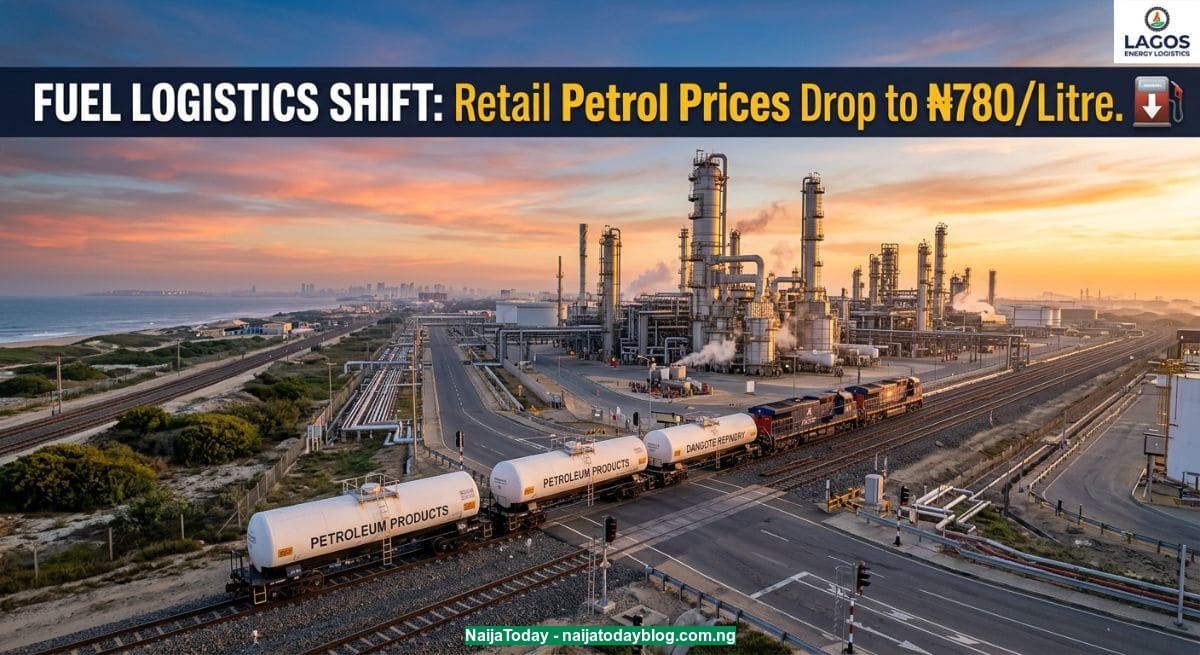
Thanks to the expansion of direct bulk delivery
mechanisms—incorporating dedicated freight rail lines, marine river barges, and
direct depot sales networks operated by the Dangote Petroleum Refinery in
partnership with independent oil marketers—pump prices across Abuja and major
northern commercial hubs have stabilized between ₦780 and ₦800 per litre at
independent stations.
[ Dangote Refinery Complex
(Lekki) ]
│
┌───────────────────────────┼───────────────────────────┐
▼ ▼ ▼
[ Marine Barges ] [ Bulk Freight Rail ] [ Short-Haul Trucks ]
(Coastal Depots) (Direct Inland Depots) (Last-Mile Local)
│ │ │
└───────────────────────────┼───────────────────────────┘
│
▼
[ Low-Cost Regional
Distribution Depots ]
│
▼
[ Retail Station Pump Price
Drops to ₦780/Litre ]
The Mathematics of Freight: Road
vs. Heavy Rail
Moving fuel via highway tankers adds massive
freight surcharges (₦80–₦130/L) due to diesel costs, transit delays, and
vehicle maintenance. By shifting bulk volume to heavy freight rail lines and
river barges, transport costs drop dramatically. A single freight train pulling
60 tank cars moves over 2.5 million litres of petrol in one journey—replacing
75 highway trucks.
IPMAN Direct Access: Eliminating
Middlemen
Under the restructured direct off-take
framework, independent marketers (IPMAN) buy petrol directly from domestic
refiners at wholesale prices, off-loading products at regional inland hubs in
Kano, Kaduna, and Abuja without middleman markups.
Macroeconomic Impact
·
Transport
Cost Relief: Reduced interstate bus fares for commuters and logistics fleets.
·
Food
Inflation Stabilization: Lower agricultural haulage costs from northern farm
belts to urban wholesale markets.
·
SME
Operational Overhead Reduction: Lower operational costs for small businesses
relying on petrol generators.