The Great Local
Transition: How Nigeria Is Breaking Its Import Addiction, and the Unsung Heroes
Building a Self-Reliant Nation
Walk into almost any major supermarket, open-air market,
or corner store in Nigeria today—from the bustling lanes of Mile 12 in Lagos
and Bodija Market in Ibadan to the sprawling aisles of Dawanau in Kano or Main
Market in Onitsha—and you will witness something that was virtually unthinkable
a decade ago.
Ten years ago, the shelves were dominated by foreign
brands. We ate foreign rice, wore foreign clothes, drank foreign fruit juices,
used foreign building materials, and even imported the toothpicks on our dining
tables. Our national economy was hooked on a dangerous intravenous drip of
cheap foreign exchange, funded entirely by crude oil exports. If oil prices
were high in London, we imported everything; if oil prices crashed, our entire
country went into economic shock.
Today, a quiet, irreversible shift has taken place across
Nigeria.
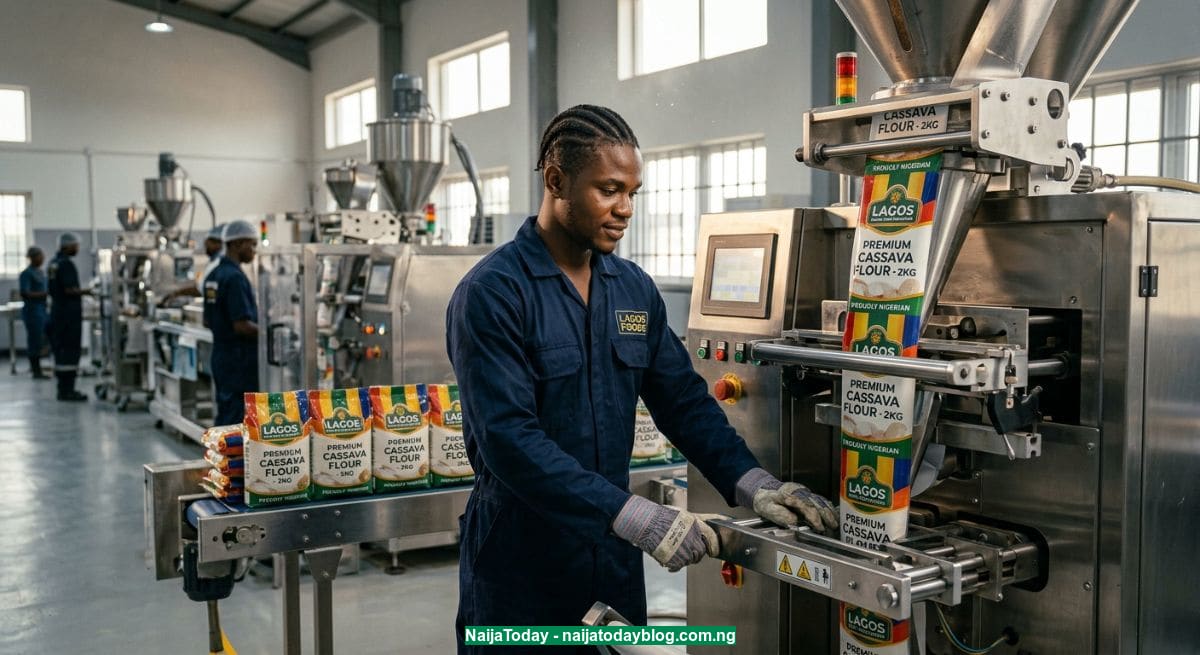
The foreign biscuit that used to sit comfortably on store
shelves now carries an imported price tag that shocks the average shopper. But
right beside it on the shelf sits a crisp, beautifully packaged Nigerian
alternative—produced in Ogun State, processed with cassava flour from Oyo
State, and packaged in Lagos—selling at half the price.
This is not an accident. It is the result of a painful,
necessary, and historic economic transition.
For forty years, Nigeria lived on an import illusion.
When foreign exchange reforms and market realities forced the country to
confront its true productivity levels, the illusion shattered. But out of the
ashes of that old import-dependent model, an army of local manufacturers,
agro-processors, industrial fabricators, and creative entrepreneurs has stepped
forward to rebuild Nigeria from the factory floor up.
This is the story of The Great Local Transition—why our
import addiction is finally breaking, who is driving the industrial comeback,
and what must be done to ensure that "Made in Nigeria" becomes a
permanent badge of economic independence.
---
1. The Fall of the
Import Illusion: How Easy Oil Dollars Crippled Our Industry
To understand the magnitude of today’s transition, one
must look back at how Nigeria became a nation of consumers rather than
producers.
In the late 1960s and early 1970s, Nigeria was an
agricultural and industrial powerhouse in West Africa. We were the world’s
largest exporter of palm oil, a dominant force in cocoa and groundnuts, and
possessed thriving textile mills in Kaduna, Kano, and Lagos.
Then came the oil boom.
|
THE DUTCH DISEASE CYCLE IN NIGERIA |
|
1. Crude Oil Discovered
---> High oil revenues flood the Treasury.
|
|
2. FX
Artificial Pegs ---> Cheap
foreign dollars make importing |
|
cheaper than
producing locally. |
|
3. Industrial
Collapse ---> Local factories close;
farms |
|
are abandoned
for civil service / oil. |
|
4. FX Shock
& Correction ---> Oil prices drop / subsidies end; |
|
imported
goods become unaffordable. |
|
5. Local
Awakening ---> Country is
forced to manufacture and |
|
process its own
goods locally. |
As billions of petrodollars flowed into government
coffers, Nigeria suffered a classic case of "Dutch Disease." Instead
of investing oil revenues into power plants, rail lines, and industrial
machinery, successive administrations used cheap foreign exchange to subsidize
the consumption of foreign goods.
It became cheaper for a baker in Lagos to buy wheat grown
in North America than to buy local grains from Taraba. It became cheaper for a
construction firm in Abuja to import steel rods from Asia than to support local
steel rolling mills. We built a national lifestyle on borrowed time and
artificial currency rates.
When the global economic landscape shifted, foreign
exchange subsidies collapsed, and multi-tier currency practices were
dismantled, the hard truth was exposed: A nation cannot consume what it does
not produce.
The sudden increase in the cost of imported items caused
immediate hardship for millions of households. But it also did something vital:
It wiped out the artificial price advantage that foreign goods held over local
manufacturers.
Suddenly, for the first time in two generations, buying
local became not just a patriotic choice, but an economic necessity.
---
2. The Silent
Industrial Powerhouses: Aba, Kano, Nnewi, and Ogun State
While pundits on television debate economic theories, the
real heavy lifting of Nigeria’s economic transition is happening in regional
industrial clusters across the country.
Nigeria’s manufacturing revival is not driven by
boardroom speeches in Abuja; it is powered by the grit, sweat, and ingenuity of
local manufacturing hubs that refused to die.
|
NIGERIA'S REGIONAL INDUSTRIAL ENGINE |
|
[ABA, ABIA STATE] ---> Footwear, Leatherworks, Apparel
& Garments |
|
[NNEWI, ANAMBRA] ---> Automotive Components, Cables
& Plastics |
|
[KANO (DAWANAU)] ---> Grain Processing, Oilseeds
& Leather Tanning |
|
[OGUN / LAGOS AXIS] ---> Large-scale FMCG, Pharmaceuticals
& Packaging |
|
[IBADAN, OYO STATE] ---> Agro-Allied Processing, Poultry
& Food Packaging |
A. The Enyimba
Miracle: Aba’s Industrial Resilience
In Ariaria International Market and surrounding
industrial clusters in Aba, Abia State, hundreds of thousands of artisans,
shoemakers, and garment manufacturers produce millions of pairs of shoes,
belts, school uniforms, and fashion apparel every single month.
For years, Aba products were unfairly mocked or branded
with fake foreign labels just to get buyers to pay attention. Today, that
narrative has flipped. Major security agencies, private schools, hotel chains,
and corporate brands now source their footwear and uniforms directly from Aba.
With improved access to automated stitching machines and digital sales
channels, Aba is asserting itself as the shoemaking capital of West Africa.
B. The Nnewi
Model: Industrialization Without Oil
Nnewi in Anambra State represents a unique phenomenon in
African economic history: an industrial city built entirely by private
enterprise without government oil allocations.
From auto spare parts, motorcycle components, and
heavy-duty plastics to electrical cable manufacturing and vehicle assembly
plants, Nnewi proves that Nigerian engineering can compete at international
standards. Companies born in Nnewi are now supplying industrial cables and auto
parts to projects across West and Central Africa.
C. The Food Basket
Processing Hubs: Kano, Kaduna, and Ibadan
In the North, Kano’s Dawanau Market—the largest grain
market in Sub-Saharan Africa—has evolved from a raw commodity trading post into
a hub for grain processing, flour milling, and vegetable oil extraction.
In the South-West, the Ibadan-Ogun industrial corridor
has turned into West Africa’s largest concentration of fast-moving consumer
goods (FMCG) manufacturing. Local cassava starch processing plants are
supplying breweries and pharmaceutical companies, replacing imported industrial
binders with locally grown cassava derivatives.
3. The Energy
Factor: How Local Refining and Gas Are Changing the Game
For three decades, the ultimate killer of Nigerian
manufacturing was a single word: Power.
When a factory owner in Agbara or Sharada has to run
heavy industrial generators on imported diesel 24 hours a day, the energy cost
accounts for over 40% of his total production expenses. No factory can compete
globally when its energy bill is four times higher than a rival factory in
Vietnam, China, or India.
This is where the recent structural changes in Nigeria’s
energy and petroleum sector become transformative for local manufacturing.
|
THE LOCAL ENERGY SUPPLY REVOLUTION |
|
OLD ENERGY
MODEL (Imported) NEW ENERGY
MODEL (Domestic) |
|
• Imported
Petrol & Diesel • Domestic Refining (Dangote/ |
|
• Exposed to
Forex Fluctuations Modular
Plants) |
|
• High Haulage
Costs • Industrial Gas
Pipelines |
|
• Grid
Instability • Compressed
Natural Gas (CNG) |
|
Commercial Transport |
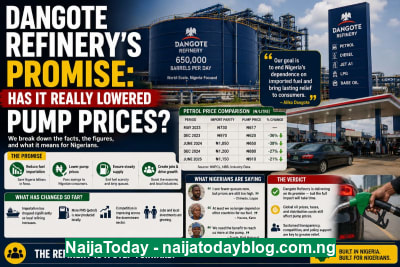
The scale-up of domestic petroleum refining—led by the
Dangote Petroleum Refinery alongside modular processing facilities in the Niger
Delta—is doing much more than providing petrol for cars. It is providing a
steady, locally priced supply of:
Industrial Diesel:
Powering heavy manufacturing machinery without foreign exchange import delays.
Aviation Jet A1
Fuel: Lowering domestic flight logistics costs for business travelers.
Petrochemical
Feedstocks: Providing local plastic, packaging, and fertilizer factories with
raw materials that were previously imported from Europe and Asia.
Simultaneously, the aggressive expansion of Compressed
Natural Gas (CNG) for commercial haulage trucks and industrial gas pipelines to
manufacturing estates is drastically cutting transportation and factory energy
costs.
When a haulage truck moving processed food from a factory
in Kaduna to a distributor in Port Harcourt runs on cheap domestic natural gas
instead of expensive diesel, the transport cost drops significantly. That
savings goes straight into lowering the final retail price of food for the
consumer.
4. Rebranding
"Made in Nigeria": From Second-Class Choice to First Preference
Ten years ago, buying a Nigerian-made item was often seen
as an act of compromise. You bought local only because you couldn't afford the
foreign version.
Today, a new generation of young Nigerian founders,
designers, food scientists, and brand strategists has changed the narrative.
They realized that producing a quality local item is only half the battle; presentation,
packaging, and quality assurance are what win the market.
Look at the Nigerian food and beverage sector today:
Local tea and
spice manufacturers are packaging ginger, garlic, hibiscus (Zobo), and natural
herbs into beautiful, international-standard tea bags that sit proudly in
foreign airports and premium supermarkets.
Local cosmetic and
skincare brands are formulating high-grade soaps, lotions, and oils using
indigenous shea butter, cocoa butter, and coconut oil—branding them so
elegantly that consumers choose them over European luxury imports.
Local fashion
houses and leather crafters are using digital platforms like Instagram, TikTok,
and international e-commerce logistics to sell custom Nigerian apparel to
buyers in London, Atlanta, Toronto, and Dubai.
|
THE REBRANDING OF LOCAL PRODUCTS |
|
PREVIOUS
PERCEPTION CURRENT REALITY |
|
• Poor
packaging & finish • World-class aesthetic design |
|
• Hidden
"Made in Aba" tags • Proudly displayed local origin |
|
• Unreliable
quality consistency • NAFDAC & SON quality certs |
|
• Informal
cash-only sales • Seamless digital payments
& |
|
global logistics |
"Made in Nigeria" is no longer an apology. It
is becoming a mark of authenticity, durability, and cultural pride.
5. The Unspoken
Bottlenecks: What Still Threatens the Manufacturing Comeback?
Despite the incredible progress of local manufacturers,
it would be dangerous to pretend that all obstacles have vanished.
If Nigeria is to move from a partial manufacturing
recovery to a full-scale industrial revolution, policy makers must address four
structural bottlenecks that continue to strangle local producers:
Bottleneck 1:
Multiple Taxation and Highway Extortion
A manufacturer moving goods from a factory in Ogun State
to a distributor in Onitsha can encounter dozens of illegal roadblocks, local
government revenue task forces, and state haulage levies along a single highway
corridor. This chaotic, uncoordinated taxation adds millions of Naira in
illegal costs to local production and causes severe transport delays.
Bottleneck 2:
Excessive Interest Rates on Commercial Loans
You cannot build heavy manufacturing infrastructure on
bank loans charging 30% or higher interest rates per year. An entrepreneur
building a furniture factory or an agricultural processing plant needs
single-digit, long-term patient capital (5 to 10-year loan tenure with grace
periods). Institutional development banks like the Bank of Industry (BOI) and
Development Bank of Nigeria (DBN) must expand their direct reach to micro and
small manufacturers.
Bottleneck 3: Port
Congestion and Customs Bureaucracy
While local production is growing, manufacturers still
need to import specialized machinery, spare parts, and industrial components
that are not yet made locally. Excessive clearing delays at maritime ports,
cumbersome paperwork, and unpredictable customs valuations drive up the cost of
setting up a new factory in Nigeria.
Bottleneck 4:
Interstate Trade Barriers and Security
Insecurity along rural agricultural corridors prevents
farmers from clearing larger expanses of land for cultivation, while interstate
transport risks inflate insurance premiums for logistics firms. Securing
farming belts and major transport arteries remains a non-negotiable
prerequisite for national food security.
6. The Action
Blueprint: How Citizens and Government Can Accelerate Local Industry
The transition from an import-dependent economy to a
self-reliant industrial powerhouse is not the job of the government alone. It
requires an unwritten contract between policy makers, business owners, and
everyday consumers.
Here is the strategic blueprint to ensure that Nigeria’s
local production momentum becomes permanent:
|
THE LOCAL PRODUCTION EXPANSION BLUEPRINT |
|
[CONSUMERS] ---> Choose
local products first; demand quality & accountability |
|
[MANUFACTURERS]-->
Standardize quality; secure NAFDAC/SON certification early |
|
[GOVERNMENT] ---> Eliminate
interstate roadblocks; enforce single-window tax |
|
[BANKS/FINTECH]--> Extend single-digit equipment credit lines to
local SMEs |
For the Nigerian
Consumer: Prioritize Local Goods
Every Naira you spend is a vote for the kind of country
you want to live in. When you buy a pair of shoes made in Aba, a bag of rice
processed in Kebbi, or juice packaged in Ogun State, you are directly paying
the salary of a Nigerian worker, keeping a local factory open, and
strengthening the value of your currency. Demand good quality, but choose local
first.
For Local
Manufacturers: Never Compromise on Quality
The current economic environment gives local producers a
rare competitive window. Do not ruin it by cutting corners. Invest in proper
packaging, obtain necessary Standards Organisation of Nigeria (SON) and NAFDAC
approvals, maintain consistent production standards, and treat your customers
with respect. Quality is what turns a one-time buyer into a lifelong customer.
For Policy Makers:
Build Special Economic Clusters
State governors must stop waiting for federal handouts
and turn their states into specialized production hubs. Create dedicated
industrial parks equipped with uninterrupted gas-powered electricity, clean
water, good access roads, and single-window tax administration. If a state
governor builds a functional 50-hectare industrial park, manufacturers will
flock there and create tens of thousands of jobs for local youth.
Conclusion: The
Path to True Economic Independence
Independence is not just a flag raised in 1960.
Independence is not a national anthem sung at official ceremonies.
True independence is the ability of a nation to feed its
own people, clothe its own citizens, build its own infrastructure, and process
its own raw materials using the intellect, skill, and labor of its own youth.
For decades, Nigeria lived on borrowed time, eating
foreign food and wearing foreign clothes funded by easy oil dollars. That era
was comfortable, but it was a trap.
The economic pain of recent years has been severe, but it
has forced us to wake up. It has forced us to look inward, to rediscover our
local craftsmanship, to build our own factories, to process our own crops, and
to take pride in what our own hands can produce.
The journey is far from complete. There are still roads
to pave, factories to build, power lines to install, and policies to fix. But
the direction is now crystal clear.
The next time you walk into a market and pick up a
product made in Nigeria that looks good, works well, and costs less, remember
that you are holding more than just an item. You are holding a piece of
Nigeria’s future.
The import addiction is breaking. The local transition is
here. And there is no turning back.
---
What Are Your
Thoughts?
Which Nigerian-made products have you started buying
recently that completely replaced a foreign brand in your home? What local
industries in your state do you believe have the biggest potential to grow?
Drop your thoughts, local product recommendations, and
stories in the comments section below!
Help us spread the message of economic self-reliance!
SHARE this article across your WhatsApp groups, Facebook pages, and social
timelines. Follow naijatodayblog.com.ng for daily verified news, deep economic
analysis, and citizen-focused reporting across Nigeria.