"We've Missed Out Twice in a Row" — Osimhen's Pain, Nigeria's Shame, and the Road Back
Category: Sports | Author: NaijaToday Sports Desk | June 19, 2026 | Published: Fri Jun 19 2026
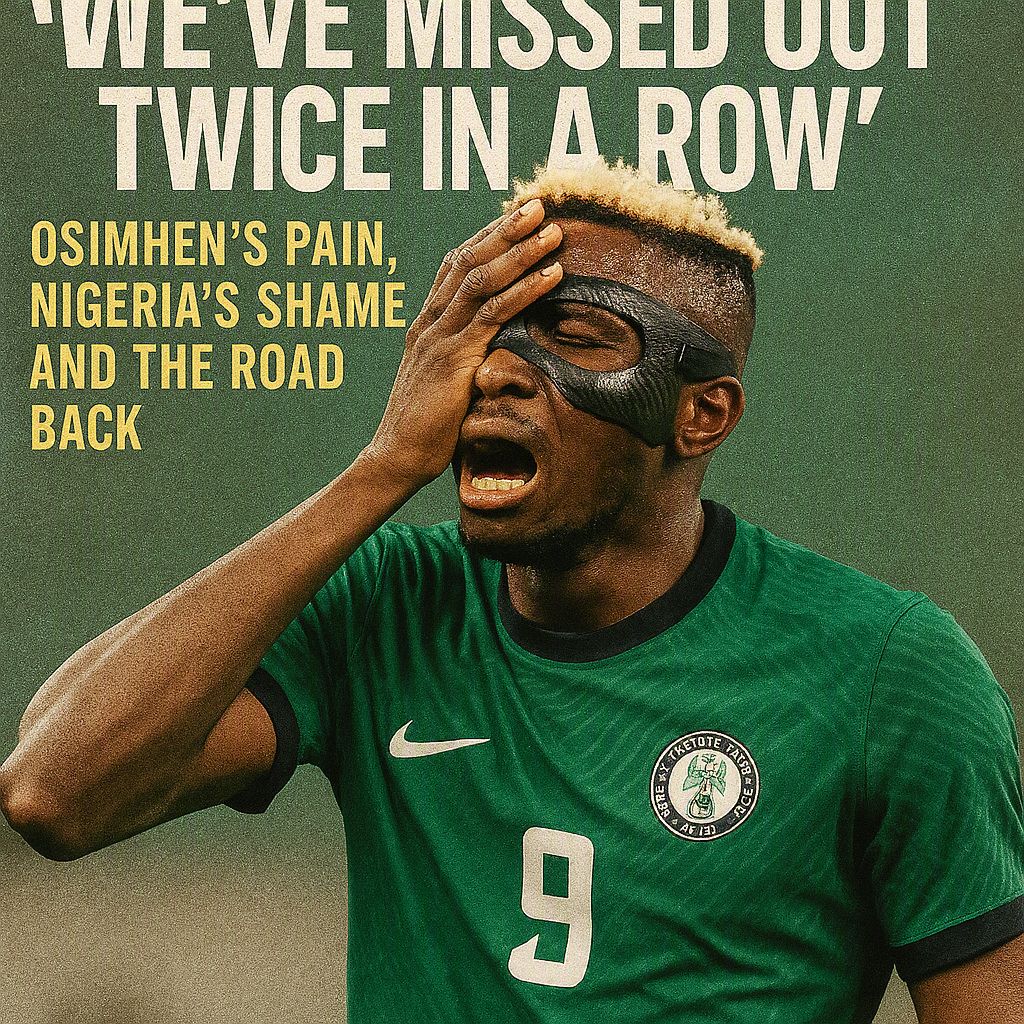
Somewhere in Istanbul, Victor Osimhen sat in front of a camera, looked into the eyes of thousands of fans watching his livestream, and said what every Nigerian already knew but nobody wanted to hear out loud.
Somewhere in Istanbul, Victor Osimhen sat in front of a camera, looked into the eyes of thousands of fans watching his livestream, and said what every Nigerian already knew but nobody wanted to hear out loud. "It's bad — not just for me but for the rest of the guys. We've missed out twice in a row. Sometimes life happens, so we just have to keep moving." Simple words. Devastating words. Because while the 2026 FIFA World Cup — the biggest, most expanded edition in history, featuring 48 nations — thunders on across the United States, Canada, and Mexico, Nigeria is not there. Again. For the second consecutive time. For only the second time since 1994, the Super Eagles are watching the World Cup from their living rooms, just like the rest of us. And it stings in a way that is difficult to fully put into words. How We Got Here Let's not pretend the pain arrived without warning. The signs were there long before the final whistle blew on Nigeria's World Cup dreams. Africa received nine automatic qualification spots and an additional playoff ticket for this tournament — the most generous allocation the continent has ever been given. Nine slots. For a continent of 54 nations. Nigeria, with her talent, her history, her three AFCON titles, and a squad bursting with world-class players — could not claim one of them. The Super Eagles finished second in their qualification group, then faced DR Congo in the continental playoff. After a 1-1 draw across two legs, it came down to penalties. And Nigeria, as they have done in some of their most painful moments, lost the shootout. DR Congo — a nation that had not appeared at the World Cup since 1974 when the country was still called Zaire — went through. Nigeria stayed home. If you want to understand how much that hurts, consider this: Victor Osimhen won the FIFA U-17 World Cup Golden Boot in 2015 as a teenager. He went on to become one of the most lethal strikers in world football — lighting up Serie A, breaking records at Napoli, becoming a sensation at Galatasaray. He has done everything right at club level. Everything. He has never played a single minute at a senior World Cup. Not in 2022. Not in 2026. At 27 years old, his window is narrowing. The 2030 World Cup — if Nigeria qualify — will come when Osimhen is 31. That is not a reason to give up hope. But it is a reason to be honest about what has been lost. Three Coaches. One Disaster. If Osimhen's pain has a culprit, it wears a suit and sits in the offices of the Nigeria Football Federation. During the 2026 World Cup qualification campaign, the Super Eagles were managed by three different coaches. Three. In one campaign. Any football person will tell you that tactical consistency, squad unity, and a defined style of play are built over months and years — not weeks. Each coaching change meant a reset. New ideas. New formations. New politics. The NFF's handling of the qualification campaign was, by any honest assessment, a catastrophe of administration. While oth