For the first time in a very long time, there's actual good
news about the naira.
The Nigerian naira opened the week relatively strong against
the United States dollar, with the local currency trading around ₦1,357.61 per
dollar at the official Nigerian Foreign Exchange Market (NFEM) window and about
₦1,420 per dollar at the parallel market.
But that's not even the biggest headline.
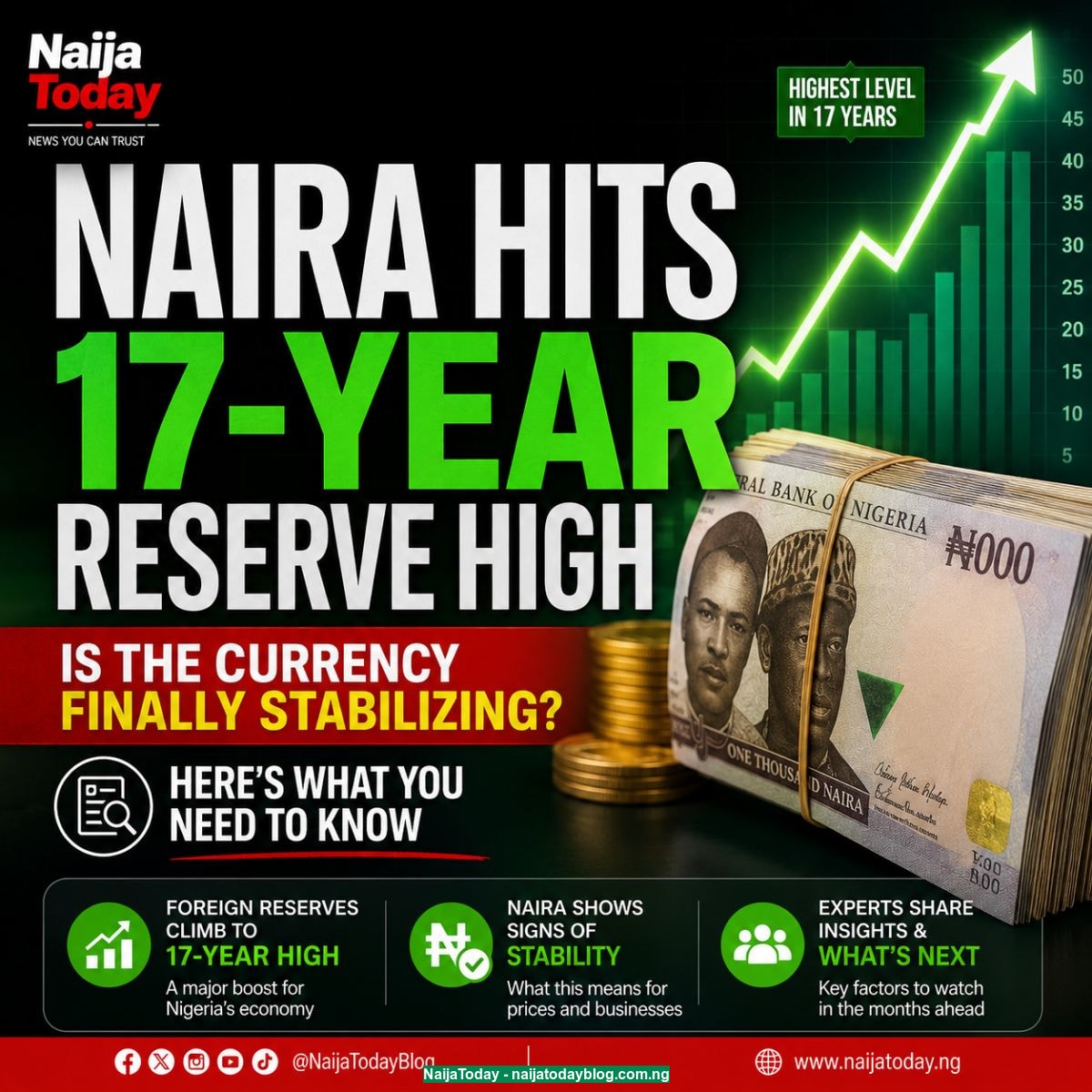
Nigeria's external reserves rose to $52.19 billion as of
August 12, 2026 — their highest level in 17 years.
Seventeen years. The last time Nigeria's reserves were this
high, Umaru Musa Yar'Adua was president, the iPhone 3GS was considered
cutting-edge technology, and the average Nigerian didn't know what
"crypto" meant.
So what does this mean for you — the ordinary Nigerian
buying garri, paying rent, and wondering if the naira will ever stop falling?
Let's break it down in plain English.
The Numbers: Where Things Stand Today
Here's the current snapshot:
|
Indicator |
Current
Level |
|
Official
Rate (NFEM) |
₦1,357.61/$1 |
|
Parallel
Market Rate |
₦1,420/$1 |
|
Gap
Between Markets |
₦62.39 |
|
External
Reserves |
$52.19
billion |
|
Reserve
Trend |
Highest
in 17 years |
The parallel market continued to quote the dollar at around
₦1,420, leaving a gap of approximately ₦62.39 between the two markets.
That gap is significant — and encouraging. At various points
over the past two years, the gap between the official and parallel market rates
was over ₦300. A ₦62 gap suggests that the two markets are converging, which is
exactly what the Central Bank of Nigeria wants.
Why Are Reserves So High?
Several factors are driving the reserve build-up:
1. Higher Oil Prices and Production: Nigeria has
benefited from relatively stable global oil prices and a modest increase in
crude oil production. As Africa's largest oil producer, any uptick in oil
revenue flows directly into the reserves.
2. Diaspora Remittances: Nigerians abroad
continue to send money home at record levels. These remittances, when channeled
through official banking channels, boost the CBN's foreign currency reserves.
3. Foreign Portfolio Investment: As Nigeria's
interest rates have risen, foreign investors have been attracted to Nigerian
government bonds and treasury bills, bringing dollars into the country.
4. CBN Policy Reforms: The CBN's unification of
exchange rate windows in 2023 and subsequent reforms have gradually improved
transparency and attracted more foreign currency inflows through official
channels.
What This Means for Ordinary Nigerians
Let's be honest. The average Nigerian doesn't care about
"external reserves" or "NFEM windows." They care about
whether things are getting cheaper or more expensive. So let me translate:
The Good News:
- A
stronger naira means imported goods COULD become cheaper over time
- The
narrowing gap between official and parallel rates means less volatility
for businesses
- Higher
reserves give the CBN more ammunition to defend the naira if it comes
under pressure
- It
signals improving economic fundamentals, which could attract more foreign
investment and create jobs
The Bad News:
- Prices
in the market haven't come down yet — and may not for a while
- The
naira at ₦1,357/$1 is still MASSIVELY weaker than where it was three years
ago (₦460/$1 in early 2022)
- Food
inflation remains high regardless of the exchange rate
- Fuel
prices haven't dropped despite the naira's relative stability
- Many
of the price increases from the past two years are now "baked
in" — sellers won't reduce prices just because the naira improves
slightly
In other words: the macroeconomic indicators are improving,
but the microeconomic reality — what you experience at the market, the fuel
station, and the school fees office — hasn't caught up yet.
Will the Naira Keep Strengthening?
This is the million-dollar question — literally.
There are reasons for cautious optimism:
- Reserves
at $52 billion give the CBN significant firepower
- Oil
prices remain relatively supportive
- The
gap between official and parallel rates is narrowing
- Foreign
investor interest is returning
But there are also risks:
- Global
oil prices could drop if the world economy slows down
- Political
uncertainty ahead of 2027 could spook investors
- Nigeria's
import bill remains high, putting constant downward pressure on the naira
- The
CBN has intervened heavily in the market to support the naira — this is
not sustainable long-term
My honest assessment: the naira is unlikely to crash back to
the ₦1,800-₦1,900 levels we saw at its worst. But expecting it to return to
₦800 or ₦500 is also unrealistic. A range of ₦1,300 to ₦1,500 seems likely for
the rest of 2026, barring any major shocks.
What You Should Do
Regardless of what the naira does, here's practical advice
for the average Nigerian:
- If
you earn in naira: Focus on increasing your income rather than
worrying about the exchange rate. The best hedge against currency
depreciation is earning more.
- If
you receive dollars: This is a relatively good time to convert —
the naira is stronger than it's been in recent months. But don't convert
everything at once. Spread your conversions.
- If
you're a business owner: The narrowing gap between official and
parallel rates is good for planning. Consider locking in rates for future
imports through your bank.
- If
you're saving: Consider keeping a portion of your savings in
dollar-denominated instruments (domiciliary accounts, dollar-based mutual
funds) as a hedge.
- If
you're planning to japa: The naira's relative strength means your
dollar purchases are slightly cheaper than they were six months ago. But
don't wait too long — currency markets are unpredictable.
The Bottom Line
$52.19 billion in reserves. The naira at ₦1,357 officially.
A narrowing parallel market gap.
These are genuinely positive signals. They're not enough to
solve Nigeria's economic challenges — not by a long shot. But they represent a
stabilization that was desperately needed after two years of currency freefall.
The question now is whether the government can build on this
momentum. Can they maintain fiscal discipline? Can they diversify the economy
beyond oil? Can they control inflation? Can they create jobs?
The reserves can buy time. But they can't buy solutions.
Those require policy, planning, and political will.
For now, enjoy the small win. The naira isn't dying today.
And in Nigerian economics, sometimes that's the best news you can get.
Are you feeling the impact of the naira's improvement? Or
are prices still killing you? Tell us your experience in the comments!
📰 Source: Vanguard News,
CBN 🔗 Naijatodayblog.com