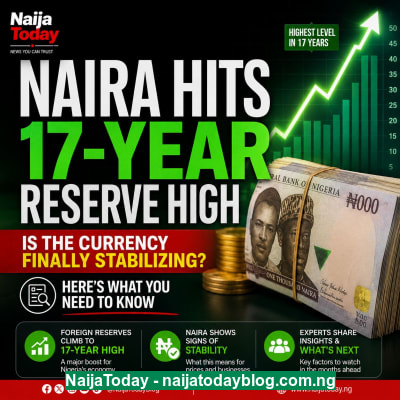
Naira Holds Near ₦1,370/$ as Official and Black Market Exchange Rates Move Closer Together
For years, one of the biggest concerns for Nigerians dealing with foreign currency has been the wide difference between the official exchange rate and the black market rate. Whether you were paying tuition abroad, importing goods, funding an international business, or simply sending money to a family member overseas, the exchange rate often depended on where you sourced your dollars.
This month, however, something unusual has happened.
The naira appears to be enjoying one of its most stable periods in recent years, with the official exchange rate and the parallel market rate trading at almost the same level.
According to data from the Central Bank of Nigeria (CBN), the Nigerian Foreign Exchange Market (NFEM) closed around ₦1,370.19 per US dollar on July 3, 2026. At the same time, Bureau De Change (BDC) operators across major commercial cities, including Lagos and Abuja, were selling the dollar for approximately ₦1,369, leaving only a tiny difference between both markets.
Just a day earlier, on July 2, the official market closed around ₦1,374.18, while the parallel market exchanged at approximately ₦1,385 per dollar.
Although these daily movements may seem small, they represent an important shift in Nigeria's foreign exchange market and could signal improving confidence in the naira.
Why Everyone Is Talking About the Naira Again
For many Nigerians, the exchange rate has become more than just an economic statistic.
It affects daily life.
The strength or weakness of the naira influences everything from food prices and transportation costs to tuition payments, international travel, online subscriptions, imported electronics, pharmaceutical products, and even the prices of locally manufactured goods that rely on imported raw materials.
When the naira loses value against the US dollar, businesses pay more to import goods.
Those higher costs are usually transferred to consumers through higher prices.
Conversely, when the naira becomes more stable, businesses can plan more confidently, importers experience less uncertainty, and households are less likely to face sudden increases in the prices of everyday products.
That is why many financial analysts are paying close attention to the current convergence between Nigeria's official and parallel exchange rates.
Why the Gap Between Official and Black Market Rates Matters
For several years, Nigeria operated with a noticeable difference between the official exchange rate and the rate obtainable in the parallel market.
This gap often reflected the availability—or lack—of foreign currency within the official financial system.
When dollars became difficult to obtain through commercial banks or official CBN channels, individuals and businesses turned to Bureau De Change operators or the informal market.
As demand increased outside official channels, the black market exchange rate often rose significantly above the official rate.
At various periods, the difference between the two markets reached several hundred naira per dollar.
Such wide disparities created opportunities for speculation and arbitrage while reducing confidence in the foreign exchange market.
Today, however, that picture has changed considerably.
With both markets now trading within only a few naira of each other, many economists believe Nigeria's foreign exchange market is becoming more transparent and more efficient.
While challenges certainly remain, the narrowing gap suggests that access to foreign exchange has improved compared with previous years.
What Has Helped Stabilise the Naira?
Several developments appear to be supporting the recent stability of the naira.
Improved Foreign Exchange Liquidity
One major factor is increased availability of foreign currency in the official market.
When banks and authorised dealers have better access to dollars, pressure on the parallel market naturally declines.
Businesses no longer need to rush to unofficial markets if they can obtain foreign exchange through formal channels.
Central Bank Reforms
The Central Bank of Nigeria has continued implementing reforms aimed at improving transparency and efficiency within the foreign exchange market.
These measures include changes designed to improve price discovery, encourage market participation, and reduce unnecessary distortions that previously created multiple exchange rates.
Analysts quoted by The Telegraph Nigeria believe these reforms have contributed significantly to the recent convergence between official and parallel market rates.
Better Market Confidence
Exchange rates are influenced not only by economic data but also by expectations.
When investors believe policies are becoming more predictable, confidence generally improves.
Greater confidence often encourages both domestic and international investors to participate in the economy, increasing the supply of foreign exchange.
Looking at the Numbers
Although the naira has remained relatively stable in recent weeks, it has not been completely fixed.
Like every freely traded currency, its value continues to fluctuate from one trading session to another.
Market data showed the naira strengthening from around ₦1,376 per dollar to approximately ₦1,369 before easing back toward ₦1,374 during subsequent trading sessions.
Viewed over an entire month, the movement has been relatively modest.
The official exchange rate moved from approximately ₦1,366.80 on June 1 to about ₦1,379.68 by June 30, representing a monthly depreciation of less than one percent.
Compared with the extreme volatility experienced in previous years, these changes are relatively small.
This suggests that the naira is currently trading within a narrower range, giving businesses and consumers greater confidence when planning transactions.
What Does This Mean for Ordinary Nigerians?
The exchange rate affects far more people than those directly buying dollars.
Consider a small business owner importing electronics.
A more stable naira allows them to estimate future costs more accurately, reducing the need to increase prices unexpectedly.
Parents paying school fees abroad also benefit.
When exchange rates fluctuate wildly within days, budgeting becomes extremely difficult.
A difference of ₦50 or ₦100 per dollar can translate into hundreds of thousands of naira on large tuition payments.
The same applies to patients travelling overseas for medical treatment, importers purchasing machinery, freelancers paying for international software subscriptions, and entrepreneurs sourcing products from foreign suppliers.
For these groups, exchange rate stability is almost as valuable as a stronger currency.
Predictability allows better financial planning.
Importers and Exporters Are Watching Closely
Businesses involved in international trade monitor the naira every single day.
Importers naturally prefer a stronger or more stable currency because it reduces the cost of bringing goods into Nigeria.
Exporters, on the other hand, may benefit when the naira weakens slightly because their foreign earnings convert into more local currency.
Finding the right balance is therefore important.
A stable exchange rate encourages long-term investment while allowing businesses to make purchasing decisions with greater certainty.
Many economists argue that consistency is often more valuable than dramatic short-term gains.
What Could Determine the Naira's Next Move?
While the current outlook appears encouraging, analysts caution that maintaining stability will require continued improvements across several key areas.
Foreign Exchange Inflows
Nigeria earns most of its foreign exchange through crude oil exports.
Additional inflows also come from non-oil exports, foreign direct investment, diaspora remittances, and portfolio investment.
Higher inflows generally strengthen the naira by increasing the supply of foreign currency available in the market.
Import Demand
Demand for foreign exchange remains high because Nigeria imports many finished goods, industrial equipment, pharmaceuticals, and raw materials.
If import demand rises significantly without a corresponding increase in dollar inflows, pressure on the naira could return.
External Reserves
Nigeria's external reserves serve as an important buffer against exchange rate shocks.
Healthy reserves enable the Central Bank to intervene when necessary to support orderly market conditions.
Investor Confidence
Perhaps the most difficult factor to measure is confidence.
Investors look beyond exchange rates themselves.
They also consider inflation, fiscal policy, interest rates, political stability, security conditions, and broader economic reforms before committing long-term capital.
Positive developments across these areas could further strengthen confidence in the naira over time.
Why Exchange Rate Stability Matters for Inflation
One important benefit of a stable naira is its potential impact on inflation.
Nigeria imports a significant amount of consumer goods, manufacturing inputs, agricultural chemicals, medical supplies, and industrial machinery.
When the naira weakens sharply, importers pay more for these products.
Those higher costs are eventually passed on to consumers.
A more stable exchange rate can therefore help slow increases in consumer prices, although inflation is also influenced by food production, transportation costs, energy prices, and domestic supply chains.
While exchange rate stability alone cannot eliminate inflation, it reduces one major source of upward pressure on prices.
Should You Buy Dollars Now?
Many Nigerians constantly ask whether it is the right time to buy dollars.
The truth is that no one can predict exchange rates with complete certainty.
However, the recent convergence between the official and parallel markets suggests that panic buying may be less necessary than during periods of extreme volatility.
If you have a genuine need to pay tuition, process a visa application, purchase imported equipment, settle international invoices, or fund overseas travel, today's relatively stable market may provide greater confidence when making those transactions.
Even so, experts continue to advise individuals and businesses to verify the prevailing exchange rate before completing any foreign exchange transaction.
Although recent movements have been relatively modest, exchange rates can still change daily in response to new economic developments.
Final Thoughts
The recent performance of the naira represents one of the more encouraging developments in Nigeria's financial markets this year.
While the currency has not experienced a dramatic appreciation, the narrowing gap between the official and parallel exchange rates signals a healthier and more transparent foreign exchange environment than many Nigerians have become accustomed to over the past several years.
Challenges remain.
Nigeria still needs stronger foreign exchange earnings, improved export performance, sustained investor confidence, and continued economic reforms to maintain long-term currency stability.
Nevertheless, the fact that the official market and the black market are now quoting almost identical exchange rates is a development that deserves attention.
For businesses, investors, students, travellers, importers, exporters, and millions of ordinary Nigerians, a more stable naira means fewer surprises, greater confidence when planning finances, and the possibility of a more predictable economic environment in the months ahead.
As always, anyone making foreign exchange transactions should monitor daily market updates and rely on authorised financial institutions or licensed Bureau De Change operators before exchanging currency.
Sources: Central Bank of Nigeria (CBN), Nigerian Foreign Exchange Market (NFEM), Channels Television, The Telegraph Nigeria, and NgnRates.com (exchange rate data for July 1–3, 2026).