Running a Small
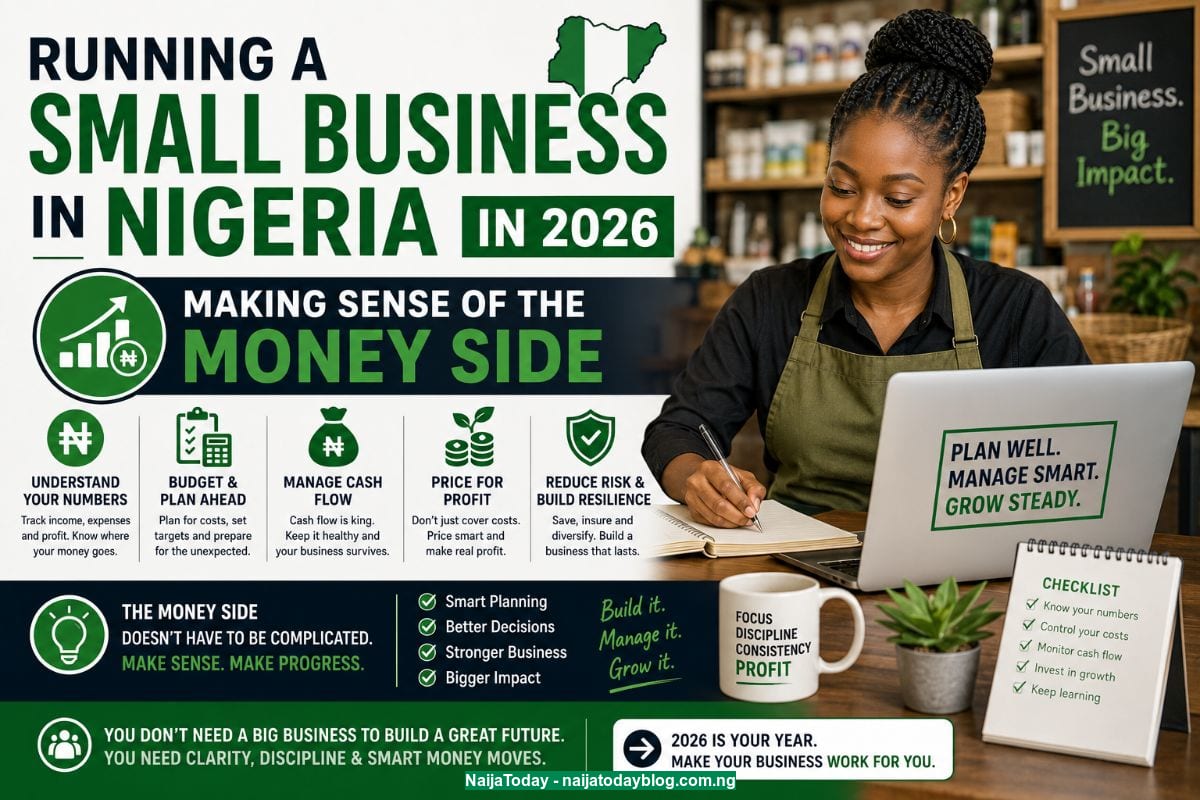
Business in Nigeria in 2026: Making Sense of the Money Side
If you run a small business in Nigeria right now, you've felt it: money to
expand is expensive, and it has been for a while. Understanding exactly why —
and which funding routes are actually worth pursuing — is the difference
between a business that survives this stretch and one that quietly stalls out.
This isn't financial advice tailored to your specific situation, but here's the
factual picture as it stands, and what it means in practice.
Why borrowing still feels so expensive
The Central Bank of Nigeria held its benchmark Monetary Policy Rate at 26.5% at
its July 2026 meeting — the second consecutive meeting it left the rate
unchanged, after cutting it from 27% earlier in the year. That benchmark rate
isn't what you personally pay to borrow; commercial banks add their own funding
costs, risk margins, and operating expenses on top of it, which is why actual
lending rates for many small businesses sit above 30%.
The CBN's own reasoning, according to its public statements, is that inflation
is trending down but not fast enough to justify aggressive rate cuts — and
cutting too quickly risks weakening the naira and reviving the same price
pressures that made borrowing expensive in the first place. Nigeria pulled in
roughly $10.4 billion in capital importation in the first quarter of 2026
alone, with the vast majority coming from portfolio investors chasing
high-yield naira assets. That inflow is genuinely useful for supporting the
currency, but it also means the CBN has an incentive to keep rates attractive
to foreign investors — which, in turn, keeps them high for local SME borrowers
too. It's a trade-off, and small business owners are, unfortunately, the ones
absorbing most of the cost of it.
The scale of the mismatch is striking: small and medium enterprises make up
over 90% of Nigerian businesses, yet receive less than 5% of total commercial
bank lending. Total private-sector credit did rise to roughly ₦81 trillion by
May 2026, so banks are lending more overall — it's just not reaching MSMEs in
proportion to how many of them there are.
The financing options that are actually worth your time
Not all borrowing in Nigeria is expensive. The gap is wide between commercial
bank rates and a handful of government-backed schemes most small business
owners simply never apply to, often because the paperwork feels
intimidating.
- Bank of Industry (BOI) intervention funds — typically 9–12% annually,
dramatically below commercial rates, though they require more documentation and
patience to access.
- FGN MSME Intervention Fund — up to ₦5 million per beneficiary at 9%
annual interest over a three-year term.
- BOI's Youth Entrepreneurship Support (YES) Programme — combines training
with funding up to ₦5 million, targeted at entrepreneurs aged 18 to 35.
- Presidential Conditional Grant Scheme (PCGS) — genuine grant funding (not
a loan) aimed at nano and micro businesses, with a particular focus on women
and youth, disbursed through local government areas.
- SMEDAN-backed funds, including a recent ₦5 billion SMEDAN x Sterling MSME
Fund specifically for registered Nigerian-owned small businesses.
- Bank of Agriculture financing for anyone in the agricultural value chain,
from primary production through processing.
The catch with almost all of these is that they favour registered businesses.
If your business is still operating informally — no CAC registration, no
separate business bank account, no basic bookkeeping — you're locked out of
nearly every single-digit-interest option before you even apply. That single
step, formalising the business, is often the highest-leverage thing an
entrepreneur can do this year, well before chasing any specific loan.
Where to be careful
Digital lending platforms have made borrowing faster and more accessible than
ever in Nigeria — you can get money into your account in minutes rather than
weeks. But that convenience carries a real cost: some fintech lenders charge
APRs of 60% or higher. For a genuine short-term cash-flow bridge — covering
payroll for two weeks while an invoice clears, for example — that might be a
reasonable trade-off. For business expansion, equipment purchases, or anything
with a payback period longer than a few months, that rate can quietly bury a
profitable business under repayment costs it never should have taken on.
Group lending through registered cooperatives is worth more attention than it
usually gets. It typically doesn't require the individual collateral that
commercial banks demand, and it spreads risk across members rather than putting
the full weight of a bad month on one business owner alone.
Practical steps that don't depend on the interest rate environment
changing
Whatever happens to the CBN's rate at the next few meetings, some habits
protect a small business regardless of the borrowing climate:
1. Register the business now, even if you're not currently seeking a loan.
CAC registration is the gateway to nearly every affordable financing option,
and it takes far less time to complete than most owners assume.
2. Keep basic records from day one. Even a simple spreadsheet tracking
income, expenses, and stock is often the difference between a loan application
that gets approved and one that gets rejected for "insufficient
documentation" — the single most common reason cited by lenders for
turning small businesses away.
3. Match the loan type to the purpose. Use fintech or microfinance credit
only for short-term, fast-turnaround needs. Reserve BOI, FGN, or SMEDAN-backed
funding for anything involving equipment, expansion, or a payback period
stretching past a few months.
4. Build a small cash buffer before you need one. With lending this
expensive, a business that can self-fund a slow month without resorting to a
high-interest loan has a real competitive advantage over one that can't.
A concrete scenario: a fashion designer in Lagos selling through Instagram
and word of mouth wants to buy a second industrial sewing machine to take on
larger orders. A fintech loan could put the cash in her account within a day,
but at 50%+ APR, the machine effectively costs far more than its sticker price
by the time it's paid off. Registering with CAC — a process that now takes
days, not months — opens the door to a BOI or FGN MSME facility at roughly 9%,
turning the same purchase into a far more sustainable investment, even though
the paperwork takes longer upfront.
The bottom line
Nigeria's high-interest-rate environment isn't going away overnight — the CBN
has been explicit that it's prioritising exchange-rate stability and inflation
control over quick relief for borrowers. But "expensive to borrow"
and "impossible to grow" aren't the same thing. The businesses that
navigate 2026 well aren't necessarily the ones with the best products — they're
the ones treating formalisation, record-keeping, and matching the right funding
source to the right purpose as seriously as they treat sales.
This article provides general information based on current CBN policy and
publicly available financing programmes. It isn't personalised financial advice
— for decisions specific to your business, speak with a qualified financial
advisor or your bank's SME desk.
💼 Business🔥 HOT
Running a Small Business in Nigeria in 2026: Making Sense of the Money Side
By NaijaToday Desk · 31 July 2026 · 6 min · 👁 3
CBN's 26.5% benchmark rate is keeping SME loans expensive in 2026. Here's why, which single-digit government-backed funding options most owners overlook, and how to avoid costly fintech loan traps.
How does this story make you feel?
No account or sign-in needed. You can react instantly.
Share:
NaijaToday Desk
The NaijaToday newsroom
More Stories to Explore
More reporting selected from NaijaToday, based on topics and categories.