2027 Is Here: Tinubu, Obi, Atiku and the Race That Will Define Nigeria's Future
Category: Politics | Author: NaijaToday Desk | Published: Thu Aug 20 2026
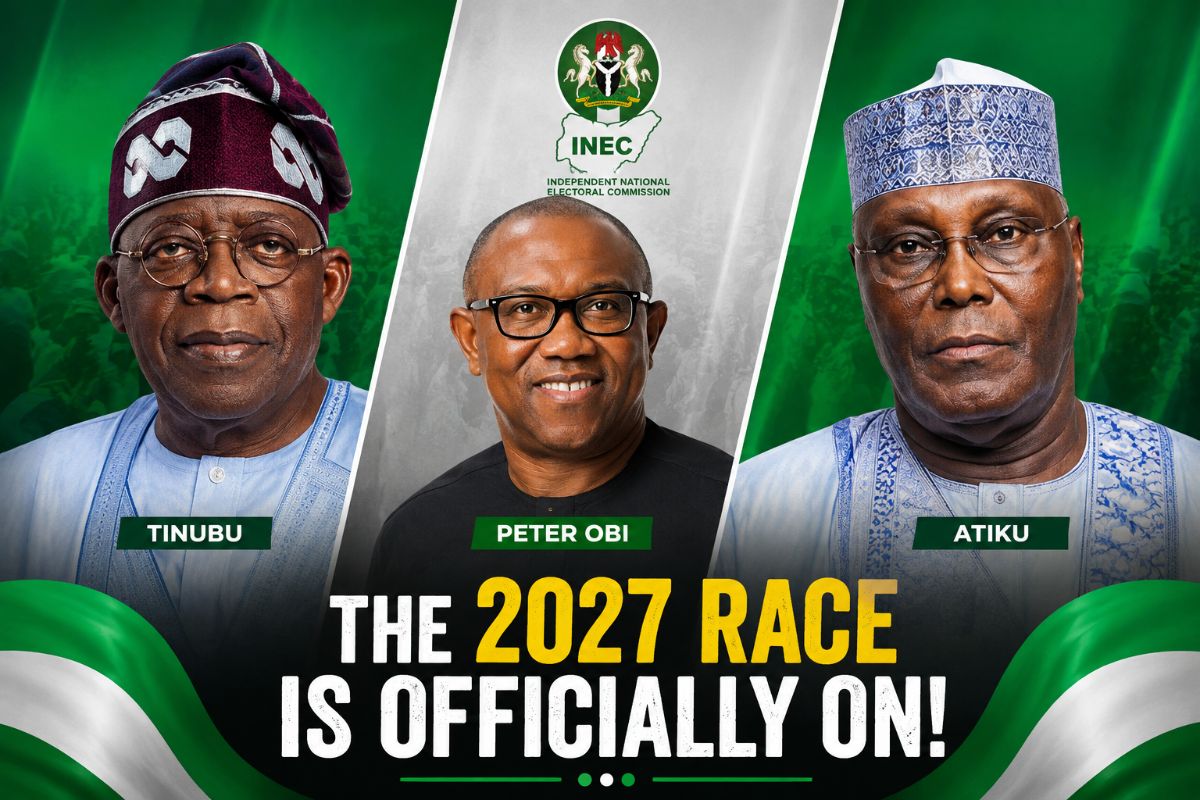
1 Wednesday, August 19, 2026, marks the statutory commencement of campaigns for the presidential and National Assembly elections for the 2027 general elections, as set by the Independent National Electoral Commission's timetable.
It's official. The starting gun has been fired. 1 Wednesday, August 19, 2026, marks the statutory commencement of campaigns for the presidential and National Assembly elections for the 2027 general elections, as set by the Independent National Electoral Commission's timetable. The countdown is over. The debates, the speculation, the social media arguments, the predictions — all of it has now given way to the real thing. Campaign season. The most consequential battle in Nigeria's recent history has officially begun. And make no mistake: this election is going to be different. It's going to be louder, messier, more expensive, more contested, and more consequential than anything we've seen since 2015. Because unlike 2023, every major player knows exactly what's at stake. The economy. The security. The credibility of Nigerian democracy itself. All of it is on the ballot. Today, we're going to break down everything you need to know — the candidates, the context, the controversies, and the critical questions that will define the next six months of Nigerian politics. Buckle up. The Peace Accord: More Than Ceremony? The day before campaigns officially opened, something significant happened in Abuja. 7 Presidential candidates and leaders of political parties ahead of the 2027 general elections signed a National Peace Accord, pledging to conduct issue-based campaigns and reject violence, hate speech, personal attacks, fake news and ethnic or religious incitement. 5 The accord, facilitated by the National Peace Committee in partnership with The Kukah Centre, commits political parties, presidential candidates and their supporters to peaceful campaigns, respect for electoral institutions and issue-based political engagement. Beautiful words. Important words. Words that have been spoken before every Nigerian election since 2015 — and promptly ignored within weeks of the campaign season starting. But let's give credit where it's due: the Peace Accord is not nothing. It creates a public record. It puts candidates on record. And it gives civil society groups and election observers something to point to when the inevitable mudslinging begins. 7 The accord is described by the organisers as more than a ceremonial document, and is anchored in the Constitution, the Electoral Act, the Independent National Electoral Commission (INEC) guidelines, and other relevant laws governing the electoral process. However, there were some conspicuous absences at the signing. 1 President Bola Tinubu, the presidential candidate of the All Progressives Congress (APC), was absent and was represented by the Secretary to the Government of the Federation, George Akume. 1 The presidential candidate of the African Democratic Congress (ADC), Atiku Abubakar, was also not present at the event. Think about what that means. The two most powerful candidates in this race — the incumbent president and the leading opposition challenger — both skipped the Peace Accord signing. They sent