If you thought the drama of the Osun 2026 governorship
election ended when INEC declared Governor Ademola Adeleke the winner, think
again. The real drama? It just started.
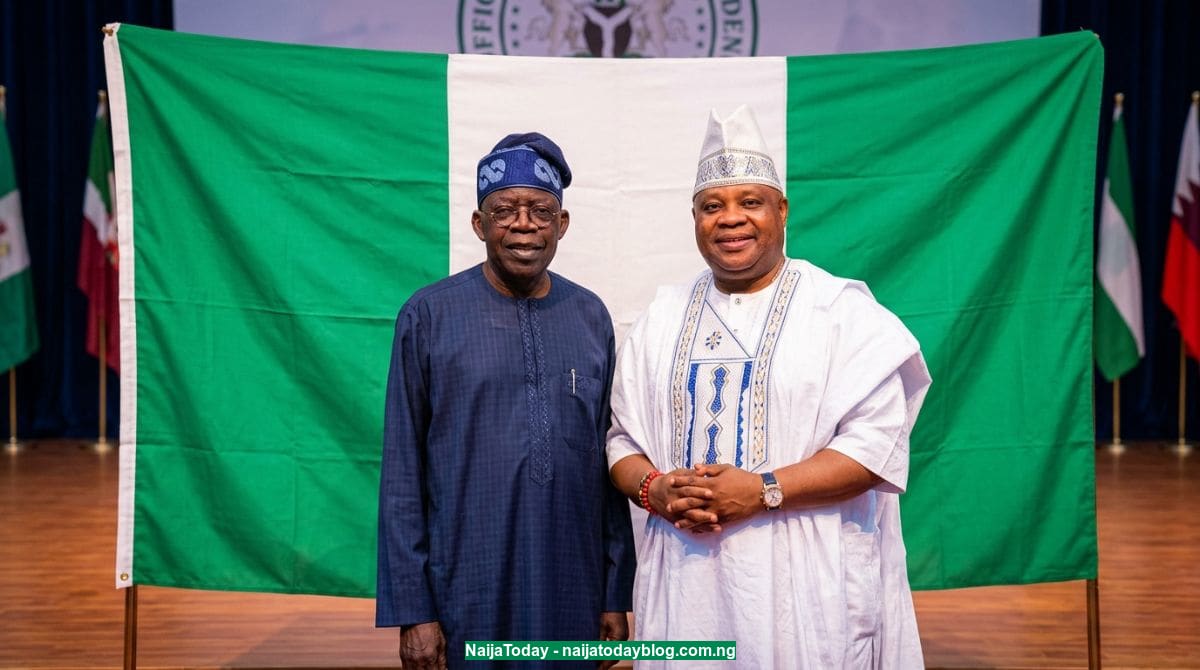
Less than 48 hours after securing his second term in office
with a commanding 511,067 votes, Governor Ademola Adeleke did something that
has set Nigerian social media on fire: he publicly endorsed President Bola
Ahmed Tinubu for re-election in 2027.
And his reason? It's the kind of statement that only
Nigerian politics can produce.
The governor said his support for the President is not based
on any agreement reached with the Federal Government, but partly because
"the President is a Yoruba man."
Yes. He said that. Out loud. On record.
Now, before you pick up your phone and start typing an angry
comment, let's slow down and actually unpack what's happening here. Because
this story is about much more than one governor endorsing one president. This
is about the future of Nigerian politics, the collapse of the PDP in the
South-West, the realignment of power ahead of 2027, and the quiet deals that
shape who rules this country.
Let's break it all down.
The Timeline: From PDP Governor to Tinubu Ally in 18 Months
To understand why this endorsement is so significant, you
need to understand the journey.
In July 2022, Ademola Adeleke won the Osun State
governorship election on the platform of the Peoples Democratic Party (PDP). It
was a massive victory — the PDP had snatched Osun from APC's Gboyega Oyetola.
The "Dancing Governor" was born, and PDP celebrated.
Fast forward to December 2025. Adeleke shocked the political
world by defecting from the PDP to the Accord Party. He left the party that
brought him to power. Many people thought he was committing political suicide.
"We opted for the Accord Party because its mission of
welfarism aligns with our passionate focus on citizens' and workers'
welfare," the governor said when announcing his defection.
But was it really about "welfarism"? Or was
something else going on behind the scenes?
Then came August 15, 2026. The Osun governorship election.
Adeleke didn't just win — he dominated. He polled 511,067 votes to APC's Bola
Oyebamiji's 444,815 votes. He won 19 out of 30 local government areas.
And here's what's interesting: the APC candidate didn't seem
to fight as hard as you'd expect the ruling national party to fight. The
campaign was relatively tame. The usual APC machinery — federal might, security
apparatus pressure, last-minute cash blitz — was noticeably subdued.
Almost as if... they didn't really want to win.
Then, barely two days after his victory, Adeleke endorses
Tinubu for 2027. And suddenly, the pieces start falling into place.
The Federal Response: "A Man of Integrity and Honour"
The speed of the Federal Government's response told its own
story.
Minister of Aviation and Aerospace Development, Festus
Keyamo, thanked Osun State Governor, Ademola Adeleke, for publicly reaffirming
his support for President Bola Tinubu's bid for re-election in 2027. Keyamo
described the governor as a "man of integrity and honour."
"A man of integrity and honour." For a governor
who just defeated the APC candidate. The same party Keyamo belongs to. The same
party whose candidate got 444,815 votes and lost.
Read that again.
The APC's own minister is calling the man who just BEAT the
APC candidate "a man of integrity." In what universe does the losing
party celebrate the winner — unless the winner was always on their side?
President Tinubu himself wasted no time. He also
congratulated Adeleke, saying the re-election is "a fitting assurance that
democracy will continue to flourish."
The President said this about a man who is NOT in his party.
Who ran under the Accord Party. Who technically defeated Tinubu's APC.
Nigerian politics, ladies and gentlemen.
What This Really Means for 2027
Let's cut through the noise and talk about what this
Adeleke-Tinubu alliance actually means for the 2027 presidential election.
1. The South-West Is Being Consolidated for Tinubu
Adeleke controls Osun. Tinubu controls Lagos (through his
political machinery). Ekiti is APC. Ondo is APC. Ogun is APC. Oyo is the only
South-Western state not fully aligned with the Tinubu camp.
With Adeleke's endorsement, Tinubu can now effectively claim
control of nearly the entire South-West. In a presidential election where the
South-West is expected to vote as a bloc for a "Yoruba president seeking a
second term," this is significant.
2. PDP Is Effectively Dead in the South-West
Adeleke was PDP's last standing governor in the South-West.
When he left for Accord, PDP lost its only foothold. Now that he's endorsing
Tinubu, PDP has no path to South-Western votes in 2027. None.
3. The "Accord Party" Was Always a Vehicle, Not
a Destination
Let's be honest. Nobody believes Adeleke moved to the Accord
Party because of its "welfarist philosophy." The Accord Party was a
vehicle — a way for Adeleke to run for re-election without being under the APC
banner (which would have been too obvious) while still maintaining his
understanding with the Federal Government.
It's the oldest trick in the Nigerian political playbook:
run under a different party, maintain your alliance with the ruling party, and
everybody gets what they want. Adeleke gets his second term. Tinubu gets his
South-West endorsement. The APC doesn't have to deal with internal party
primary drama in Osun. Win-win-win.
4. This Sets the Template for 2027 Alliances
Watch closely. What happened in Osun is going to happen
across Nigeria in the coming months. Governors and political heavyweights from
different parties will start making their 2027 alignments known. Adeleke was
just the first to show his cards publicly.
The Ethnic Card: "Because He's a Yoruba Man"
Now let's address the elephant in the room. Adeleke didn't
just endorse Tinubu. He said his support is partly "because the President
is a Yoruba man."
In a country where ethnic politics has been the source of
countless conflicts, division, and mistrust, a sitting governor publicly
declaring ethnic loyalty as a basis for political support is... well, it's
Nigerian politics at its most honest.
Honest, but troubling.
Because when a Yoruba governor says he supports a Yoruba
president because he's Yoruba, what message does that send to the Igbo voter?
The Hausa voter? The Tiv voter? The Ijaw voter?
It sends the message that identity trumps performance. That
your tribe matters more than your track record. That the bonds of ethnicity are
stronger than the bonds of citizenship.
And the saddest part? Most Nigerians aren't even shocked.
Because we've always known this is how the game is played. Adeleke just said it
out loud.
The Opposition's Problem
For opposition candidates eyeing 2027, the Adeleke
endorsement is bad news.
Peter Obi of the NDC needs South-Western votes to have any
chance of winning. With Adeleke — the most popular politician in Osun — backing
Tinubu, Obi's path through the South-West just got significantly harder.
Atiku Abubakar, if he runs again, faces the same problem.
His strength is in the North. Without South-Western allies, his electoral math
doesn't add up.
The reality is this: Tinubu is building a coalition that
will be very difficult to defeat. Not because he's popular — his approval
ratings are mixed at best — but because he's assembling the political machinery
at the state level. Governors, political godfathers, traditional rulers, party
structures. That's how you win elections in Nigeria. Not with Twitter likes.
With structures.
What the People of Osun Actually Want
Here's the part that gets lost in all the political chess:
what do the actual people of Osun State want?
They want good roads. They want functioning hospitals. They
want their children to go to school without paying bribes. They want security.
They want water. They want electricity. They want jobs. They want to eat three
meals a day without selling their destiny.
Whether their governor supports Tinubu, Obi, Atiku, or the
man on the moon is secondary to whether their potholes get fixed and their
salaries get paid.
Adeleke won because, by most accounts, he delivered more
development than his predecessors in key areas. The people voted for continuity
of projects, not for political alliances they'll never benefit from.
The tragedy of Nigerian politics is that the people's
mandate is often used as currency in elite negotiations that have nothing to do
with the people's welfare.
Adeleke's endorsement of Tinubu may benefit Adeleke. It may
benefit Tinubu. It may benefit the political class.
But will it benefit the woman selling tomatoes in Osogbo
market who voted for Adeleke because he fixed her road?
That's the question nobody is asking.
What Happens Next
Keep your eyes on these developments:
- Will
APC challenge the results in court? With only a 66,252-vote
margin, a legal challenge isn't impossible. But given the federal
government's warm response, it seems unlikely.
- Will
more governors follow Adeleke's lead? Expect cross-party
endorsements of Tinubu to accelerate in the coming months.
- How
will PDP respond? Their last South-Western governor has publicly
backed Tinubu. The party's response will tell us a lot about its 2027
strategy — or lack thereof.
- What
does this mean for Davido? The singer is Adeleke's nephew and was
very vocal during the campaign. Does his uncle's Tinubu endorsement put
Davido in an awkward position with his fans who support the opposition?
Nigerian politics never sleeps. And 2027 is closer than you
think.
What do you think about Adeleke's endorsement? Smart
politics or ethnic bias? Drop your thoughts in the comments!
📰 Source: Vanguard News,
Leadership Newspaper 🔗 Naijatodayblog.com