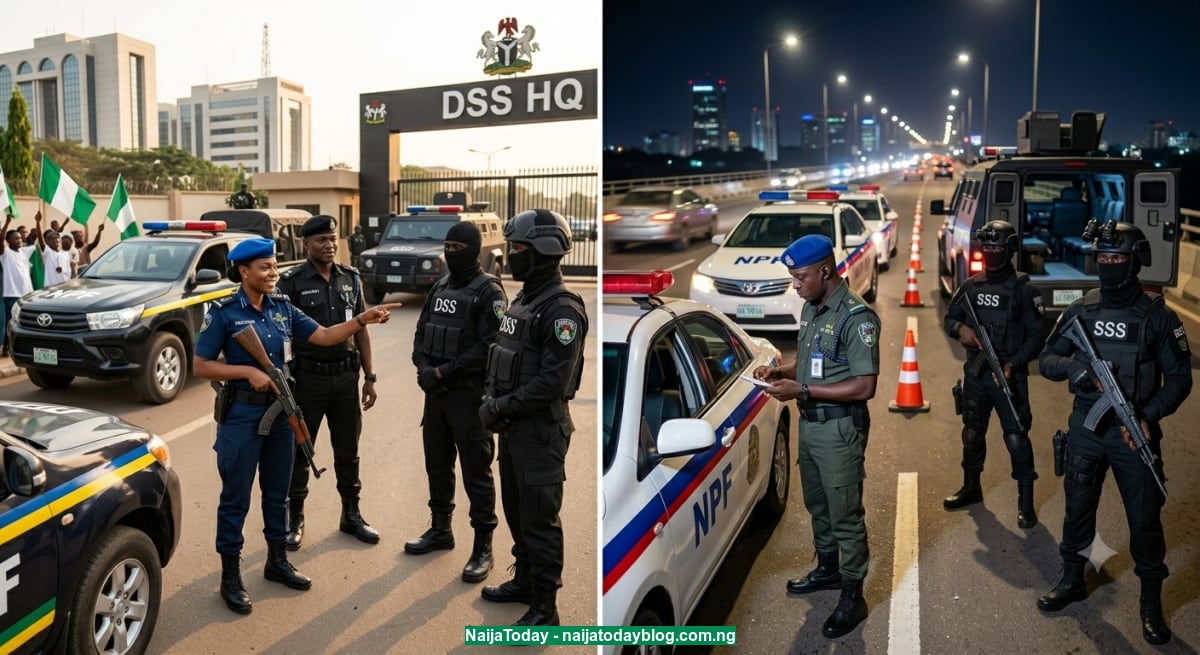
The development has reignited nationwide discussions about security, governance, and the future of law enforcement. Supporters argue that state police could provide faster responses to local security threats, while critics fear potential abuse by state governments.
With insecurity remaining one of the country's biggest challenges, the latest legislative progress has attracted widespread attention from citizens, security experts, and political stakeholders eager to see meaningful reforms implemented.
For decades, Nigeria has operated a centralized policing system in which the Nigeria Police Force is controlled by the Federal Government.
While this structure was designed to ensure uniformity and national cohesion, many experts have argued that it has become increasingly difficult to effectively police a nation of more than 200 million people from a single command structure.
Rising incidents of banditry, kidnapping, terrorism, communal clashes, armed robbery, and other forms of criminal activity have intensified calls for security reforms.
Governors across various states have repeatedly complained about their inability to directly control security resources despite being referred to as chief security officers of their respective states.
As a result, several states established regional security outfits to complement federal security agencies. Examples include Amotekun in the South-West and other state-backed security initiatives in different parts of the country.
The push for state police has gained momentum in recent years, with advocates arguing that local authorities possess a better understanding of their communities and can respond more effectively to emerging security threats. Opponents, however, have expressed concerns that state-controlled police forces could be misused for political purposes.
The latest constitutional amendment process has moved the state police proposal closer to becoming reality. Lawmakers are considering provisions that would allow states to establish and manage their own police services while maintaining cooperation with federal security agencies.
Under the proposed framework, states would be responsible for recruitment, training, administration, and operational management of their police personnel.
The arrangement is expected to complement rather than replace the existing Nigeria Police Force.
Supporters of the proposal believe local policing structures could significantly improve intelligence gathering and rapid response capabilities. Because officers would likely be recruited from within their communities, they may possess deeper knowledge of local languages, cultures, and security dynamics.
Security experts argue that criminals often exploit gaps in the current centralized system, particularly in rural areas where security presence may be limited. State police, they say, could help bridge these gaps and improve community engagement.
The proposal also includes discussions around accountability mechanisms, oversight structures, funding requirements, and coordination between state and federal law enforcement agencies.
Several lawmakers have emphasized the need to establish safeguards that prevent abuse of power.
These safeguards may include independent oversight bodies, judicial review mechanisms, and clearly defined operational boundaries.
While the proposal has crossed a major legislative stage, additional constitutional processes must still be completed before state police can become operational across the country.
The advancement of the bill has generated strong reactions from across Nigeria. Many governors and state governments have welcomed the development, describing it as a practical solution to persistent security challenges.
Security analysts argue that decentralization could improve response times and strengthen collaboration between communities and law enforcement agencies. According to several experts, successful policing often depends on local knowledge and trust between officers and residents.
Civil society organizations have expressed cautious support while emphasizing the importance of accountability. They insist that robust oversight mechanisms must accompany any state police arrangement to prevent political interference.
Some opposition figures and human rights advocates remain skeptical.
They fear that state governments could potentially use police forces to suppress political opponents or influence electoral processes.
On social media, Nigerians remain divided.
While many citizens believe state police could help reduce insecurity, others worry about funding challenges and potential misuse of authority.
If eventually approved and implemented, state police could represent one of the most significant security reforms since Nigeria's return to democratic governance. Citizens may benefit from improved local security coverage, faster emergency responses, and stronger community policing initiatives.
However, the effectiveness of the system will depend heavily on proper funding, professional training, and transparent oversight. The outcome could shape Nigeria's security landscape for decades to come.
The progress made by the State Police Bill marks an important milestone in Nigeria's ongoing search for effective security solutions. While challenges and concerns remain, the proposal has opened a serious national conversation about how best to protect lives and property in a rapidly growing country.
As lawmakers continue the constitutional amendment process, Nigerians will be watching closely to see whether state police becomes a reality. Regardless of the final outcome, the debate has already highlighted the urgent need for innovative approaches to addressing the nation's complex security challenges.