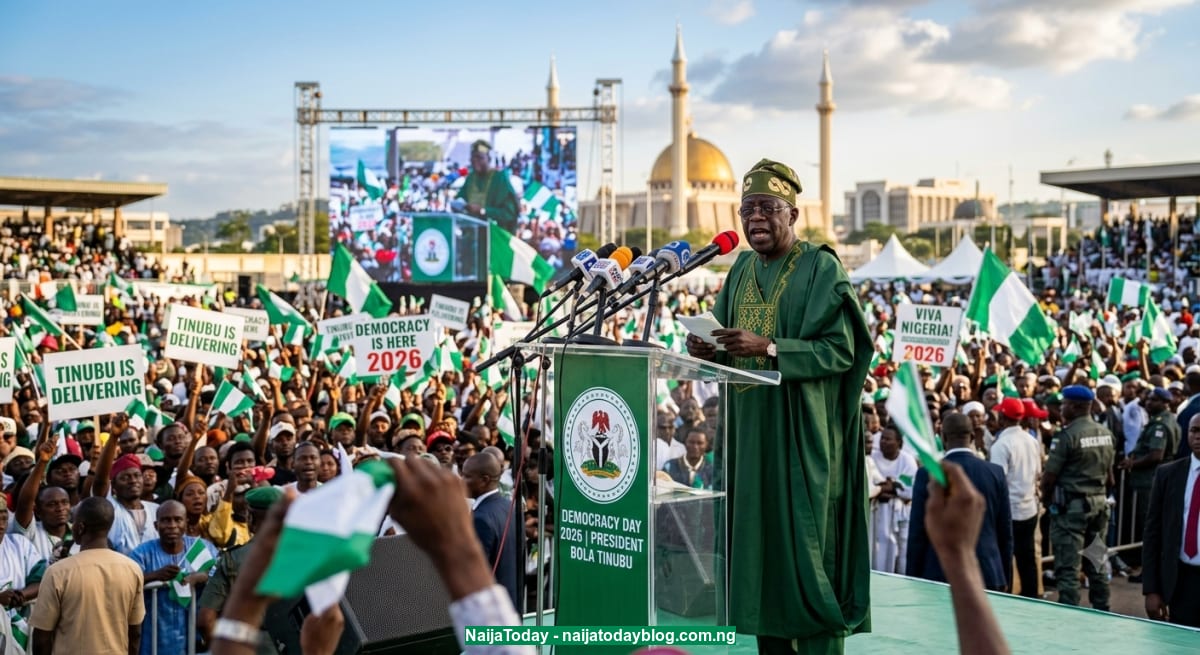
The announcement was made during his nationwide address on June 12, a day set aside to commemorate the historic struggle for democratic governance in Nigeria.
The President praised individuals who played significant roles in defending democratic values during the military era and reaffirmed his administration's commitment to strengthening democratic institutions. The development has generated widespread reactions across the country, with many Nigerians viewing it as recognition of sacrifices made during the nation's democratic journey.
June 12 remains one of the most significant dates in Nigeria's political history.
The day commemorates the annulled June 12, 1993 presidential election, widely regarded as one of the freest and fairest elections ever conducted in the country.
The election was won by the late Chief Moshood Kashimawo Olawale (MKO) Abiola but was subsequently annulled by the military government, triggering nationwide protests and a prolonged struggle for democratic rule.
For years, democracy advocates, civil society groups, journalists, lawyers, and political activists campaigned tirelessly for the restoration of democratic governance. Many were detained, harassed, or forced into exile because of their involvement in pro-democracy activities.
Recognizing the historical significance of the June 12 struggle, the Federal Government officially designated June 12 as Nigeria's Democracy Day in 2018. Since then, annual celebrations have served as opportunities to reflect on democratic progress and honour individuals who contributed to the nation's political development.
T
he 2026 Democracy Day celebration comes at a critical period when discussions about governance, economic reforms, security, and constitutional amendments continue to dominate national conversations.
During his Democracy Day address, President Tinubu announced national honours for several notable Nigerians who played significant roles in defending democratic ideals during periods of military rule.
The recipients include politicians, journalists, legal practitioners, activists, and civil society leaders whose contributions helped shape Nigeria's democratic evolution.
According to the President, the honours are intended to acknowledge the sacrifices made by individuals who risked their freedom and personal safety in pursuit of democratic governance.
He noted that many of the recipients endured imprisonment, intimidation, and financial hardship while advocating for democratic reforms.
Beyond the awards, Tinubu used the occasion to highlight achievements recorded by his administration in areas such as economic stabilization, infrastructure development, anti-corruption efforts, and security operations. He emphasized that democratic governance remains essential for sustainable development and national unity.
The President also reiterated his commitment to electoral reforms, judicial independence, and stronger institutions capable of protecting citizens' rights. He encouraged Nigerians to actively participate in democratic processes and hold elected leaders accountable through lawful means.
Political observers noted that the speech appeared designed to reinforce public confidence in democratic governance amid ongoing economic challenges.
Tinubu stressed that while reforms may involve temporary hardships, they are necessary for long-term national progress.
The announcement of national honours quickly became one of the most discussed topics on social media, with Nigerians expressing varying opinions about the recipients and the broader state of democracy in the country.
Reactions to the President's announcement have been mixed but largely positive.
Many democracy advocates welcomed the recognition of individuals who contributed to Nigeria's return to civilian rule.
Political analysts described the honours as an important step toward preserving historical memory and educating younger generations about the sacrifices that made democratic governance possible.
S
ome civil society organizations praised the Federal Government for acknowledging the contributions of activists who were previously overlooked in national recognition programs.
On social media, many Nigerians applauded the decision to celebrate democratic heroes while also urging the government to address pressing economic concerns affecting ordinary citizens.
Opposition figures argued that national honours should be accompanied by stronger commitments to transparency, accountability, and institutional reforms.
Meanwhile, several recipients expressed gratitude for the recognition, describing it as an honour not only for themselves but also for countless Nigerians who participated in the struggle for democracy.
The national honours serve as a reminder of the sacrifices made to secure democratic freedoms in Nigeria. For younger Nigerians, the recognition provides an opportunity to learn about the country's democratic history and appreciate the importance of civic participation. It also highlights the need to protect democratic institutions and ensure that governance remains accountable to the people.
As Nigeria continues navigating economic and political challenges, strengthening democratic values remains essential for national development.
President Tinubu's Democracy Day announcement has placed renewed attention on Nigeria's democratic journey and the individuals who contributed to it. By recognizing pro-democracy heroes, the government seeks to preserve an important chapter in the nation's history while encouraging continued commitment to democratic governance. Although opinions differ regarding the current state of democracy, the significance of June 12 remains undisputed.
The day's events reinforce the importance of protecting democratic institutions and ensuring that the sacrifices of past generations continue to inspire future progress.