The Dangote Refinery One Year On: Has It Actually Changed Anything for Ordinary Nigerians?
Category: Business | Author: By NaijaToday Business Desk | June 21, 2026 | Published: Sun Jun 21 2026
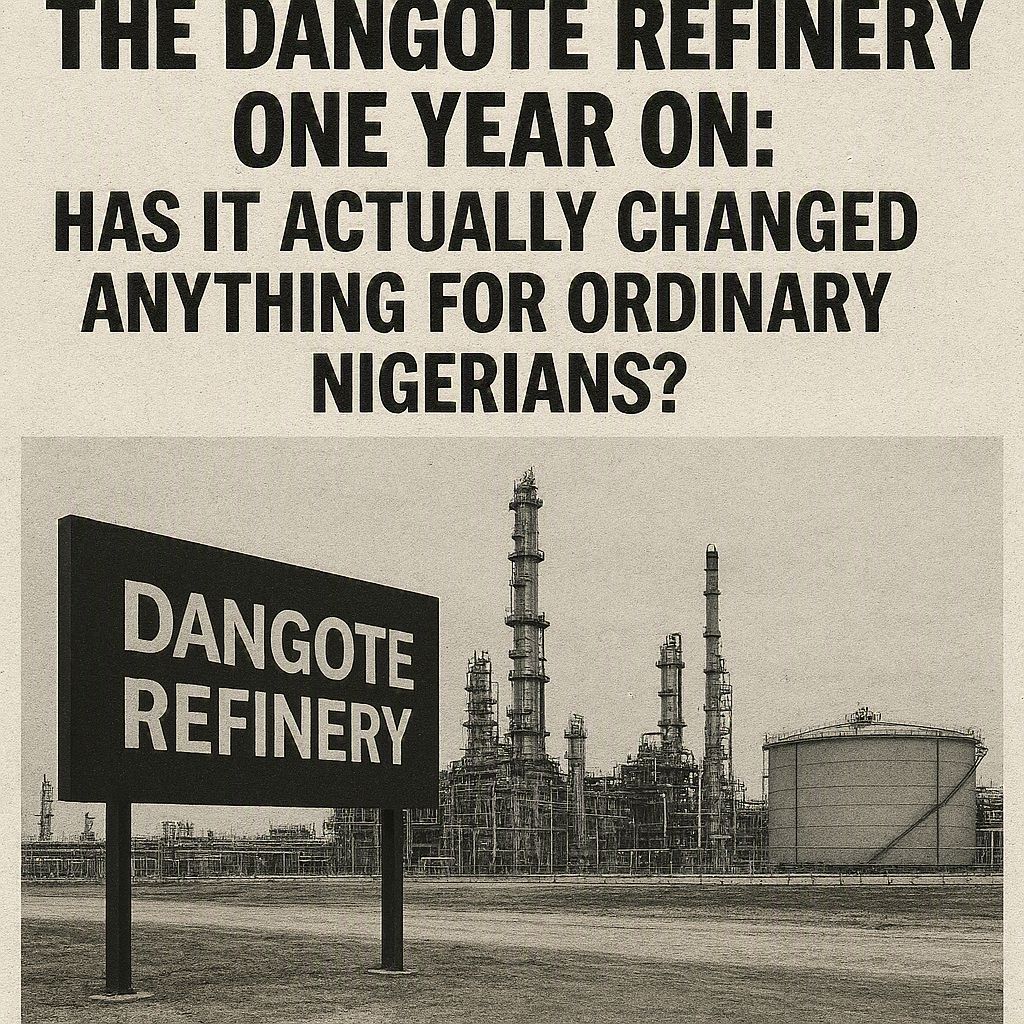
When the Dangote Petroleum Refinery finally began processing crude oil at meaningful scale, the reaction from Nigerians was a mixture of pride, relief, and cautious expectation. Here, at last, was the thing that was supposed to change everything — a 650,000-barrel-per-day refinery sitting on the edge of the Lagos lagoon, the largest single-train refinery in the world, built by a Nigerian for Nigeria.
When the Dangote Petroleum Refinery finally began processing crude oil at meaningful scale, the reaction from Nigerians was a mixture of pride, relief, and cautious expectation. Here, at last, was the thing that was supposed to change everything — a 650,000-barrel-per-day refinery sitting on the edge of the Lagos lagoon, the largest single-train refinery in the world, built by a Nigerian for Nigeria. The promise was simple and powerful: Nigeria, which sits atop some of the largest crude oil reserves in Africa, would no longer have to import the refined petroleum products that its own people needed to cook, to drive, to run generators, to power the engines of daily life. The foreign exchange haemorrhage caused by petrol imports would stop. Pump prices would stabilise. The naira would strengthen. Industry would have cheaper inputs. Life would get better. That was the promise. The question — the honest, difficult, necessary question — is what has actually happened. What the Refinery Has Achieved Let us start with what is genuinely true and genuinely impressive. The Dangote Refinery is operational. After years of delays, false starts, funding crises, and the particular Nigerian tendency to announce completion long before completion has actually arrived, the refinery is processing crude oil and producing refined products at increasing scale. In June 2026, reports confirmed that the refinery had increased its processing capacity further — a development that economists and energy analysts described as potentially significant for domestic fuel supply and industrial output. The refinery has moved beyond symbolic production into something approaching meaningful contribution to Nigeria's fuel supply. This is not nothing. This is, in fact, considerable. The construction of this refinery — financed largely by Aliko Dangote's personal wealth and a consortium of international lenders — was an act of private-sector ambition at a scale Nigeria has rarely seen. Whatever criticisms follow, that achievement deserves to be acknowledged clearly. The Foreign Exchange Question One of the central promises of the Dangote Refinery was that it would reduce Nigeria's dependence on imported petroleum products and thereby reduce the pressure on the country's foreign exchange reserves. Nigeria has historically spent billions of dollars importing petrol, diesel, kerosene, and aviation fuel — products that its own refineries, if they functioned, should have been producing domestically. The Port Harcourt, Warri, and Kaduna refineries — collectively capable of refining 445,000 barrels per day when built — have for decades operated at a fraction of their stated capacity, victims of chronic underfunding, corruption, and institutional neglect. The foreign exchange cost of fuel imports has been a persistent drag on the naira and a consistent source of instability in Nigeria's balance of payments. If the Dangote Refinery can supply a significant portion of Nigeria's domestic fuel needs,