Why faith is the most complicated relationship Nigerians have ever been in
Category: Religion | Author: NaijaToday Desk | Published: Sun Jun 28 2026
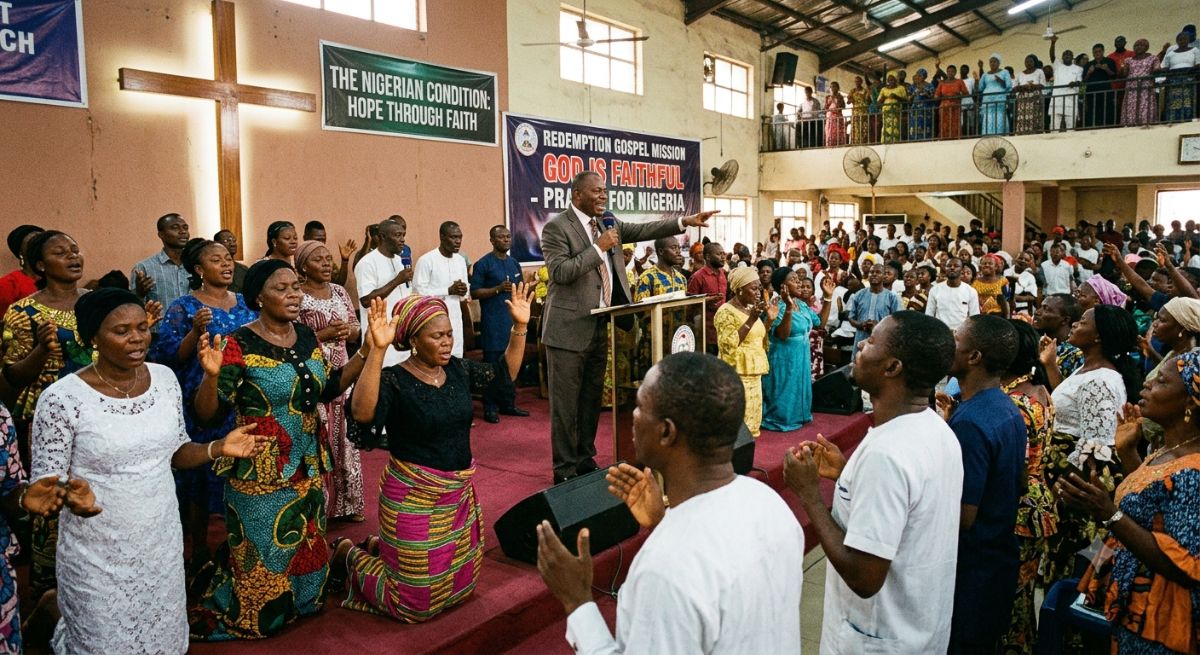
Why faith is the most complicated relationship Nigerians have ever been in
There is a joke that Nigerians tell about themselves — the kind of joke that is only funny because it is entirely true — that Nigeria has more churches per square kilometre than any other country on earth, and yet things have never been harder. You cannot walk two streets in Lagos without passing a white-garment congregation singing at full volume at six in the morning, a Pentecostal megachurch with a car park that looks like a Rolls-Royce showroom, a mosque with loudspeakers that reach four neighbourhoods simultaneously, and a roadside prophet with a megaphone and a handwritten banner promising miracles before Friday. Nigeria is, by any measurable standard, one of the most religious countries in the world. And it is also one of the most difficult places on earth to live a dignified life. These two facts sit side by side every single day, and nobody quite knows what to do with the tension between them. This is not an article written to attack faith. Religion in Nigeria is not a simple thing that can be dismissed or celebrated without nuance. It is woven into the fabric of daily life in ways that go far deeper than Sunday services and Ramadan fasts. It is how people survive grief. It is how mothers hold themselves together when the money runs out and the children are still hungry. It is the language through which entire communities understand themselves, their history, their pain, and their hope. But it is also something else. And that something else needs to be talked about — honestly, without flinching, and with the kind of love that tells the truth. Where It Begins To understand religion in Nigeria, you have to understand what Nigeria has put its people through. Decades of military dictatorship. A civil war whose wounds have never been properly tended. Corruption so entrenched that it has become structural — not just the behaviour of bad individuals but the operating system of entire institutions. Infrastructure that collapses faster than it can be built. A healthcare system that sends the wealthy abroad and leaves the poor to pray. An education system that produces graduates who cannot find work. A currency that loses value while the people who hold it watch helplessly. When your earthly systems fail you this completely and this consistently, where do you turn? You turn to God. Not as a last resort — as a first language. As the only power that has not yet disappointed you. As the relationship that, unlike government and unlike institutions and sometimes unlike people, has never asked you to lower your expectations and then failed to meet even those. This is the ground from which Nigerian faith grows. And it is important to hold that ground with respect before anything else is said. The Church That Built Itself an Empire But something happened along the way. Something shifted. The church — particularly the Pentecostal church that exploded across Nigeria in the 1980s and 1990s — began as a genuinely radical thing. It was loud and democratic in w