Why Food Is So Expensive in Nigeria — and What Can Actually Fix It
Category: Business | Author: NaijaToday Business Desk | June 21, 2026** | Published: Mon Jun 22 2026
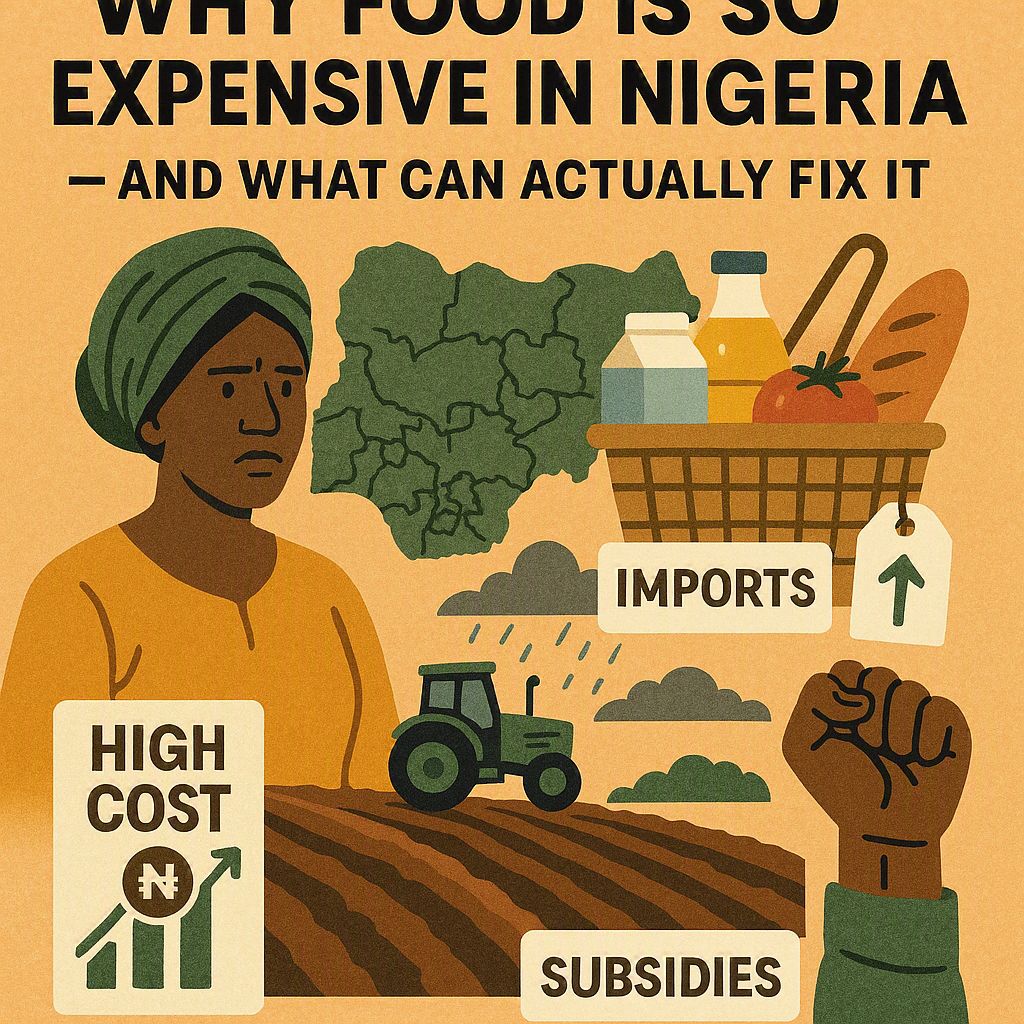
These are not luxuries. They are the building blocks of what Nigerians eat every day — the ingredients of jollof rice and egusi soup and fried plantain and all the dishes that make Nigerian food what it is. And in the past three years, the cost of these basics has increased so dramatically that a significant proportion of Nigerian families have been forced to reduce how much they eat, cut back on protein, or skip meals entirely.
A bag of rice. A bunch of tomatoes. A litre of groundnut oil. A dozen eggs. These are not luxuries. They are the building blocks of what Nigerians eat every day — the ingredients of jollof rice and egusi soup and fried plantain and all the dishes that make Nigerian food what it is. And in the past three years, the cost of these basics has increased so dramatically that a significant proportion of Nigerian families have been forced to reduce how much they eat, cut back on protein, or skip meals entirely. Food inflation in Nigeria has been running at some of the highest rates ever recorded. At its peak in 2024, food inflation exceeded 40 percent. It has moderated somewhat since — the NBS recorded food inflation at approximately 21 percent in early 2026, still more than double the rate that most economists would consider acceptable. This is not an abstraction. It is hunger. And understanding why it is happening — and what can actually fix it — requires an honest examination of Nigeria's agricultural system, its infrastructure, its policy environment, and the political economy that shapes all of them. Nigeria Grows Enough Food — So Why Is It Expensive? Here is the first thing to understand about Nigerian food prices: the country is not suffering from a fundamental inability to produce food. Nigeria is one of the largest agricultural economies in the world. It is the world's largest producer of cassava. It produces significant quantities of yam, sorghum, millet, cowpea, and palm oil. It has enormous potential for rice, wheat, tomato, and livestock production that is nowhere near fully realised. The problem is not production alone. The problem is the system that connects production to consumption — and that system is broken in multiple places simultaneously. The Roads That Are Not There The single most important factor in Nigerian food prices — more important than climate, more important than inputs, more important than any policy intervention — is the state of rural roads. Nigeria's rural road network is, in most parts of the country, inadequate to the point of being barely functional. Farmers in Benue State — Nigeria's "food basket" — grow tomatoes, peppers, yams, and vegetables in quantities that should supply markets across the country. But getting those goods from the farm to the market requires navigating roads that become impassable in the rainy season, that destroy vehicles at rates that make transportation prohibitively expensive, and that can add days to journeys that should take hours. The cost of transportation adds directly to the cost of food at the market. When a truck carries tomatoes from Benue to Lagos and breaks an axle on a potholed road, the repair cost is recovered from the price of tomatoes. When the journey takes three days instead of one, the fuel cost is recovered from the price of tomatoes. When the tomatoes spoil because the journey is too long for perishable goods to survive, the loss is recovered — or simply absorbed as a