God, Money, and the Nigerian Soul: Why We Are the Most Religious People on Earth — Yet Still Searching
Category: Religion | Author: NaijaToday Desk | Published: Thu Jun 25 2026
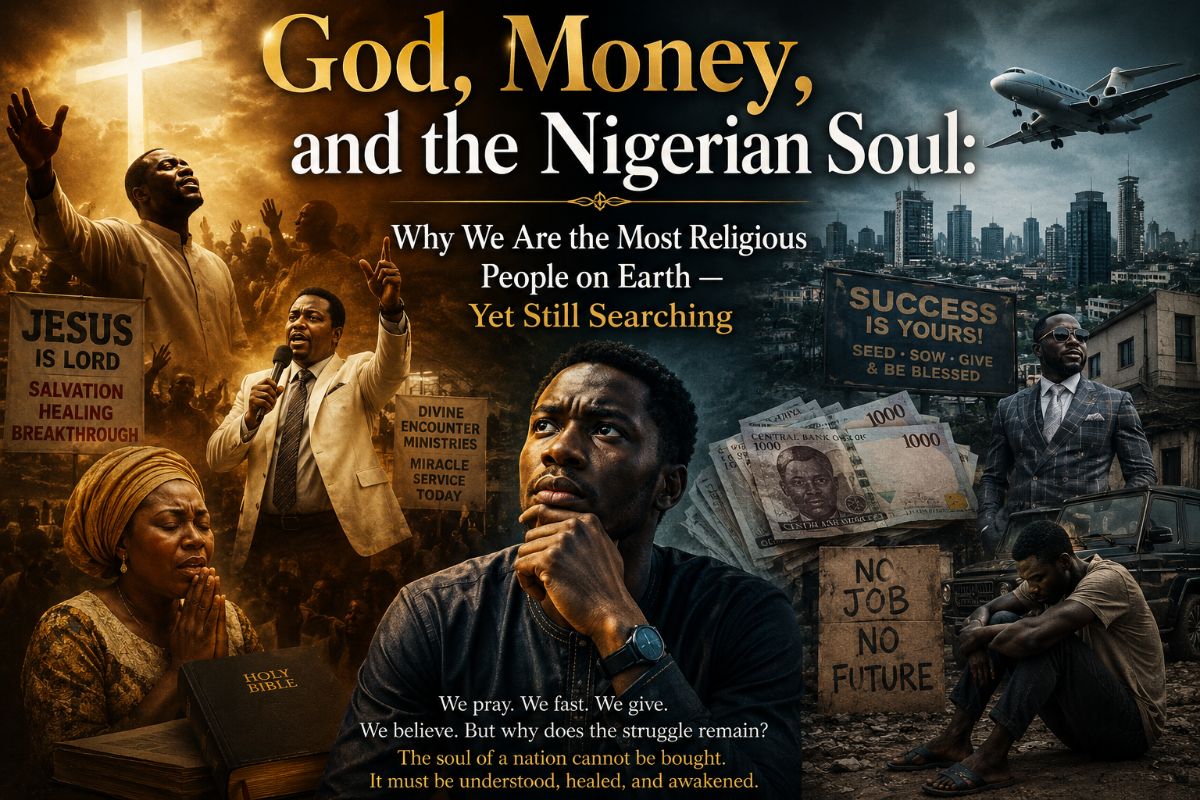
Nigeria prays more than almost any nation on earth. We fast more. We tithe more. We build more churches per square kilometre than hospitals. We name our children Chukwuemeka, Oluwaseun, Abubakar, and Chisom — every name a declaration of faith, a tiny sermon pressed into a birth certificate. We spray "God is good" on danfo buses, paint "By His Grace" on container trucks barreling down the Lagos-Ibadan expressway at 120 kilometres per hour, and open PTA meetings, company board sessions, and even football press conferences with prayer.
Nigeria prays more than almost any nation on earth. We fast more. We tithe more. We build more churches per square kilometre than hospitals. We name our children Chukwuemeka, Oluwaseun, Abubakar, and Chisom — every name a declaration of faith, a tiny sermon pressed into a birth certificate. We spray "God is good" on danfo buses, paint "By His Grace" on container trucks barreling down the Lagos-Ibadan expressway at 120 kilometres per hour, and open PTA meetings, company board sessions, and even football press conferences with prayer. By every measurable standard, Nigeria is the most intensely religious country in the world. And yet. And yet we remain one of the most economically unequal nations on earth. And yet our hospitals still lack basic equipment. And yet our roads swallow lives every rainy season. And yet millions of Nigerians go to bed hungry in a country sitting on some of the most fertile land on the African continent. How do we hold both of these things at the same time? How do we square our extraordinary, almost violent devotion to God — on both sides of the Christian-Muslim divide — with the lived reality of a nation that, by so many measures, does not reflect the blessing we declare over it every single day? That is the question this article dares to ask. Not to mock faith. Not to dismiss religion. But to look honestly, lovingly, and without flinching at what religion has done for us, what it has done to us, and what it still has the power to do. The Numbers Don't Lie Let's start with the data. The Pew Research Centre has consistently ranked Nigeria among the top countries in the world for religious commitment — not just in Africa, but globally. Over 90 percent of Nigerians report that religion is very important in their daily lives. Compare that to 53 percent in the United States, 21 percent in the United Kingdom, and under 10 percent in France. Nigeria has an estimated 86,000 registered churches — and that figure doesn't account for the thousands of unregistered fellowships operating out of rented shops, converted warehouses, and open fields. There are more Pentecostal Christians in Lagos alone than in the entire country of Sweden. On the Muslim side, Nigeria has the highest number of Muslims in sub-Saharan Africa, with a practice that ranges from the deeply Sufi traditions of the North to growing Salafi movements reshaping how young Nigerians in Kano and Sokoto think about piety. We do not half-commit to faith. When a Nigerian believes, they believe with their whole chest. Where It Comes From To understand Nigerian religiosity, you have to understand history — not just the colonial history that brought Christianity and formalised Islam into the territory that became Nigeria, but the deeper, older spiritual consciousness that was already here. Before the missionaries arrived, before the jihads reshaped the North, the people of this land already lived inside a world that was densely, profoundly spiritual. The Yoruba had Ifa — one of