Petrol Price Hike Rocks Nigeria: What ₦1,400 Per Litre Really Means
Category: Lifestyle | Author: NaijaToday Desk | Published: Sat Jul 18 2026
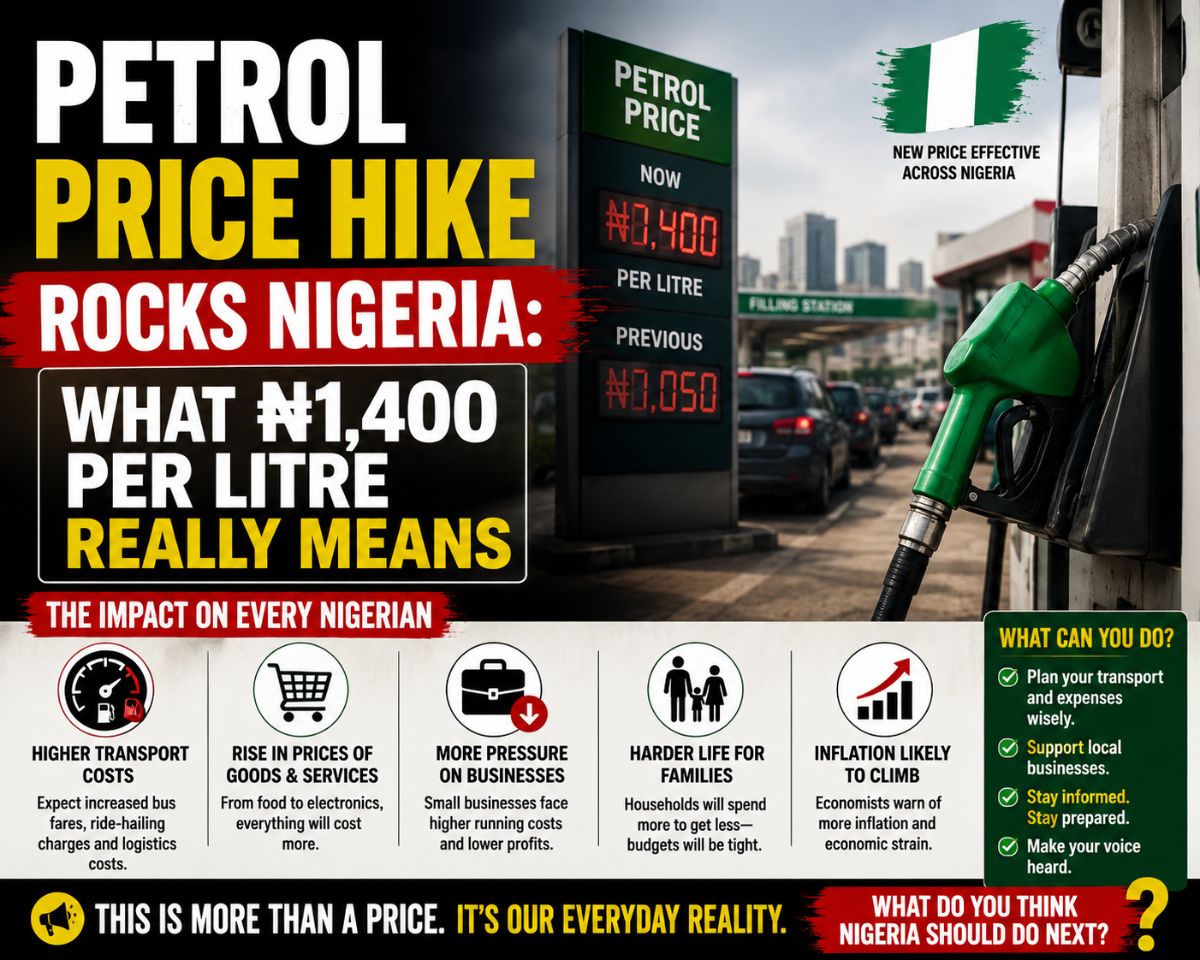
Description: A look at Nigeria's July 2026 petrol price hike, from ₦1,230 to ₦1,350 at depot level, and what it means for commuters, drivers, and small businesses nationwide.
Lagos, July 2026 — By Friday morning, the queue at the NNPCL station along Ikorodu Road had already stretched past the third bus stop. Okada riders idled their engines to save fuel while they waited. A woman selling roasted corn by the roadside watched the line grow and shook her head. "Every time na the same story," she muttered, fanning smoke away from her tray. "Price go up, we go suffer, then them go tell us say na international market." She wasn't wrong about the timing. Fuel importers had notified marketers across the country that the depot price of Premium Motor Spirit, popularly called petrol, would rise from ₦1,230 to ₦1,350 per litre starting Friday, July 17, 2026, a jump that industry sources warned could push pump prices as high as ₦1,380 to ₦1,400 per litre nationwide by the time it filtered down to the average filling station. For a country where the minimum wage sits at ₦70,000 a month in most states, that kind of jump does not stay confined to newspaper headlines. It shows up in transport fares, in the price of bread, in the cost of moving a sack of rice from Kano to Lagos. The official reason given by importers was the rising cost of imported fuel cargoes, tied to global crude prices and the naira's continued pressure against the dollar. Nigeria's inflation rate was already sitting at 15.91 percent before this latest adjustment, and analysts quoted in the reporting around the hike expect that figure to climb further once the new pump prices work their way through supply chains. It is a familiar pattern by now: a fuel price increase rarely stays a fuel story for long. It becomes a transport story, then a food story, then a story about how far a civil servant's salary can actually stretch before the month ends. A Three-Year Pattern To understand why a ₦150 jump in depot price feels so significant, it helps to look at where Nigeria's fuel prices have been. Before May 2023, when President Bola Ahmed Tinubu removed the long-standing fuel subsidy in his inauguration speech, petrol sold for roughly ₦185 to ₦200 per litre in most of the country — a price that had been artificially held down for over a decade by government subsidy payments that, at their peak, consumed trillions of naira annually from the federal budget. Within days of the subsidy announcement, prices more than doubled to around ₦537 per litre. By September of that year, further deregulation pushed the price to roughly ₦617. Through 2024, as the naira continued to slide against the dollar and the deregulated market found its footing, prices climbed into the ₦750 to ₦900 range. By 2025 and into 2026, ₦900 to ₦1,000-plus had become the new normal, before this month's announcement pushed the ceiling even higher. Seen against that timeline, the current hike isn't an isolated shock — it's the latest step in a three-year climb that has fundamentally reshaped how Nigerians budget for transport and, by extension, for almost everything else that has to move by road in a country st