The Elephant: Earth's Greatest Living Giant — and Why Nigeria Is Losing Its Last Few
Category: Education | Author: NaijaToday Desk | Published: Fri Jun 19 2026
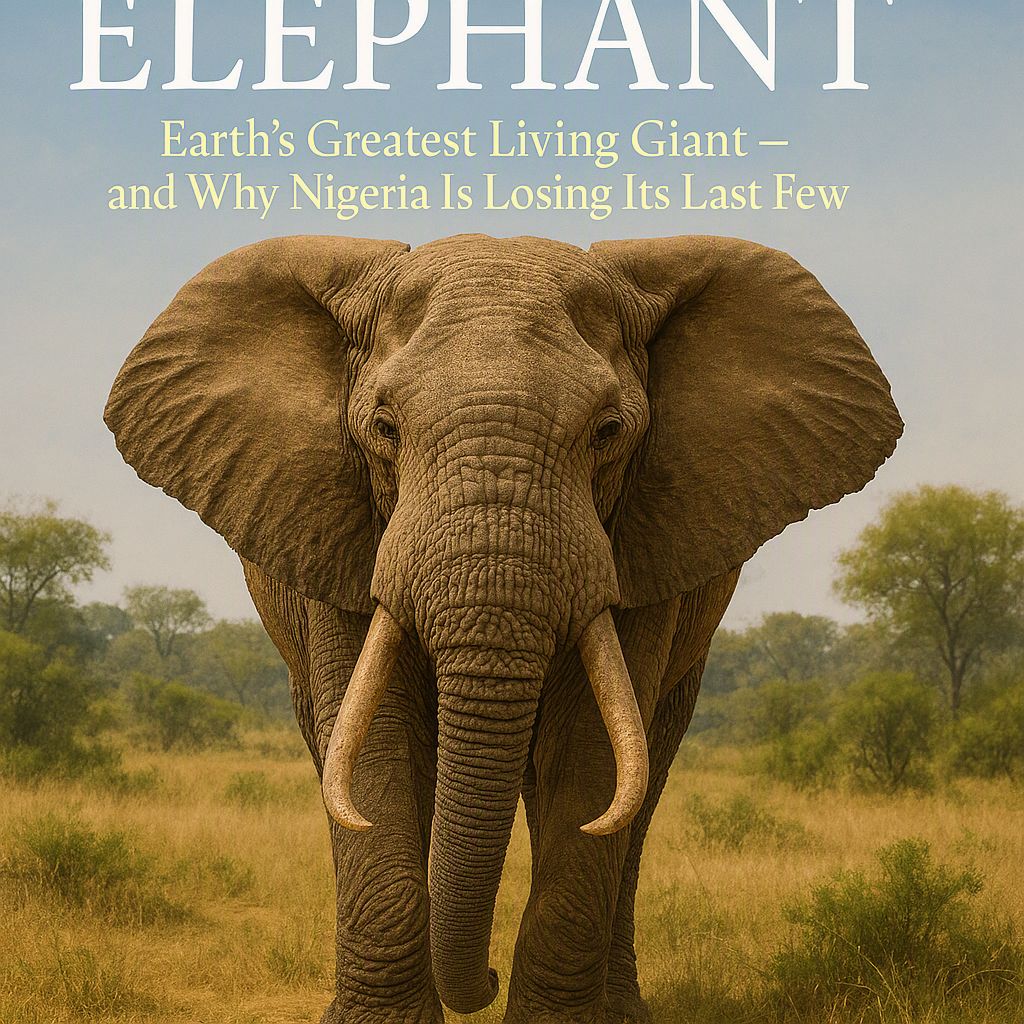
Somewhere deep in the forests of Cross River State, on the 22nd of May 2025, at precisely 4:37 in the afternoon, a camera trap mounted between the trees captured something remarkable.
Somewhere deep in the forests of Cross River State, on the 22nd of May 2025, at precisely 4:37 in the afternoon, a camera trap mounted between the trees captured something remarkable. An African forest elephant — silent, unhurried, enormous — walked quietly across the frame. For the community of Iko Esai, it was the first confirmed sighting of an elephant in over a decade. "We haven't seen an elephant in our forest for over a decade. This gives us hope that they still belong here," a community member said, his words carrying the particular emotion of someone who had almost given up. One photograph. One elephant. And yet it felt like a miracle. That is the state of things. That is what we have come to. In a country that once had between 1,200 and 1,500 elephants roaming freely across its savannas and forests, a single camera trap image is now cause for celebration. But before we get to what is happening to Nigeria's elephants, let us first understand what kind of creature we are talking about. Because the elephant is not just another animal. It is, without exaggeration, one of the most extraordinary beings that has ever walked this planet. The Largest Land Animal on Earth The African elephant is the largest land animal alive today. A fully grown male African bush elephant — called a bull — can stand over 3.5 metres tall at the shoulder and weigh as much as 6,000 kilograms. To put that in perspective: that is roughly the combined weight of four mid-sized cars. When one of these creatures moves through the forest, the ground trembles. There are two distinct species of African elephant: the savanna elephant ( Loxodonta africana ) and the forest elephant ( Loxodonta cyclotis ). For many years, scientists debated whether they were the same species. Genetic studies eventually confirmed they are not — they are as distinct from each other as lions are from tigers. Both species exist in Nigeria, though in devastatingly small numbers. Then there is the Asian elephant ( Elephas maximus ), found across South and Southeast Asia, which is smaller than its African cousins and distinguished by its rounded back, smaller ears, and a single-domed head. All three species share the same essential truth: they are ancient, they are intelligent, and they are in danger. A Brain That Rivals Our Own Here is something that might stop you in your tracks. A landmark study published in PNAS Nexus in May 2025 by researchers from Humboldt-Universität zu Berlin and the Leibniz Institute for Zoo and Wildlife Research made a finding that sent waves through the scientific community: elephant brains triple in weight after birth — a postnatal growth trajectory that directly parallels human brain development and far exceeds that of other primates, including chimpanzees. The elephant brain weighs between 4.4 and 5.6 kilograms. The human brain weighs approximately 1.4 kilograms. And yet, the trajectory of how both brains develop — slowly, over years of childhood, shaped by experience and