From Benin City to the World Cup Stage: How Rema Became the Sound of a Generation
Category: Entertainment | Author: By NaijaToday Entertainment Desk | June 21, 2026 | Published: Sun Jun 21 2026
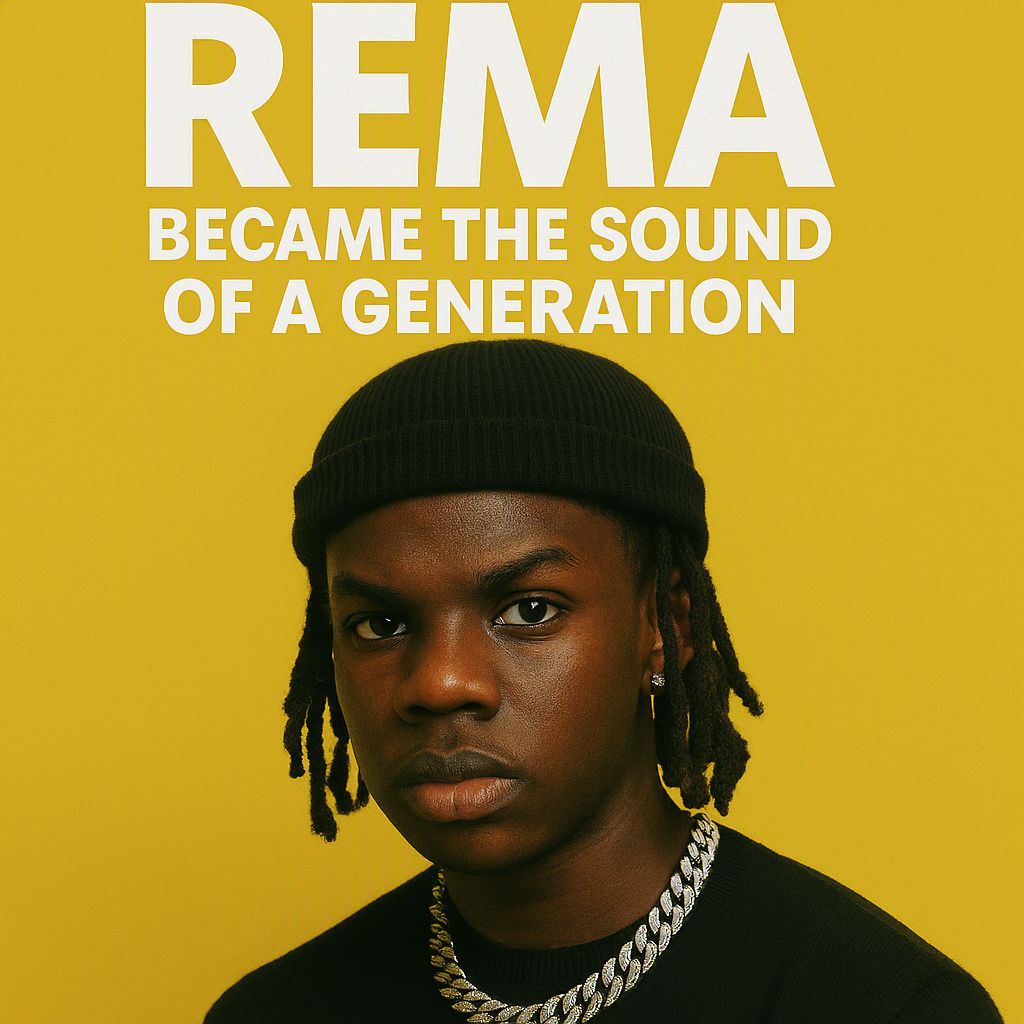
When the organisers of the 2026 FIFA World Cup opening ceremony sat down to decide which artist would represent the sound of the modern world to a global television audience of over a billion people, they chose a young man from Benin City, Edo State, Nigeria.
When the organisers of the 2026 FIFA World Cup opening ceremony sat down to decide which artist would represent the sound of the modern world to a global television audience of over a billion people, they chose a young man from Benin City, Edo State, Nigeria. His name is Divine Ikubor. The world knows him as Rema. That choice — Rema as a headline performer at the opening ceremony of the biggest sporting event on the planet — is not just a music industry story. It is a statement about where Nigerian music has arrived, and what it now means in the global cultural conversation. The Journey From GRA, Benin City Rema's origin story has been told many times, but it bears retelling in this context because it illuminates something important about the generation of Nigerian artists who are now remaking global pop music. Born in 1999, Divine Ikubor grew up in Government Reserved Area, Benin City — a city with a rich cultural heritage and a music scene that has produced multiple generations of Nigerian artists. He lost his father when he was nine years old. He was raised by his mother and grandmother in circumstances that were not easy. He was discovered after posting music on Instagram, signing with Jonzing World — a record label founded by D'Prince, the brother of Don Jazzy — and then with Mavin Records, one of Nigeria's most storied music houses. His debut EP arrived in 2019 when he was 19 years old. It announced a distinctive voice: melodic, unhurried, built on Afrobeats foundations but reaching toward something more expansive — incorporating elements of Afropop, R&B, and what he has described as "Afrorave," a genre he has largely defined himself. The international breakthrough came in stages. Critical acclaim in 2019 and 2020. A growing streaming presence. Then, in 2022, "Calm Down" — a song that started as a straightforward Afrobeats track and became, after a remix featuring American pop star Selena Gomez, one of the most-streamed songs in the world. It spent over a year on the Billboard Hot 100. It introduced Rema to audiences in the United States, Latin America, Europe, and Southeast Asia who had never heard of him before. By 2023 and 2024, Rema was no longer a rising star. He was a star. His debut album "Rave & Roses" had cemented his artistic identity. His tours sold out internationally. His name appeared alongside the established giants of the Afrobeats generation — Wizkid, Burna Boy, Davido — while representing something distinctly his own. And now, in June 2026, he will stand on the opening ceremony stage of the World Cup and perform for the entire world. What the World Cup Moment Means Let us be honest about what a World Cup opening ceremony performance means in the hierarchy of global cultural moments. This is not a festival slot. This is not a streaming milestone. This is not a music award. The World Cup opening ceremony is one of the most-watched television events on the planet — a broadcast that reaches audiences in every country,