How Nigerians Can Protect Their Savings While Inflation Remains at 15.93%
Category: Lifestyle | Author: NaijaToday Desk | Published: Tue Jul 07 2026
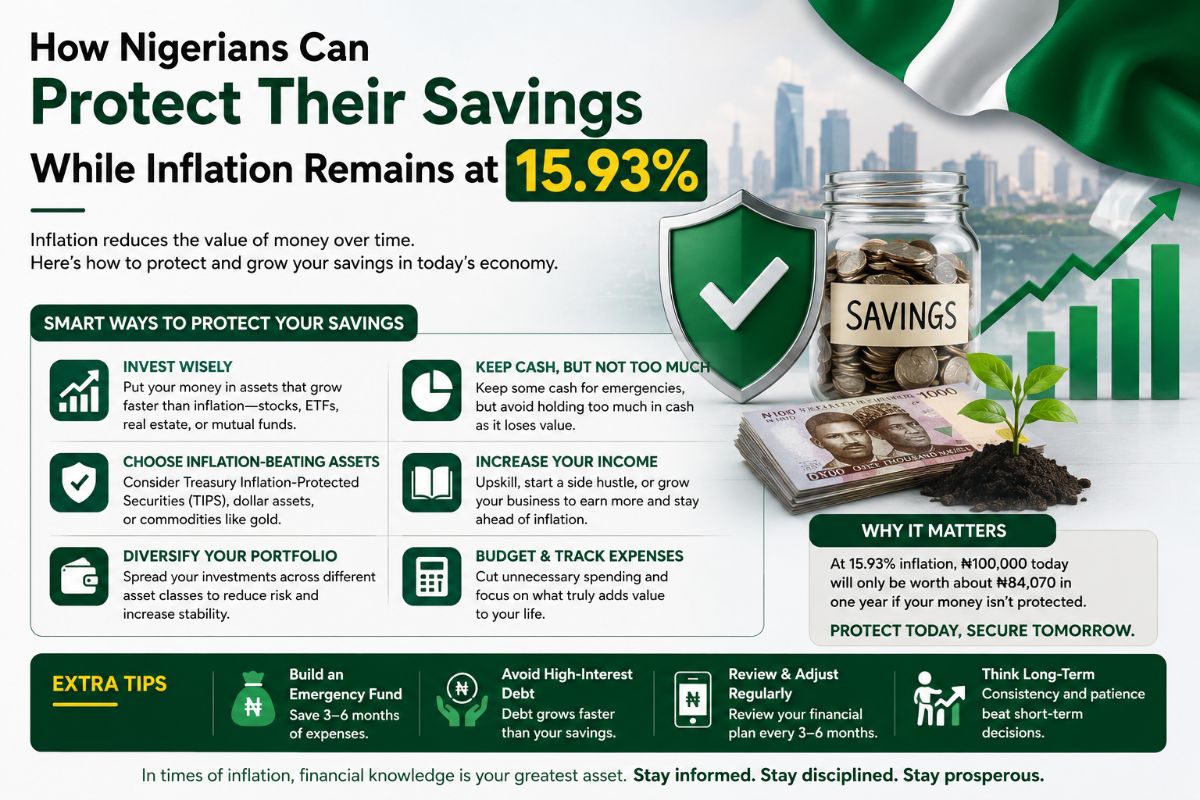
Nigeria's inflation rate is 15.93%. Learn practical ways to protect your savings through budgeting, Treasury Bills, money market funds, emergency savings, and smarter investing.
How Nigerians Can Protect Their Savings While Inflation Remains at 15.93% For many Nigerians, the feeling is familiar. You receive your salary, transfer some money into a savings account, and hope you're doing the responsible thing. Yet a few months later, that same money doesn't seem to go as far as it used to. A bag of rice costs more, transportation fares have increased, and everyday groceries keep taking a bigger bite out of your income. The reason is simple: inflation. According to the National Bureau of Statistics (NBS), Nigeria's headline inflation rate stood at 15.93% in May 2026 . While this is a significant improvement from 26.06% recorded in May 2025 , prices are still rising much faster than the interest most banks pay on ordinary savings accounts. In practical terms, this means that even though your bank balance may be increasing slightly, your purchasing power is shrinking. The money you're saving today may buy less tomorrow if it isn't growing faster than inflation. The good news is that protecting your finances doesn't always require earning millions or becoming a professional investor. Small financial decisions, made consistently, can help preserve the value of your money even during periods of high inflation. Here's what every Nigerian should know. Why Inflation Matters More Than Your Bank Balance Many people assume that as long as they're saving money, they're making financial progress. Unfortunately, that's not always true. Imagine you have ₦1,000,000 in a savings account earning 5% annual interest . After one year, your balance grows to ₦1,050,000 . At first glance, it looks like you've made ₦50,000 . However, if prices across the economy increased by 15.93% during the same period, the goods and services that cost ₦1,000,000 a year earlier would now cost roughly ₦1,159,300 . Although your account balance increased, your money now buys less than it did before. Economists refer to this as a negative real return —when your investment grows more slowly than inflation. This is why leaving large sums of money in low-interest savings accounts can quietly reduce your wealth over time. Inflation Is Slowing—But It's Still High There is encouraging news. Nigeria's inflation rate has fallen significantly compared to last year, dropping from over 26% to below 16%. That suggests that government policies, exchange rate stability, and improvements in food supply may be helping to reduce the pace of price increases. However, it's important to understand what this decline actually means. It doesn't mean prices are falling. It simply means prices are increasing more slowly than they were a year ago. For households, the reality remains the same: everyday expenses continue to rise. That's why financial planning remains essential even as inflation gradually eases. Food Prices Continue to Put Pressure on Families According to the National Bureau of Statistics, food inflation remained one of the biggest contributors to rising living costs. Products