Nigeria's Inflation Eases to 15.93% in May — But Your Market Bag Still Feels Lighter
Category: Lifestyle | Author: NaijaToday Desk | Published: Tue Jul 07 2026
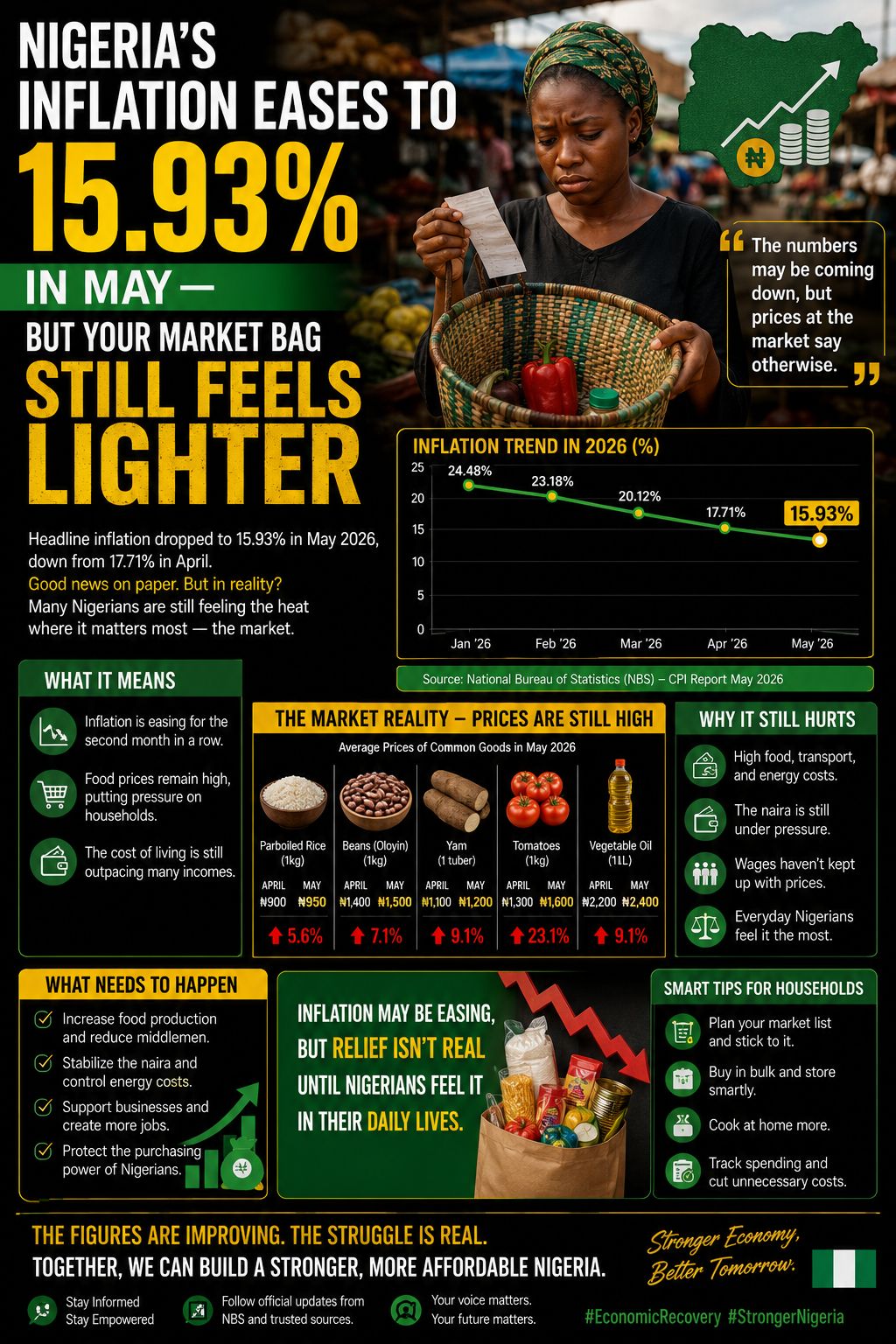
Nigeria's inflation rate rose to 15.93% in May 2026, marking the third consecutive monthly increase. Although inflation is lower than it was a year ago, rising food and transport costs continue to put pressure on household budgets across the country.
Nigeria's Inflation Climbs to 15.93% in May 2026: What It Really Means for Your Wallet Nigeria's headline inflation rate increased to 15.93 percent in May 2026 , according to the latest Consumer Price Index (CPI) report released by the National Bureau of Statistics (NBS). The figure represents a slight rise from 15.69 percent recorded in April , marking the third consecutive month that inflation has edged upward. For many Nigerians, however, the statistics simply confirm what they have already been experiencing every time they visit the market. Whether you shop at Mile 12 in Lagos, Wuse Market in Abuja, Ogbete Market in Enugu, or Kurmi Market in Kano, the story is the same—buying the same basket of food now costs noticeably more than it did just a few weeks ago. If you've recently wondered why your weekly grocery budget seems to disappear faster than before, the latest inflation report provides the answer. Food Prices Continue to Put Pressure on Household Budgets Although inflation affects almost every part of the economy, food remains the biggest source of concern for most families. According to the NBS, food inflation rose to 16.96 percent year-on-year in May , making it one of the strongest contributors to the overall increase in consumer prices. Several everyday food items experienced notable price increases. These include: Onions Tomatoes Fresh pepper Maize Melon Wheat grain Cassava flour (garri) Cassava tubers Yam tubers Water yam Sweet potatoes Plantain Cowpea (beans) Crayfish Ginger These are not luxury products. They are basic ingredients used in preparing meals across Nigeria every single day. Whether a family is cooking jollof rice, beans, yam porridge, vegetable soup, or pepper soup, many of these ingredients are unavoidable. That explains why households are feeling the impact so strongly. Many shoppers have also noticed another trend. Prices often change within days instead of weeks. A bag of onions purchased on Monday may cost significantly more by Friday, making budgeting increasingly difficult for families trying to manage limited incomes. The Numbers Tell One Story, Everyday Life Tells Another Inflation is an economic term, but its effects are deeply personal. For salary earners, it means the same monthly income buys fewer goods than before. For business owners, it means higher operating costs, more expensive transportation, rising electricity expenses, and shrinking profit margins. For students, it means increased feeding costs and accommodation expenses. For pensioners and retirees living on fixed incomes, every increase in food prices reduces their purchasing power even further. While economists often discuss inflation using percentages and graphs, ordinary Nigerians experience it through everyday decisions: Should I buy a crate of eggs or half? Can I still afford meat this week? Is it cheaper to cook at home or buy food outside? Can I postpone replacing household items until prices stabilize? These are the real-life consequen